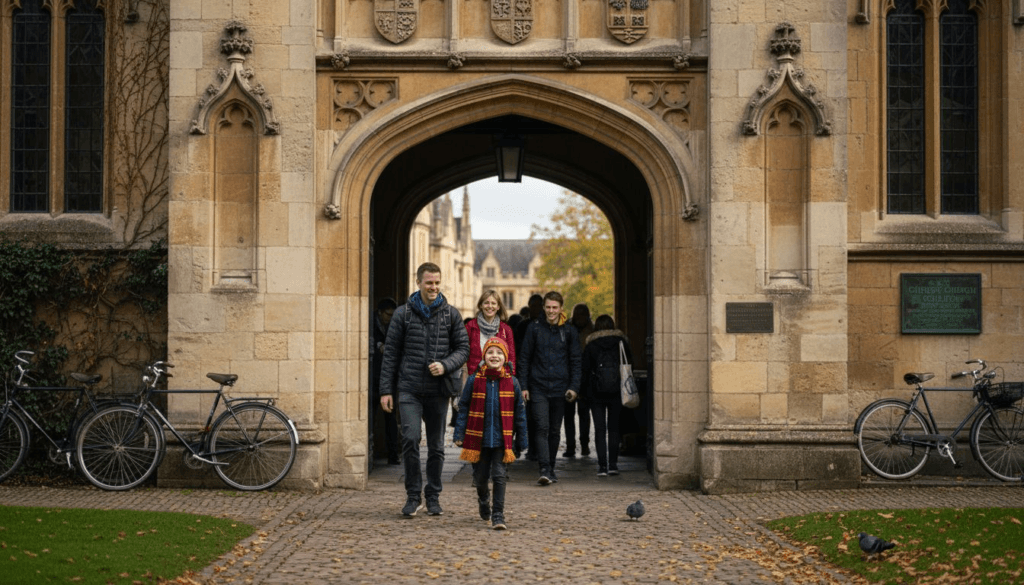
Every Harry Potter fan recognises the magic woven into Oxford’s ancient colleges, but few realise these spaces are the actual filming locations where Hogwarts came to life. The city’s gothic arches and historic libraries make Oxford one of the most recognisable backdrops of the entire series. Whether you’re a lifelong enthusiast or planning a family outing, immersive walking tours with live entertainment transform these iconic sites into unforgettable experiences, blending storytelling and genuine wonder for all ages.
Table of Contents
- Harry Potter Locations in Oxford Explained
- Key Filming Sites and Their Magic
- How Walking Tours Create Immersive Fun
- Live Magic Shows: Unique Family Entertainment
- Practical Tips for Oxford Film Set Visits
Key Takeaways
| Point | Details |
|---|---|
| Authentic Film Locations | Oxford’s historic architecture provides the genuine settings for iconic Harry Potter scenes, offering a unique experience for visitors. |
| Importance of Guided Tours | Expert-led tours enhance understanding of filming choices and architectural significance, creating memorable experiences for families. |
| Strategic Planning Required | Advance booking and a well-thought-out route are essential for accessing key locations and maximising the visitor experience. |
| Live Magic Enhances Engagement | Incorporating live magic during tours captivates audiences, blending entertainment with historical insight for a lasting impact. |
Harry Potter Locations in Oxford Explained
Oxford’s architecture holds the key to understanding why the filmmakers chose this city as their magical stage. The university’s centuries-old buildings feature the exact aesthetic that defines Hogwarts—soaring gothic arches, ancient libraries, and mysterious staircases that seem pulled straight from the books.
Several iconic locations appear in multiple films, making Oxford one of the most recognisable filming locations in the entire series. These aren’t set reconstructions or studio builds. These are the actual spaces where Harry and his friends walked on screen.
The Most Significant Filming Locations
Oxford’s key filming locations showcase the university’s role in bringing the wizarding world to life. Here are the spots that appeared most prominently:
- Bodleian Library’s Divinity School – Featured in Goblet of Fire and other films; the vaulted ceilings create an unmistakably magical atmosphere
- Duke Humfrey’s Library – One of the oldest libraries in Europe; appeared as restricted areas within Hogwarts
- Christ Church’s dining hall – Inspired the Great Hall’s design and actually featured in filming scenes
- New College cloisters and courtyard – Used for outdoor Hogwarts scenes; the medieval courtyard is instantly recognisable
- Bodley Tower staircase – The iconic spiralling staircase featured prominently in several films
Each location tells a story about how the filmmakers translated J.K. Rowling’s descriptions into reality. The architecture wasn’t modified or enhanced—it was already perfect.
Why Oxford’s Architecture Works
The buildings predate the books by centuries, yet they match Rowling’s vision precisely. Gothic vaulted ceilings soar overhead; ancient stone staircases wind upwards mysteriously; libraries hold centuries of knowledge in hushed silence.
Oxford’s real Hogwarts aesthetic came from centuries of architecture, not set design—making it the perfect filming location.
This authentic atmosphere cannot be replicated on a soundstage. Visitors walking through these spaces experience the same architectural grandeur that appeared on screen. The experience becomes tangible in a way film alone cannot convey.
When you stand in Duke Humfrey’s Library, you’re standing in the exact spot where filming occurred. The light falls the same way. The shadows create identical patterns. The centuries-old wood smells the same.
Understanding the Connection Between Oxford and Hogwarts
Notable sites used throughout filming reveal how deeply Oxford’s character shaped the visual language of the films. The university’s layout—with separate colleges contained within the broader university—mirrors Hogwarts’ own structured environment.
Filmmakers could move between colleges and create varied scenes without ever leaving Oxford. The Bodleian Library could represent different Hogwarts locations depending on camera angles and lighting. A single courtyard could become multiple settings across different films.
This architectural variety meant the production team had everything needed within walking distance. No need for studio construction when centuries of authentic medieval and Renaissance architecture already surrounded them.
Pro tip: Visit the locations in sequence rather than jumping randomly between them—moving through Oxford the way the filmmakers did helps you understand how they composed scenes and chose angles for specific magical moments.
Key Filming Sites and Their Magic
Three principal locations anchor Oxford’s role in the Harry Potter universe. Each building contributed something irreplaceable to the films—authentic gothic architecture that no soundstage could replicate.
These weren’t random backdrops. The filmmakers selected specific spaces for specific magical moments. Understanding why each location mattered transforms your visit from sightseeing into storytelling.
Christ Church College
Christ Church holds the distinction of being the most recognisable filming location in Oxford. The college’s dining hall directly inspired the Great Hall’s design—not just visually, but structurally. Diners sit at long tables beneath a vaulted ceiling, creating the exact atmosphere Rowling described.
The grand staircase featured prominently in several films. Students and visitors climb these steps daily; Harry and his friends did the same on screen. The stone, the lighting, the scale—all authentic.
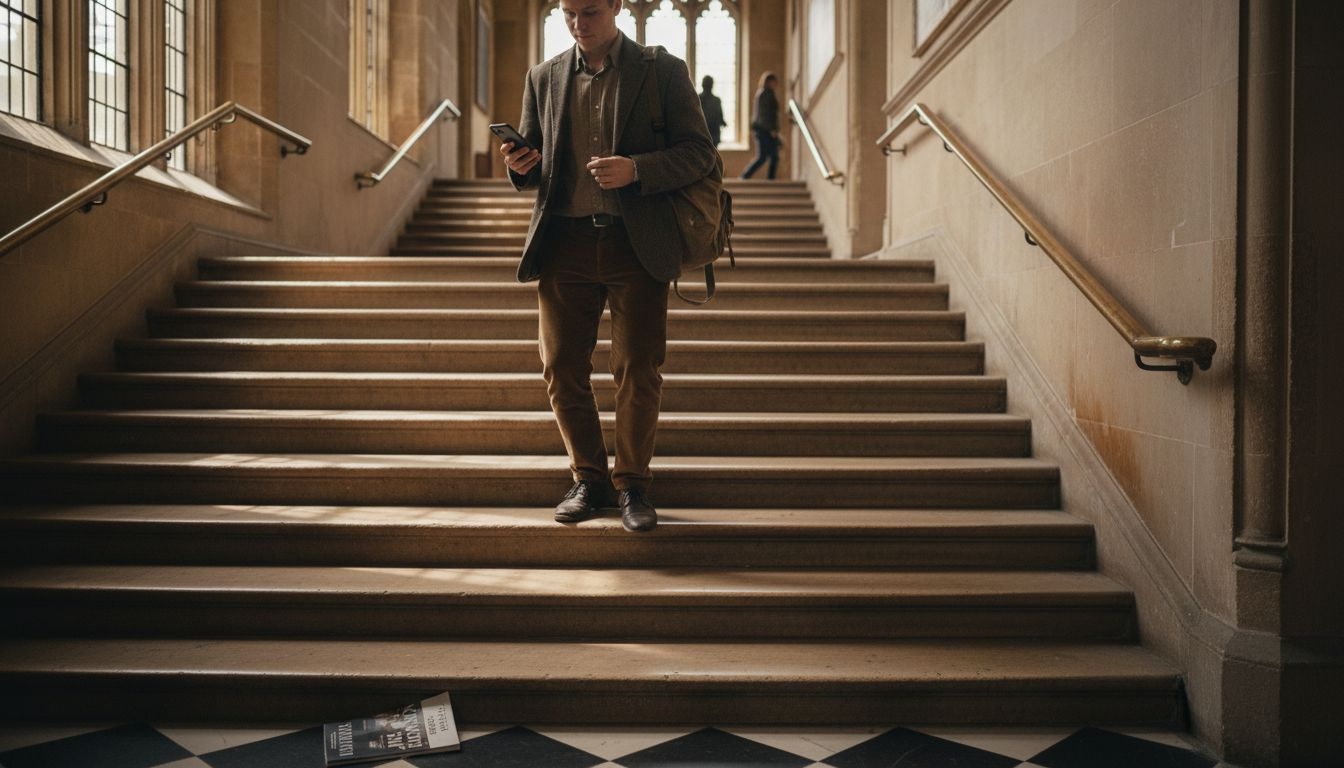
What makes Christ Church particularly special is its continuous use. The college still functions as it did when filming occurred. Walking through the dining hall, you’re experiencing the space exactly as the filmmakers did.
Bodleian Library: Two Essential Spaces
The Divinity School and Duke Humfrey’s Library represent two distinct magical settings within the Bodleian.
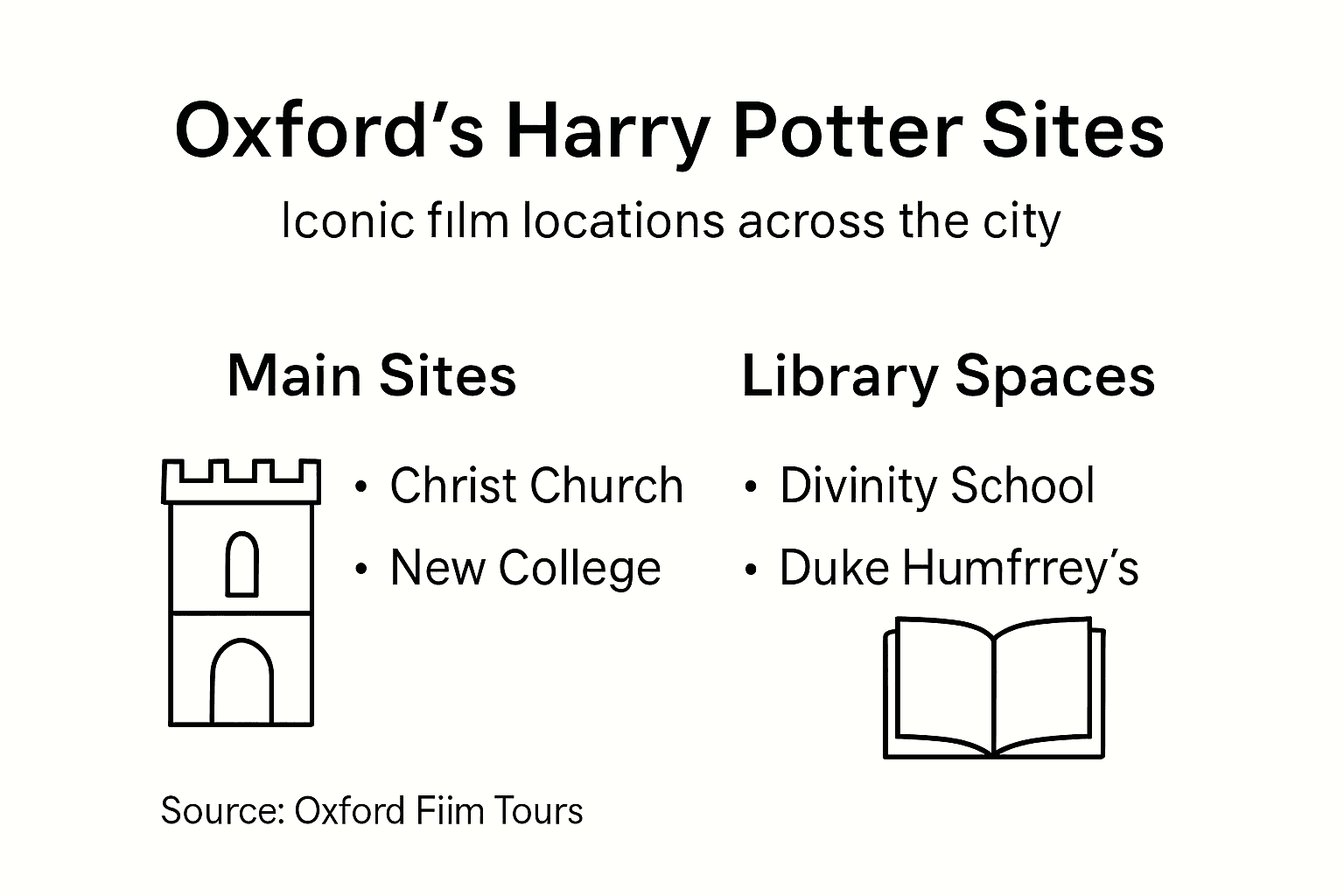
Divinity School portrayed Hogwarts’ hospital wing. The gothic architecture—with its intricate ribbed ceiling and soaring arches—created an unmistakably magical atmosphere. Injured students recovering from magical mishaps seemed perfectly at home in this ornate space.
Duke Humfrey’s Library became Hogwarts’ restricted section. This library is genuinely restricted; visitors see it only from designated viewing areas. The exclusivity adds authenticity. The books genuinely are centuries old. The silence is genuinely reverent.
- Divinity School: Hospital wing scenes; ornate gothic ceiling
- Duke Humfrey’s Library: Restricted section; centuries-old manuscripts visible behind glass
- Both locations: Authentic medieval and Renaissance architecture unchanged for filming
New College: The Courtyard
New College’s cloisters and courtyard provided outdoor Hogwarts scenes. The medieval stone courtyard, with its enclosed layout and historic architecture, becomes a different world. Filmmakers could shoot expansive scenes within a compact space.
The courtyard’s versatility meant it represented multiple Hogwarts locations across different films. Camera angles changed; the setting transformed. This is filmmaking using authentic architecture as the primary visual language.
The following table summarises Oxford’s principal Harry Potter filming locations, highlighting their cinematic significance and visitor experience.
| Location | Film Role | Architectural Highlights | Visitor Experience |
|---|---|---|---|
| Christ Church College | Great Hall, staircase scenes | Vaulted ceilings, grand steps | Public access, active college |
| Bodleian Library (Divinity School) | Hospital wing | Intricate gothic arches | Pre-book required, historic site |
| Bodleian Library (Duke Humfrey’s) | Restricted section | Old manuscripts, medieval woodwork | Guided viewing only |
| New College Courtyard | Outdoor Hogwarts | Medieval stone courtyard | Explorable cloisters |
Three locations. Three distinct atmospheres. All genuinely medieval or Renaissance. All still used daily by Oxford students and scholars.
Why These Spaces Matter Beyond Film
These aren’t museum pieces preserved in amber. Christ Church still hosts student dinners. The Bodleian still contains working libraries. New College still functions as residential accommodation. The magic you’re witnessing is real institutional history, not historical recreation.
Visiting these spaces connects you directly to the creative process. You see exactly what filmmakers saw. You understand exactly why they chose each location. The architecture speaks for itself.
Pro tip: Book your visit for morning hours when light streams through the windows at angles matching the filmed scenes—this recreates the cinematography you remember from the films and provides superior photography opportunities.
How Walking Tours Create Immersive Fun
Walking tours transform Oxford’s Harry Potter locations from photo stops into living narratives. You’re not just visiting buildings; you’re stepping into the creative decisions filmmakers made decades ago.
A guide who knows these spaces reveals layers invisible to solo visitors. Why did the camera angle shift here? What made this staircase perfect for that scene? These questions get answered as you walk.
The Power of Expert Guidance
Guided walking tours unlock Oxford’s magic through storytelling anchored in specific locations. A knowledgeable guide connects the books, the films, and the real architecture into a coherent experience.
Without guidance, you see buildings. With guidance, you see choices. You understand why filmmakers selected Christ Church’s dining hall over any other venue. You grasp why Duke Humfrey’s Library perfectly embodied the restricted section.
Guides share production details unavailable in films or books. They’ve researched the creative process and now translate that research into your experience. Every location becomes a chapter in a larger story.
Live Entertainment Changes Everything
Standard walking tours provide information. Walking tours with live entertainment create memories. Our tours feature a magician who has performed for the British Royal Family and A-list celebrities—bringing the wizarding world to life as you explore real filming locations.
When a magician performs tricks at the exact spot where Harry learned defensive spells, the boundary between film and reality blurs. You’re not imagining Hogwarts anymore. You’re standing in it, watching magic happen in real time.
This creates genuine immersion that photographs cannot capture. Your children remember the experience differently. Adults experience wonder they thought they’d outgrown. The magic becomes tangible.
Key benefits of live entertainment include:
- Engagement across age groups – Adults and children stay captivated throughout
- Memorable moments – Magic tricks at filming locations create shareable experiences
- Emotional connection – Wonder transforms information into lasting memory
- Photo opportunities – Magical moments make for genuinely special photographs
Why Walking Matters More Than Transport
You could drive past these buildings. You’d miss everything that matters. Walking forces you to notice details—the stone texture, the light patterns, the hidden courtyards.
Pace matters too. Walking keeps you slow enough to absorb architecture. Fast transport creates distance between you and the buildings. Walking creates intimacy.
Walking tours turn passive sightseeing into active exploration—you’re not observing Oxford, you’re experiencing it.
Your feet carry you through the same corridors Harry walked on screen. Your eyes follow the same architectural lines. This physical presence in the actual locations changes how your brain processes the experience.
The Social Element
Shared experiences strengthen memories. You’re not alone on a tour; you’re with fellow Harry Potter enthusiasts. Conversations spark. Observations get shared. Individual experiences become collective ones.
This social dimension matters, particularly for families. Children remember not just what they saw, but who they saw it with. Parents notice their children’s reactions in real time. These moments become family stories retold for years.
Pro tip: Book tours departing in late afternoon, when golden hour light hits the buildings at the same angles as filming—your photographs will match the cinematography you remember from the films, and the atmosphere becomes genuinely magical.
Live Magic Shows: Unique Family Entertainment
Most walking tours end with information. Oxford’s Harry Potter tours with live magic shows end with wonder. Professional magicians perform genuine illusions at the exact spots where Harry learned spells, transforming sightseeing into spectacle.
This isn’t theatre attendance. This is magic happening in real locations where fictional magic was filmed. The boundary between imagination and reality dissolves completely.
What Makes Live Magic Different
Walking tours blending Harry Potter locations with live magic shows create experiences standard tours cannot match. Professional magicians—many who have performed for the British Royal Family and A-list celebrities—bring spellcasting to life.
Your children don’t just hear about magical moments. They witness them. A magician performs sleight of hand tricks in Christ Church’s dining hall where Harry sat. Another performs spell recreations at Duke Humfrey’s Library where restricted magic happened on screen.
These aren’t pre-recorded tricks or video effects. These are live performances by skilled illusionists working feet away from you. The proximity creates genuine amazement.
Why Children Remember This
Children forget standard information quickly. They remember experiences that surprised them. A magician making objects appear or disappear creates the kind of wonder that stays with them for years.
Parents often report their children retelling the experience repeatedly—not just remembering it, but reliving it. The magic becomes part of their Oxford story, their Harry Potter story, their family story.
Key reasons live magic enhances the experience:
- Sensory engagement – Children see, hear, and feel amazement in real time
- Believable magic – Illusions at filming locations make fictional magic feel possible
- Interactive moments – Magicians often invite audience participation, creating personal memories
- Photo opportunities – Magic moments make for genuinely shareable photographs
- Cross-generational appeal – Adults find the performances equally captivating
The Entertainment-Education Balance
These tours don’t sacrifice education for entertainment. Guides still explain architectural history, filming decisions, and behind-the-scenes production details. Magic becomes punctuation to the narrative, not the entire story.
You learn why Christ Church inspired the Great Hall. Then magic happens in that very hall. The contrast deepens both understanding and amazement.
Live magic at filming locations transforms passive learning into active wonder—knowledge becomes memorable because it’s anchored in genuine astonishment.
This psychological effect works across ages. Children internalize information through excitement. Adults appreciate the performance craft whilst absorbing historical details. Families leave with shared memories and genuine knowledge.
Managing Expectations
These tours work best when you embrace the spectacle whilst valuing authentic locations. You’re experiencing real Oxford—centuries-old buildings, genuine architecture, actual filming sites. The magician adds magic; the location provides authenticity.
Pacing allows genuine exploration. Magic shows aren’t rushed performances; they’re integrated moments within walking tour narrative. You move between locations, learn about each space, then experience magic within it.
This rhythm maintains engagement without overwhelming younger family members with either information or performance.
Pro tip: Arrive early to secure positions near the magician during performances—standing close enough to see sleight of hand details transforms a good show into an unforgettable one, particularly for children fascinated by how tricks work.
Practical Tips for Oxford Film Set Visits
Visiting Harry Potter filming locations requires planning. Unlike theme parks with fixed hours, Oxford’s colleges operate on university schedules. Locations close unexpectedly for academic events. Understanding these realities transforms frustration into successful exploration.
Proper preparation means actually accessing the sites you travelled to see. It means standing in the spaces you dreamed about. It means photographs instead of disappointment.
Book Everything in Advance
Opening hours vary significantly across Oxford’s colleges and libraries, making advance booking essential. Christ Church limits public access due to ongoing university activities. The Bodleian Library operates restricted viewing hours. Booking tickets before arrival guarantees entry.
During peak tourist seasons—particularly school holidays and summer months—sites fill rapidly. Self-guided visits require flexibility; guided tours secure your spot regardless of crowds.
Why booking matters:
- Guaranteed access – Avoid arriving to find locations closed for university events
- Time management – Know exactly when you can visit each location
- Reduced queuing – Pre-booked visitors often bypass general admission queues
- Group coordination – Easier to plan family itineraries around confirmed times
- Peace of mind – No last-minute scrambling or cancelled plans
Wear Appropriate Footwear
You’ll cover substantial distances on foot between locations. Oxford’s medieval streets feature uneven cobblestones, steps, and sloped pavements. Comfortable walking shoes matter more than style. Trainers work better than fashion shoes.
Children’s feet tire quickly on lengthy walks. Plan regular breaks near colleges; Oxford has numerous benches and quiet courtyards. Pacing matters as much as distance.
Respect Academic Environments
These aren’t tourist attractions. They’re functioning universities where students study, attend lectures, and live. Respect restricted areas marked by signs. Don’t enter private courtyards or blocked sections.
Many locations charge modest entry fees—typically £3–£7 per person. These fees support the institutions maintaining these spaces. Pay them willingly; you’re funding preservation.
Planning ahead transforms visits from chaotic scrambles into meaningful experiences where you actually see the locations you travelled to find.
Choose Your Route Strategically
Maximising your Oxford tour experience depends on prioritising key locations and understanding site locations relative to each other. Christ Church, the Bodleian Library, and New College form a geographical cluster—visiting these three eliminates excessive backtracking.
Consider starting at Christ Church (furthest south), moving north to the Bodleian, then finishing at New College. This reduces walking time and maintains energy for photography.
Location priorities by importance:
- Christ Church—most recognisable filming location
- Bodleian Library (Divinity School and Duke Humfrey’s)
- New College courtyard
- Additional sites depending on time available
Self-Guided vs. Guided Tours
Self-guided visits allow flexibility but require research. You’ll spend time finding locations, confirming opening hours, and piecing together production details. Guided tours eliminate this work whilst providing insights unavailable online.
Guided tours particularly benefit families. Children stay engaged through storytelling. Adults learn production history guides researched for you. The investment pays dividends in both experience and knowledge.
Below is a concise comparison of self-guided and guided Harry Potter tours in Oxford, showing their unique benefits and considerations:
| Tour Type | Flexibility | Educational Insight | Family Engagement |
|---|---|---|---|
| Self-guided | Full control over route | Limited production details | May require parental input |
| Guided | Fixed itinerary | Expert storytelling and history | Children captivated by magic shows |
Pro tip: Book tours departing early morning—you’ll photograph locations with superior light, encounter fewer tourists, and complete visits before crowds arrive, securing the authentic Oxford atmosphere the filmmakers captured.
Experience the Magic of Oxford’s Harry Potter Locations Like Never Before
Visiting Oxford’s authentic Harry Potter filming sites offers a unique chance to walk where Hogwarts came to life. However, as the article highlights, navigating these historic colleges and libraries alone can be challenging due to university schedules, restricted access, and the need to appreciate architectural details that shaped the films’ magic. You want more than just photos; you want to live the story behind every staircase and grand hall.
Our walking tours of Oxford University and Harry Potter filming locations address these exact challenges by combining expert storytelling with immersive, live magic performances by a magician who has entertained the British Royal family and A-list celebrities. This creates an unforgettable experience that connects architectural history with cinematic magic. Don’t just visit Oxford—step inside the enchanting world the filmmakers chose and see the key filming locations brought vividly to life.
Book your tour now to secure your place and enjoy the perfect timing when the light matches the scenes you love. Discover why guided exploration with live entertainment is the only way to truly capture Oxford’s Harry Potter magic. Visit Oxford Magic Tours today and make your visit legendary.
Frequently Asked Questions
What are the key Harry Potter filming locations in Oxford?
Oxford features several key filming locations, including Christ Church College, the Bodleian Library’s Divinity School and Duke Humfrey’s Library, and New College cloisters and courtyard.
Why is Oxford chosen for Harry Potter filming over other locations?
Oxford’s architectural heritage, with its gothic arches and ancient libraries, closely resembles the magical aesthetics described in J.K. Rowling’s books, making it a fitting backdrop for the film series.
How can visitors maximise their experience when touring Harry Potter locations in Oxford?
Visitors should consider booking guided tours that provide insights into the filming process and architectural details, and plan visits for morning hours for optimal lighting for photography.
Are walking tours of Harry Potter locations in Oxford worthwhile?
Yes, guided walking tours enhance the experience by providing expert storytelling and allowing visitors to connect with the actual spaces where the films were shot, deepening their understanding of the magical world.