
TL;DR:
- Small group travel involves professionally arranged guided tours with 8 to 24 participants, offering social connection and personalized experiences. Operators ensure pre-organized logistics, expert guides, and exclusive access, making the trip both intimate and efficiently paced. Choosing the right tour requires verifying the maximum group size, itinerary details, and operator reputation to maximize social and cultural engagement.
Small group travel is a guided travel format in which a small number of participants, typically between 8 and 24, join a professionally arranged tour that combines expert-led exploration with genuine social connection. Unlike large coach tours or fully independent travel, this format sits in a deliberate middle ground. Operators like Exodus, Insight Vacations, and Globus have built entire product lines around it, recognising that travellers want the ease of organised logistics without the anonymity of a crowd. The result is a format that suits solo adventurers, couples, and seasoned explorers alike, offering structured itineraries with room to breathe.
What is small group travel and how is it defined in 2026?
Small group travel is defined by participant count, professional arrangement, and guided delivery. No single industry standard fixes the maximum number of travellers, which means the term covers a wide spectrum depending on the operator and destination. A walking tour in Oxford might cap at 10 guests, while a European coach itinerary could stretch to 26. What unites them is the intent: fewer people, more personal attention, and a richer experience than mass tourism allows.
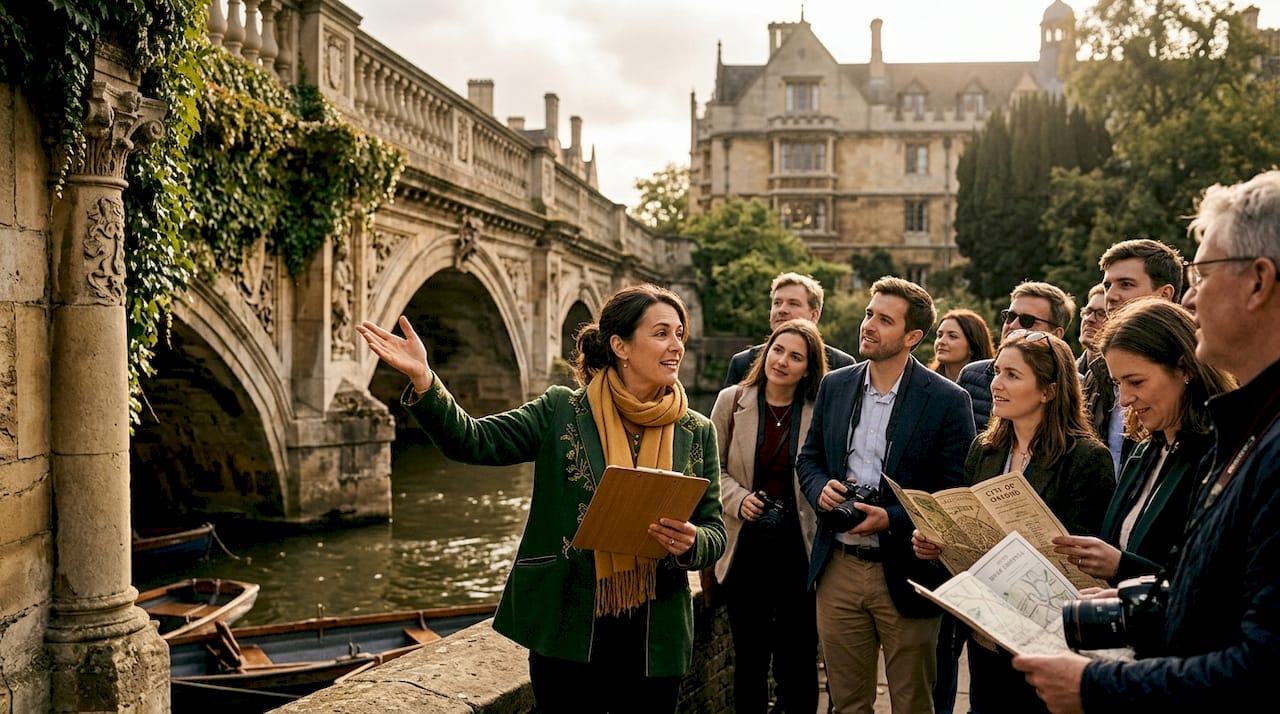
The format has grown significantly in appeal. Small group tours are big business for operators and travel agents, driven by demand from Gen X and younger Boomers seeking authentic, manageable experiences. This demographic wants the reassurance of a guide and a plan, but not the feeling of being herded through a site with 50 strangers. Small group travel answers that directly.
The key characteristics that define the format are consistent across operators. Groups are led by a professional guide or host. Accommodation, transport, and core activities are pre-arranged. Itineraries are designed with pacing in mind, not just sightseeing volume. And the group size itself is treated as a feature, not an afterthought.
How do group sizes compare across leading operators?
Leading operators in 2026 cap small groups typically between 8 and 26 travellers. CIE Tours allows up to 26 on some full-coach itineraries, Collette averages 19, and Globus averages 15 across European routes. Specialist adventure operators often cap at 8 to 16. Insight Vacations launched a collection in 2026 with 35 itineraries and group caps of 18 to 24, positioning the format as personal and premium.
The table below shows how small group tours compare with large tours and private travel across the factors that matter most to travellers.
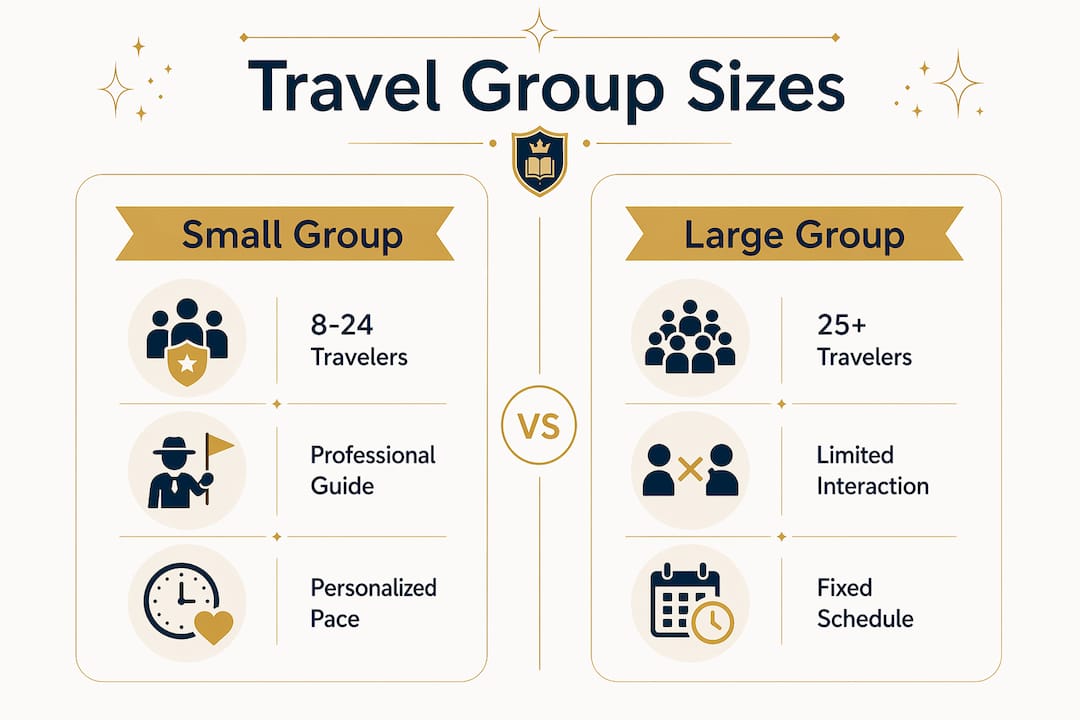
| Factor | Small group tour | Large group tour | Private travel |
|---|---|---|---|
| Typical group size | 8 to 24 | 30 to 50+ | 1 to 4 |
| Cost per person | Moderate to high | Lower | Highest |
| Social connection | High | Low | Varies |
| Flexibility | Moderate | Low | Full |
| Logistics arranged | Yes | Yes | Self-managed |
| Exclusive access | Often included | Rarely | On request |
The size of a group shapes the entire experience. At 8 to 12 people, a guide can adjust pace in real time, answer individual questions, and create a genuinely intimate atmosphere. At 24, the dynamic shifts closer to a traditional tour, even if the operator still labels it “small group.” Knowing the actual cap before booking is the single most useful piece of information a traveller can have.
Pro Tip: Always ask the operator for the maximum group size on your specific departure date, not the average. Averages can mask a tour that regularly runs at full capacity.
How does small group travel work in practice?
Operators like Exodus describe small group tours as professionally arranged experiences where accommodation, transport, meals, and guided activities are organised in advance, freeing participants to focus entirely on the destination. The logistics model is the core appeal. You arrive, meet your guide and fellow travellers, and the structure takes over. There is no need to research train connections at midnight or argue over restaurant choices.
A typical day on a small group tour follows a recognisable rhythm. Mornings often involve a guided activity or site visit. Afternoons may include a mix of structured options and free time. Evenings are frequently communal, with group dinners or informal gatherings that accelerate social bonding. This balance of structure and freedom is deliberate. It suits travellers who want expert guidance without feeling micromanaged.
The features you can expect on most small group tours include the following:
- A professional guide with local knowledge and language skills
- Pre-booked accommodation suited to the group’s style and budget
- Included transport between destinations, whether by coach, train, or boat
- A mix of group meals and independent dining options
- Curated site visits, often with skip-the-line access or private entry
- A daily programme that balances activity with downtime
- A group communication channel for coordination and social connection
Pro Tip: Check the itinerary for the number of hotel changes. Frequent moves reduce social time and increase fatigue. A tour with three or fewer base locations typically offers a more relaxed and connected experience.
The guide’s role extends beyond navigation. On the best small group tours, the guide acts as a social facilitator, creating moments for the group to connect naturally. Meal arrangements, optional evening activities, and even seating on transport are often designed with group cohesion in mind.
What are the key benefits of small group travel?
Small group travel positions itself as the middle ground between independent travel and large escorted tours, and the benefits are concrete rather than merely promotional. The most significant advantages include the following:
- Social connection. In groups of 8 to 16, participants learn each other’s names within hours and often maintain contact long after the trip ends. Camaraderie is a design feature, not a happy accident.
- Exclusive access. Insight Vacations highlights private entries and before or after-hours visits as standard benefits of small group formats. These are negotiated by operators and written into itineraries, not improvised on the day.
- Reduced crowding. Visiting a UNESCO World Heritage Site with 12 people rather than 50 changes the experience entirely. You can hear the guide, ask questions, and absorb the atmosphere without jostling for position.
- Solo traveller appeal. Small group tours are the most practical format for solo travellers. The social structure is built in, the safety concerns of independent travel are reduced, and the single supplement question is worth checking directly with the operator.
- Authentic local engagement. Smaller groups attract less attention and fit more naturally into local settings. A group of 10 at a family-run restaurant in Tuscany is a welcome table. A group of 45 is a logistical event.
“The best small group tours are not just about seeing places. They are about experiencing them with people who chose to be there for the same reasons you did.”
For solo travellers specifically, the guided walking tours format offers an immediate social entry point without the pressure of organising everything independently.
How to choose and prepare for a small group tour
Choosing the right small group tour requires looking past the marketing label. Two tours with identical group caps can feel entirely different based on pacing, hotel changes, and transfer demands. A tour that moves locations every night offers far less social time than one that stays in each city for two or three nights. Read the day-by-day itinerary, not just the highlights page.
The factors worth comparing before booking are these:
- Actual group cap. Ask for the maximum, not the average.
- Number of hotel changes. Fewer moves mean more time to settle and connect.
- Included versus optional activities. A tour heavy on optional extras can feel fragmented.
- Single supplement policy. Solo travellers should confirm costs and room-sharing options upfront.
- Guide continuity. Some tours use a different local guide at each destination. Others use one guide throughout. The latter builds stronger group cohesion.
- Operator reputation. Check reviews specifically for your destination and departure season, not just the operator’s overall rating.
For packing, Exodus recommends broken-in comfortable shoes, layered clothing, travel insurance documents, a universal adapter, and sun protection as standard essentials. These cover the practical demands of varied activities and climates without overpacking. For a more detailed preparation checklist tailored to guided tours, the Oxford Magic Tours packing guide offers a useful reference point.
Small group tours generally cost more per person than large group options but less than private tours. The price reflects higher service intensity, smaller economies of scale, and the exclusive access elements that operators negotiate on behalf of their groups. Understanding this pricing logic helps set realistic expectations before comparing quotes.
Key takeaways
Small group travel delivers the most value when the group cap is genuinely small, the logistics are well-paced, and the operator has designed social connection into the itinerary rather than leaving it to chance.
| Point | Details |
|---|---|
| Group size varies by operator | Caps range from 8 to 26 depending on operator and destination; always confirm the maximum. |
| Logistics are pre-arranged | Accommodation, transport, and activities are organised, removing planning burden from travellers. |
| Social connection is by design | Group bonding depends on meal sharing, rooming, and pacing choices built into the itinerary. |
| Exclusive access is negotiated | Private entries and skip-the-line benefits come from operator agreements, not group size alone. |
| Preparation improves the experience | Comparing day-by-day itineraries and packing practical essentials makes a measurable difference. |
Why small group travel suits the way we travel now
I have been guiding and observing group travel in Oxford for years, and the shift towards smaller groups is one of the most consistent trends I have seen. Travellers are not just looking for a list of sights. They want to feel something at each one, and that is genuinely harder to do in a crowd of 50.
What strikes me most is how quickly a group of 10 or 12 people becomes a unit. By the second day, there is usually a shared language, a running joke, and a genuine sense of looking out for each other. That does not happen on a large coach tour. It is not a criticism of large tours. It is simply a different product.
The other thing I notice is that small group travel works particularly well for people who are new to guided travel and for those who are very experienced. New travellers appreciate the structure and the safety of a group. Experienced travellers appreciate the access and the quality of the guide. Both get something they could not easily replicate independently.
The challenge with the format is the inconsistency of the label. “Small group” means 8 to some operators and 26 to others. The guided vs self-guided comparison is worth understanding before you commit, because the right choice depends entirely on what you actually want from the trip.
— Shane
Experience small group travel in Oxford with Oxfordmagictours
Oxfordmagictours offers something genuinely different in the small group travel space. As the only walking tour in Oxford to feature live entertainment from a magician who has performed for the British Royal Family and A-list celebrities, the experience combines the intimacy of a small group with a level of performance that you simply will not find elsewhere. Groups explore Oxford University’s iconic colleges and the Harry Potter filming locations with a guide who entertains as much as he informs. If you are looking for a starting point for small group walking tours that balance history, magic, and genuine social engagement, Oxfordmagictours is the place to begin. You can also explore the full range of Oxford city walks to find the tour that fits your group.
FAQ
What is the typical size of a small group tour?
Most operators define small group tours as between 8 and 24 travellers, though there is no universal industry standard. Specialist operators often cap groups at 8 to 16, while larger operators may allow up to 26 on certain itineraries.
Is small group travel worth it for solo travellers?
Small group travel is one of the best formats for solo travellers because the social structure is built into the itinerary. Check the operator’s single supplement policy before booking, as costs vary significantly.
How does small group travel differ from a private tour?
A private tour is arranged exclusively for one person or party, offering maximum flexibility but at the highest cost. Small group travel shares costs across participants, includes a pre-set itinerary, and adds the social dimension of travelling with others.
What should I look for when choosing a small group tour?
Compare the actual group cap, the number of hotel changes, guide continuity, and the day-by-day itinerary rather than relying on the marketing summary. Pacing and logistics choices affect the experience as much as the destinations themselves.
Do small group tours include exclusive access to sites?
Many do, but exclusive access depends on what the operator has negotiated and written into the itinerary. It is not an automatic benefit of small group size. Check the itinerary details to confirm whether private entries or skip-the-line access are included on your specific tour.