
TL;DR:
- Good walking tour etiquette involves punctuality, attentiveness, respectful photography, appropriate tipping, and awareness of safety and community norms. Participants should arrive early, remain engaged, follow guide instructions, and respect local customs to ensure a meaningful experience. Respectful behavior fosters positive interactions with communities, enhances the tour, and preserves access for future visitors.
A walking tour etiquette guide is the set of respectful behaviours, social norms, and practical habits that allow guided group tours to run smoothly for everyone involved. Punctuality, attentiveness, and cultural sensitivity form the backbone of good tour group behaviour, and getting these right benefits your guide, your fellow participants, and the local communities you pass through. Whether you are joining a Harry Potter filming locations tour in Oxford or a heritage walk through a medieval city centre, the same core principles apply. Follow them and you will get more from every stop, every story, and every moment.
How should you prepare before joining a walking tour?
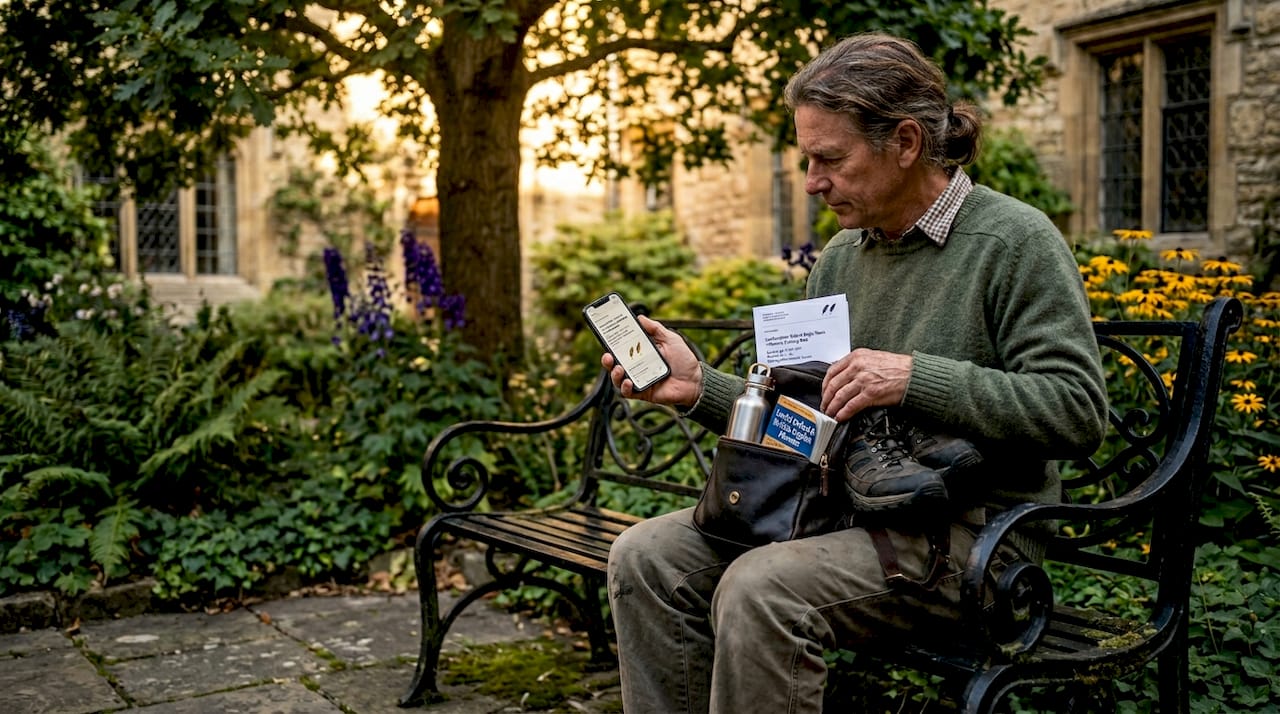
Preparation is the single most underrated element of good walking tour etiquette. Most participants focus on what happens during the tour and overlook the ten minutes beforehand, which is where the experience is often won or lost.
Arriving 10 to 15 minutes early gives you time to check in, locate your guide, and settle before the group moves off. Turning up at the exact start time means you are already behind. You miss the guide’s introduction, you disrupt the group’s rhythm, and you start the experience on the back foot. Punctuality is not just polite. It is the foundation of good tour group behaviour.
Clothing and footwear matter more than most travellers expect. Cobbled streets in Oxford, for example, are uneven and slippery in wet weather. Comfortable, flat-soled shoes are not optional. Check the essential gear advice for your specific route before you leave your accommodation. Pack water, a light layer, and any medication you might need. Your guide is not a pharmacist or a porter.
- Arrive 10 to 15 minutes before the scheduled start time
- Wear flat, comfortable footwear suited to the route surface
- Carry water, a snack, and any personal medication
- Silence your phone before the tour begins
- Research the tour’s key highlights in advance so you can engage meaningfully
Learning a few basic courtesy phrases in the local language, even just “thank you” and “excuse me,” signals respect to local residents and avoids the kind of misunderstandings that can embarrass an entire group. It takes five minutes and makes a genuine difference.
Pro Tip: Read the tour operator’s confirmation email carefully the night before. Guides often include meeting point details, dress code notes, and photography policies that most participants skim past and then ask about mid-tour.
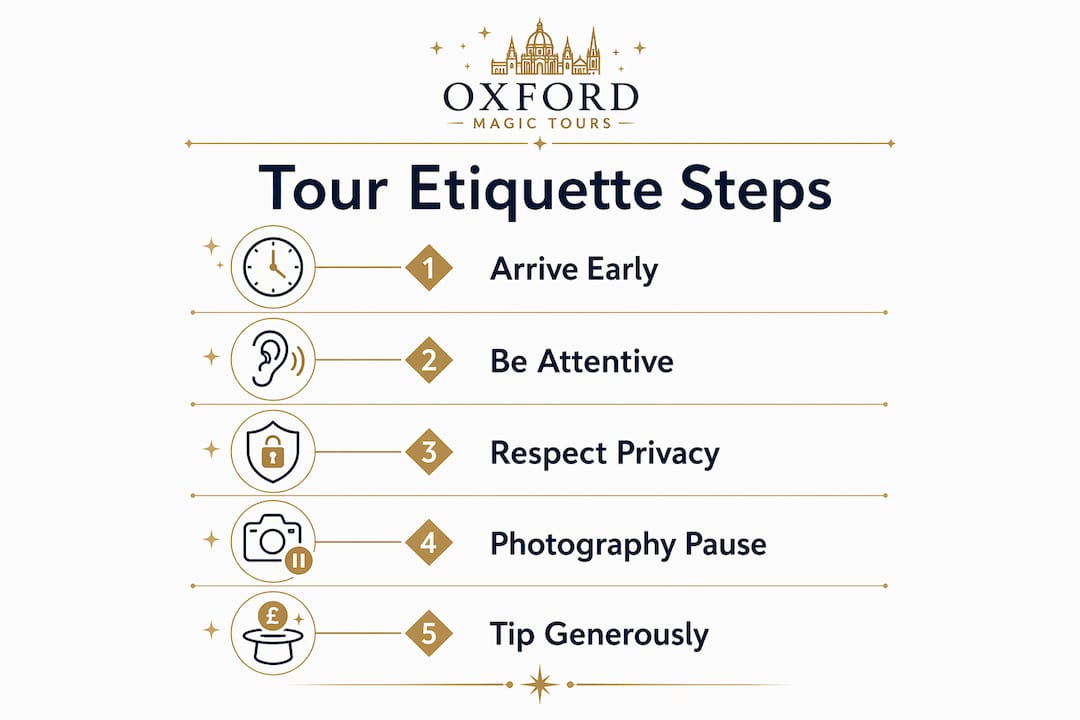
What behaviours demonstrate good etiquette during the walking tour?
Good in-tour conduct is not complicated, but it requires consistent attention. The most common mistakes are not deliberate rudeness. They are distraction, inattention, and a failure to read the room.
Keep your phone on silent and avoid side conversations unrelated to the tour. A guide delivering a carefully prepared narrative about, say, the Bodleian Library or a Harry Potter filming location deserves the same attention you would give a theatre performance. Talking over them is not just rude to the guide. It robs the people around you of the experience they paid for.
Here are the core in-tour conduct rules every participant should follow:
- Stay with the group at all times and follow the guide’s designated route
- Listen attentively and save questions for the natural pauses your guide creates
- Keep your voice low, particularly near residential areas, places of worship, or heritage sites
- Match the group’s walking pace rather than surging ahead or falling behind
- Respect any site-specific rules your guide communicates at each stop
- Dispose of any litter responsibly and avoid single-use plastics where locally restricted
“Good pedestrian etiquette means being aware and considerate of others’ pace, direction, and needs.” This principle, drawn from mindful walking guidance, applies directly to tour groups. When you walk mindfully, the whole group moves better.
Be particularly attentive in sacred or sensitive locations. Lowering your voice, putting your phone away, and following any dress code requirements at these stops is not optional courtesy. It is the minimum standard of respectful behaviour. Guides at Oxfordmagictours, for instance, brief participants before entering college grounds precisely because the rules differ from public streets.
Pro Tip: If you have a question that requires a longer answer, note it down and ask at the end of the tour or during a designated break. Interrupting mid-narrative disrupts the guide’s flow and the group’s concentration.
How to handle photography during walking tours ethically?
Photography is one of the most common sources of tension on group tours, and almost all of it is avoidable with a small amount of consideration.
Ask your guide before photographing in sensitive or restricted areas. Many heritage sites, college chapels, and filming locations have explicit rules about photography, and your guide knows them. Assuming permission is the fastest way to create an awkward situation for the entire group.
- Never block the view of other participants while photographing
- Avoid stepping in front of the group or moving off the path to get a better angle
- Flash photography restrictions apply at many heritage and religious sites. Follow them without exception
- Ask permission before photographing local residents or fellow tour participants
- Follow any instructions from security personnel on large or professional camera equipment
Photography should not dominate or disrupt the shared group experience. This principle, observed across birding tours, cultural walks, and heritage excursions alike, holds universally. The person who spends the entire tour with a camera in front of their face misses the experience and slows everyone else down.
The Oxford colleges and Harry Potter filming locations that Oxfordmagictours visits are working academic and cultural spaces. A quick photograph at the right moment is welcome. A ten-minute photo session while the group waits is not.
Pro Tip: Take your photographs during the natural pauses when the guide invites the group to look around. You will get better shots with less pressure, and you will not miss a word of the commentary.
What are the tipping practices and social customs to follow post-tour?
Tipping is where many well-intentioned tourists get caught out, particularly on free walking tours where the financial model is not always obvious.
Free walking tours rely on tips as their primary income source for guides. The “free” in the name refers to the absence of an upfront booking fee, not the absence of payment. Guides invest significant time, expertise, and preparation into every tour. Leaving without tipping is the equivalent of walking out of a restaurant without paying for service.
| Situation | Recommended approach |
|---|---|
| Free walking tour, satisfied | Tip 10 to 20 euros per person after the closing talk |
| Paid tour, excellent guide | A tip of 5 to 10 euros is a recognised gesture of appreciation |
| Leaving early | Notify the guide quietly beforehand and tip before you go |
| Group booking | Consolidate tips through one person to avoid confusion |
| Dissatisfied with the tour | Provide constructive feedback directly rather than withholding without explanation |
Tipping 10 to 20 euros per person is the widely accepted standard on free tours across Europe. This range reflects genuine appreciation and sustains the free tour model that makes quality guiding accessible to budget travellers.
If you need to leave early, notify your guide quietly before the tour begins or at the first natural break. Disappearing mid-tour without a word creates confusion and can cause the guide to pause the group to check whether someone is missing.
Pro Tip: Carry small notes or coins specifically for tipping before your tour. Fumbling for change at the end while the guide waits is awkward for everyone, and it diminishes an otherwise generous gesture.
How to stay safe and respect community norms on walking tours?
Safety and community respect are two sides of the same coin on any guided walk. Both require the same quality: sustained awareness of your surroundings.
Follow all safety instructions from your guide without question. Use designated crosswalks, stay on the pavement when instructed, and step aside for phone calls rather than stopping in the middle of the group. These are not bureaucratic rules. They are the difference between a smooth tour and a dangerous one.
- Stay within hearing range of your guide at all times. Falling more than 15 metres behind means you will miss key information and potentially lose the group entirely
- Keep your phone in your pocket in busy pedestrian areas and near traffic
- Respect dress codes at heritage sites, college grounds, and places of worship
- Avoid loud conversation or disruptive behaviour near residential properties
- Report any safety concerns immediately to your guide rather than attempting to manage them independently
Respectful engagement with local communities is not a soft courtesy. It is the practical foundation of sustainable tourism. When tour groups behave well, local residents and site managers remain welcoming. When they do not, access gets restricted for everyone who follows.
The benefits of guided walking tours depend entirely on the goodwill of the communities and institutions that allow access. Oxford’s colleges, for example, permit guided tours because operators like Oxfordmagictours maintain high standards of conduct. Every participant who respects those standards protects access for future visitors.
Key takeaways
Good walking tour etiquette requires punctuality, attentiveness, respectful photography, appropriate tipping, and sustained awareness of safety and community norms throughout the experience.
| Point | Details |
|---|---|
| Arrive early | Reach the meeting point 10 to 15 minutes before the start to check in and settle calmly. |
| Silence your phone | Keep your device on silent and avoid unrelated conversations to respect the guide and fellow participants. |
| Ask before photographing | Check with your guide before taking photos in sensitive, restricted, or heritage areas. |
| Tip appropriately | On free tours, 10 to 20 euros per person is the accepted standard after the closing talk. |
| Stay with the group | Remaining within hearing range protects your safety and ensures you miss nothing of value. |
What I have learnt from years of guiding in Oxford
The most common mistake I see on walking tours is not rudeness. It is passive disengagement. Participants who arrive on time, dress appropriately, and then spend the tour half-listening while scrolling through their phones. They are technically present and technically polite, but they extract a fraction of the value available to them.
The tours that genuinely change how people see a place, the ones where participants leave visibly moved or excited, share one quality. Everyone in the group is fully there. They ask questions. They react to the stories. They look at what the guide points to rather than at their screens.
I have also noticed that participants who make the effort to learn even one or two local phrases, or who take a moment to thank a guide sincerely at the end, consistently report better experiences. This is not coincidence. Respectful engagement creates a feedback loop. Guides give more to groups who are clearly invested, and invested groups get more from their guides.
The etiquette principles in this article are not restrictions. They are the conditions under which a genuinely memorable experience becomes possible. Treat them as such and you will notice the difference immediately.
— Shane
Explore Oxford’s walking tours with Oxfordmagictours
Oxfordmagictours offers guided walks through Oxford covering the University’s most iconic buildings and the Harry Potter filming locations that have captivated visitors from around the world. As the only walking tour in Oxford to feature live entertainment from a professional magician who has performed for the British Royal Family and A-list celebrities, Oxfordmagictours sets a standard for both quality and conduct that participants consistently praise. Every tour is led by expert local guides who model the etiquette principles covered in this article and create the conditions for a genuinely memorable experience. Browse the full range of Oxford city walks and book your place today.
FAQ
How early should you arrive for a walking tour?
Arriving 10 to 15 minutes early is the standard recommendation. This gives you time to check in, find your guide, and settle before the group departs.
Is tipping compulsory on free walking tours?
Tipping is not legally compulsory, but it is the financial foundation of the free tour model. The accepted range is 10 to 20 euros per person, paid after the guide’s closing talk.
Can you take photos on a walking tour?
Photography is generally welcome, but you should ask your guide first in sensitive or restricted areas. Flash photography is prohibited at many heritage and religious sites.
What should you wear on a walking tour?
Wear flat, comfortable footwear suited to the route surface, and dress appropriately for the cultural or heritage sites on the itinerary. Check the tour operator’s guidance in advance for any specific dress code requirements.
What do you do if you need to leave a walking tour early?
Notify your guide quietly before the tour begins or at the first natural break. Tip before you leave to acknowledge the guide’s time and expertise.