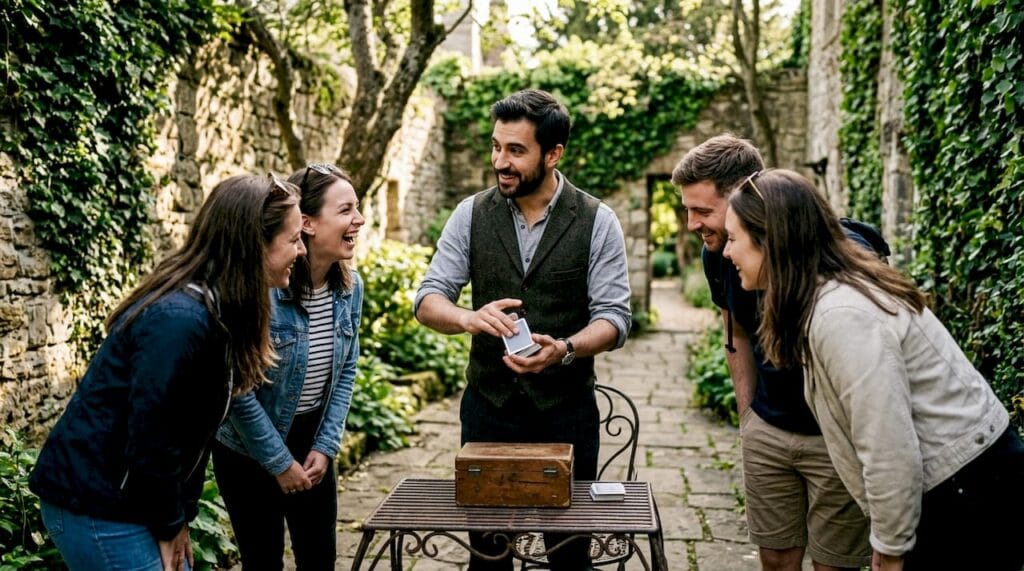
TL;DR:
- Magicians in tours provide active entertainment by combining live magic with cultural storytelling at historic locations.
- This approach creates memorable experiences that enhance engagement and emotional connection to the destination.
Magicians in tours are defined as live performers who integrate close-up magic and narrative illusion directly into the tour experience, transforming passive sightseeing into active, memorable entertainment. The industry term for this format is the “magic walking tour,” a structured experience that blends historical storytelling with live performance at real locations. Oxfordmagictours is the only walking tour in Oxford to offer this format, led by a magician who has performed for the British Royal Family and A-list celebrities. Magic-infused walking tours typically run for 60–90 minutes and combine small-group intimacy with close-up illusions performed at historically significant sites. That combination is what separates them from every other tour format on the market.
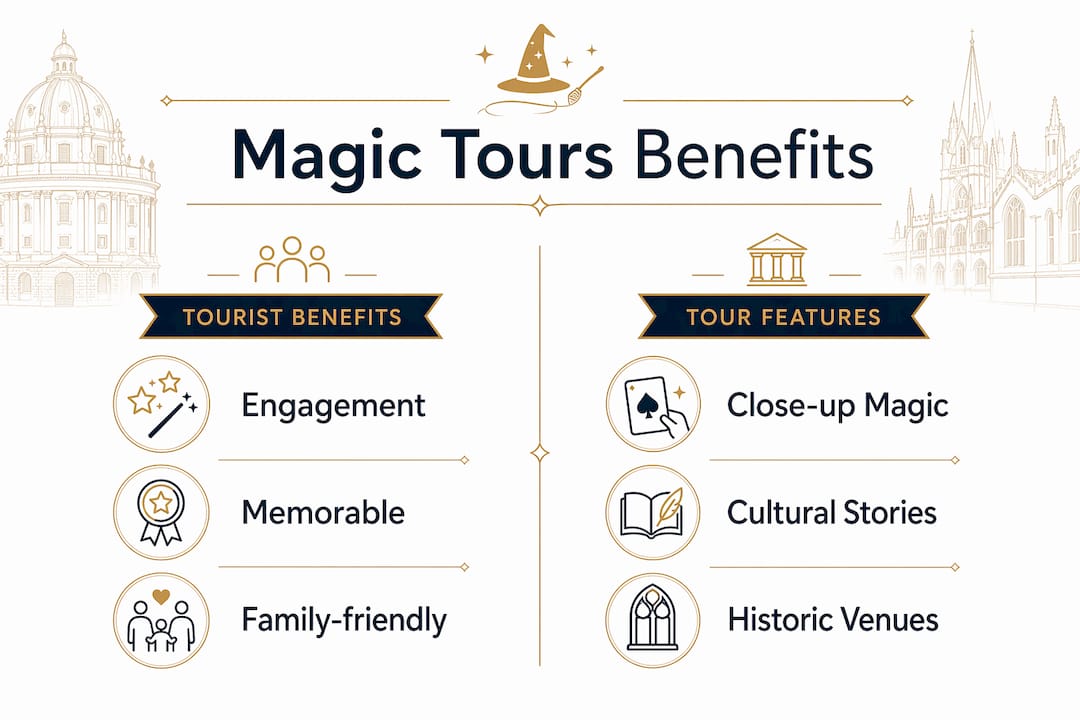
What is the role of magicians in tours?
Magicians in tours serve as both entertainers and storytellers, using live performance to make historical and cultural content stick. A guide reciting facts about a medieval building is informative. A magician performing an illusion tied to the building’s history makes that same fact unforgettable. The difference is emotional engagement, and that is what tourists remember long after the tour ends.
The role breaks down into three clear functions:
- Narrative anchor. The magician connects each performance to the location’s story. At Oxford, for example, a trick performed in a college courtyard can illustrate a tale about a famous alumnus or a scene from a Harry Potter film. The magic becomes a memory hook for the history.
- Audience activator. Audience participation and storytelling engage tourists actively rather than leaving them as passive observers. Tourists who are called upon to hold a card or make a choice become part of the performance, which deepens their connection to the place.
- Atmosphere creator. A magician sets the emotional tone of a tour. Wonder, surprise, and laughter are not incidental. They are the conditions under which people absorb and retain new information most effectively.
Pro Tip: When booking a magic tour, look for one where the magic is written specifically for the locations visited. Generic tricks performed at historic sites add little. Location-specific illusions are what create genuine immersion.
The role of performers in tours has grown significantly as tourists increasingly seek experiences over simple sightseeing. Oxfordmagictours exemplifies this shift, earning five-star reviews and awards by weaving Oxford University history, Harry Potter filming locations, and live magic into a single coherent experience.
How do magicians enhance cultural and historical tours?
Live magic enhances cultural tours by giving abstract history a physical, sensory form. Reading about the history of the Bodleian Library is one thing. Watching a magician produce an object that connects to its story, while standing in front of the building, is something else entirely. The location becomes the stage, and the history becomes the script.
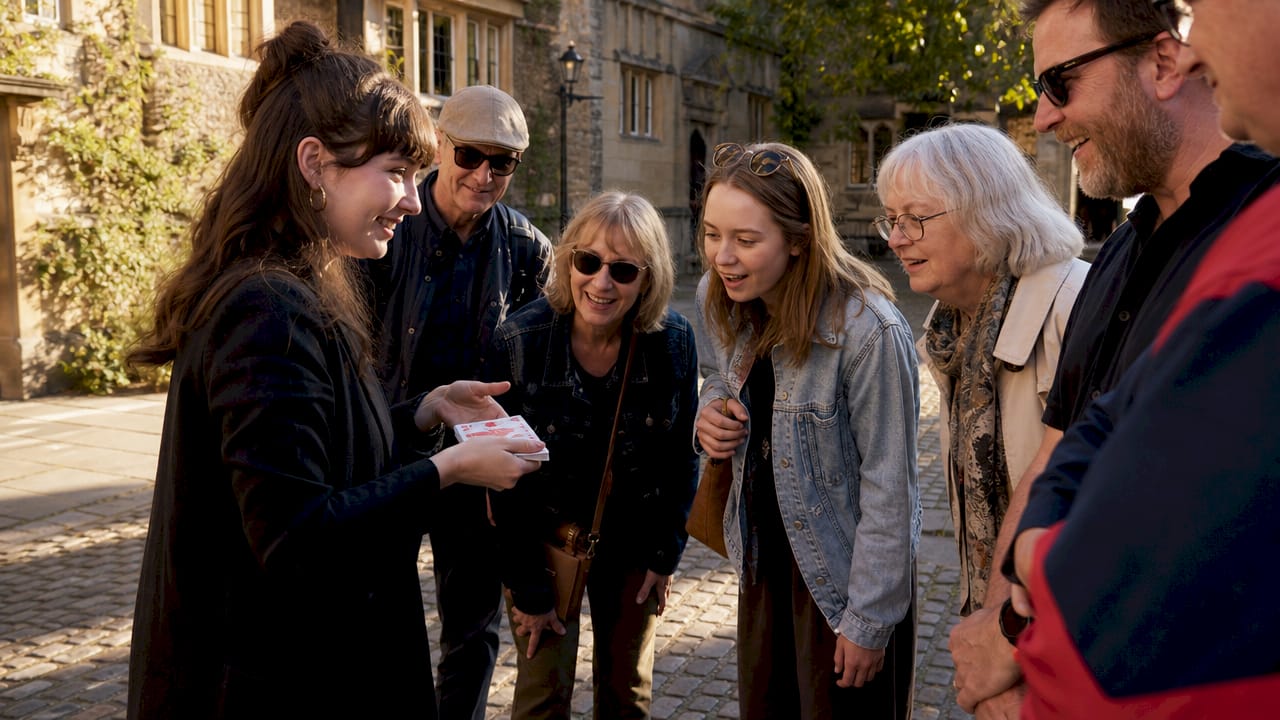
Close-up magic is particularly well suited to walking tours. It requires no stage, no lighting rig, and no distance between performer and audience. A magician can perform inches away from a small group, making the experience feel personal rather than theatrical. That intimacy is impossible to replicate in a large venue or on a bus tour.
Storytelling is the other half of the equation. The best magic performances for tourists are not stand-alone tricks. They are chapters in a larger narrative about the place being visited. Oxfordmagictours structures its performances so that each illusion advances the story of Oxford, from its university colleges to its connections with J.K. Rowling’s wizarding world. The magic and the history reinforce each other.
Magic shows at festivals often incorporate educational talks about illusion history and psychology, adding depth beyond pure entertainment. That same principle applies to walking tours. When tourists understand why a trick feels impossible, they engage more deeply with both the performance and the cultural context surrounding it.
How do magic tours differ from traditional magic shows?
The distinction matters because tourists often arrive expecting one and receive the other. A standalone magic show generally lasts 25–30 minutes, with a structured opening, audience participation segment, and a high-impact finale. It is designed for a seated audience in a theatre or event space, and its purpose is pure entertainment.
A magic walking tour operates on a completely different model.
| Feature | Magic walking tour | Traditional magic show |
|---|---|---|
| Duration | 60–90 minutes | 25–30 minutes |
| Setting | Outdoor locations, historic sites | Theatre, event venue |
| Group size | Small, intimate group | Large seated audience |
| Purpose | Entertainment plus cultural storytelling | Entertainment only |
| Performer role | Guide and magician combined | Performer only |
| Tourist role | Active participant | Passive audience member |
The table makes the contrast clear. A magic tour is not a magic show that happens outdoors. It is a guided cultural experience in which magic is the primary storytelling tool. The guided walking tour format demands a performer who can hold a narrative across 90 minutes, adapt to unpredictable outdoor conditions, and connect each trick to a specific location. That is a fundamentally different skill set from performing a polished 30-minute stage act.
The small-group format also changes the dynamic entirely. When ten people watch a magician perform close-up magic in a college courtyard, the experience feels exclusive and personal. When three hundred people watch the same performer on a stage, the spectacle is greater but the connection is weaker. Magic tours trade scale for depth, and most tourists find that trade worthwhile.
Why do unique venues amplify the impact of magic on tours?
Historic venues do not merely host magic performances. They transform them. A trick performed in a centuries-old building carries a weight that the same trick performed in a conference room simply does not. The architecture, the atmosphere, and the history of the space all contribute to the audience’s sense of wonder before a single card is drawn.
The evidence from major magic festivals supports this directly. Historic venues such as Can Balaguer in Palma host close-up magic performances that enhance cultural capital and provide immersive experiences at international magic festivals. The venue’s prestige elevates the performance, and the performance gives the venue a new audience. Both benefit.
The same logic applies to magic tourism events at scale. Abbott’s Magic Get-Together, founded in 1934, attracts over 1,000 visitors during its four-day event, significantly boosting the local economy and creating a town-wide atmosphere of magic. That event demonstrates how a single recurring magic programme can define a destination’s identity for tourists.
Large-scale touring magic groups also illustrate what is possible when multiple performers collaborate. The Band of Magicians performs illusions that are impossible for solo magicians, offering greater entertainment value through collaborative execution of complex tricks. That principle scales down to walking tours. When a magician performs within a historically rich environment, the location itself becomes a collaborator, adding layers of meaning that no stage set can replicate.
- Historic venues signal cultural prestige, attracting tourists who want more than standard sightseeing.
- The ambiance of old buildings primes audiences for wonder before the performance begins.
- Location-specific magic creates a sense that the experience is unique to that place and cannot be replicated elsewhere.
- Heritage settings give magic performances a narrative context that standalone shows lack entirely.
What practical benefits do magicians bring to tourism experiences?
The commercial and emotional case for magicians in tourism is strong. Tourists who experience magic tours consistently report stronger memories of the destination than those who take standard guided tours. That is not a trivial outcome. Memorable experiences drive repeat visits, positive word-of-mouth, and online reviews, all of which directly benefit local tourism economies.
Oxfordmagictours demonstrates this in practice. The tour blends Oxford University history, film locations, and live magic, receiving five-star reviews and awards that reflect high tourist satisfaction. That level of feedback is the commercial proof that the format works. Tourists are not just entertained. They leave with a richer understanding of Oxford than a standard walking tour would provide.
The practical benefits for tourists specifically include:
- Stronger memory retention. Emotional experiences are encoded more deeply in memory. A trick tied to a historical fact makes that fact retrievable long after the tour ends.
- Greater engagement with the destination. Interactive magic performances pull tourists into the story of a place rather than leaving them as spectators of it.
- Entertainment value that justifies the cost. A 90-minute magic walking tour delivers both a guided history lesson and a live performance. Tourists receive two experiences for the price of one.
- Adaptability to different group types. Magic tours work for solo travellers, couples, families, and corporate groups. The format scales without losing its core appeal.
Pro Tip: If you are travelling with children, a magic walking tour is one of the few formats that genuinely holds their attention throughout. The combination of outdoor movement and live performance prevents the attention drift that plagues traditional guided tours.
The impact of magicians on tours extends beyond individual tourists. When a tour operator builds a reputation for outstanding magic performances, it raises the profile of the destination itself. Oxford benefits from Oxfordmagictours not just because tourists visit, but because they leave talking about it.
Key takeaways
Magicians in tours create deeper tourist engagement by combining live performance with cultural storytelling, producing memories and destination loyalty that standard guided tours cannot match.
| Point | Details |
|---|---|
| Magicians are storytellers first | The best magic performances connect each trick to the history or culture of the location visited. |
| Format differs from stage shows | Magic walking tours run 60–90 minutes in small groups, unlike the 25–30 minute standalone show format. |
| Venues amplify the experience | Historic settings add cultural weight to performances, making the magic feel specific to that place. |
| Emotional engagement drives memory | Tourists retain historical facts more effectively when those facts are delivered through live performance. |
| Oxfordmagictours sets the standard | The only Oxford walking tour with live magic, led by a performer with Royal Family and celebrity credentials. |
Why I think most tourists are missing the best version of a city
I have watched tourists walk through Oxford for years. Most of them leave having seen the buildings but not having felt the place. That gap between seeing and feeling is exactly what a magician closes.
The conventional wisdom is that history tours need better guides. I disagree. The problem is not the guide. The problem is the format. A person talking at you while you walk is a lecture with better scenery. A magician performing at you while you walk is an experience. Those are not the same thing, and tourists who have done both will tell you immediately which one they remember six months later.
What I find genuinely interesting about the growth of magic-infused cultural tours is that they are not a gimmick. They are a return to something older. Storytellers have always used spectacle to make their stories land. The medieval mystery plays used theatrical effects. Court entertainers used illusion to hold attention. A magician on a walking tour is doing the same thing, just in a more honest and transparent way.
The tourists who seek out this format tend to be curious, open-minded, and genuinely interested in the places they visit. They are not looking for a theme park. They are looking for a way to connect with a city that goes beyond a photograph. Magic, done well, provides exactly that.
— Shane
Oxfordmagictours: Oxford’s only magic walking tour
Oxfordmagictours is the only walking tour in Oxford that features a live magician, and that distinction is not a marketing claim. It is the result of a format built from the ground up around the idea that live magic and local history belong together. The tour covers Oxford University colleges and Harry Potter filming locations, performed by a magician with credentials that include the British Royal Family and A-list celebrities. It has earned five-star reviews and awards that place it among the most distinctive tourist experiences in the UK. If you are visiting Oxford and want to leave with a genuine connection to the city rather than a collection of photographs, the Oxford magic walking tour is the experience to book.
FAQ
What is a magician tour?
A magician tour is a guided experience that combines live close-up magic with historical or cultural storytelling at real locations. It typically runs for 60–90 minutes in a small-group format, unlike a standalone magic show.
How do magicians enhance tours compared to standard guides?
Magicians use live performance and audience participation to make historical facts emotionally memorable, which standard narration alone cannot achieve. Tourists retain more and engage more deeply when the information is delivered through illusion and story.
How long does a magic walking tour last?
Magic walking tours typically last 60–90 minutes. This is significantly longer than a standalone magic show, which generally runs 25–30 minutes.
Are magic tours suitable for families with children?
Magic walking tours are well suited to families because the combination of outdoor movement and live performance holds children’s attention throughout. The interactive format means children participate rather than simply observe.
What makes Oxfordmagictours different from other Oxford tours?
Oxfordmagictours is the only Oxford walking tour to feature a live magician, covering Oxford University history and Harry Potter filming locations with a performer who has performed for the British Royal Family and A-list celebrities.