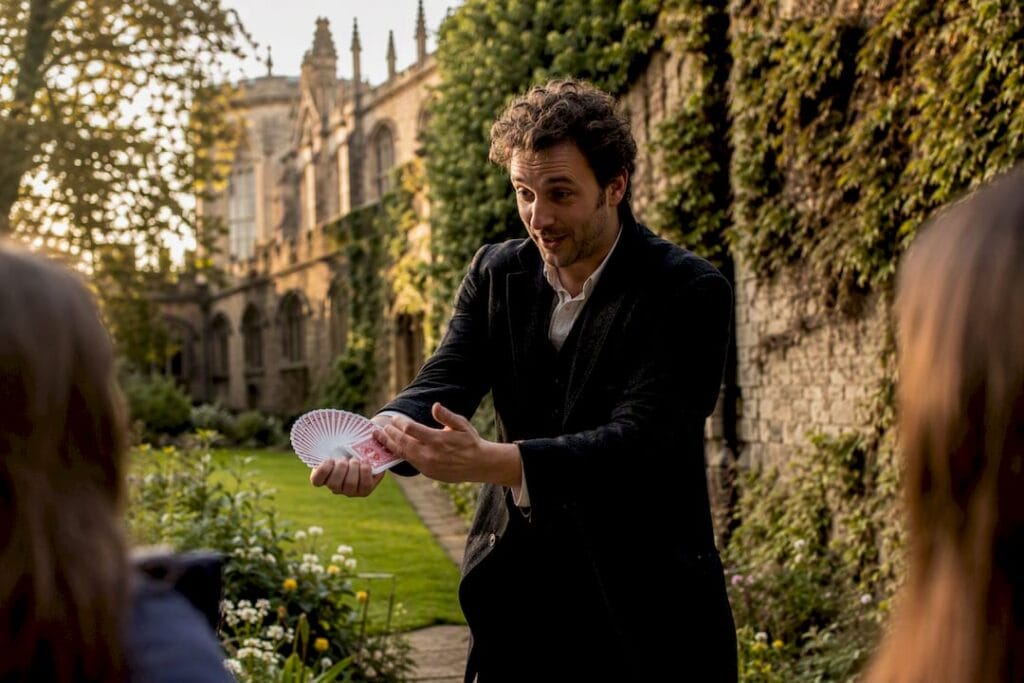
Narrative tourism is travel experience design that uses story structure, myths and personal anecdote, rather than plain fact, to turn visitors into participants in a place’s history. It matters because well-told narrative produces stronger cultural immersion and more memorable visits, according to Tourism Recreation Research. Tourism researcher Dr Gianna Moscardo calls this shift the “story turn”: destinations become living archives, and operators like Oxfordmagictours build entire tours around it.
Key Takeaways
Narrative tourism works because story structure, character, stakes, surprise, produces stronger emotional arousal and more durable memory than plain factual delivery.
| Point | Details |
|---|---|
| Narrative versus story | Narrative is ordered fact; story adds character and consequence, which is what visitors actually remember. |
| Evidence backs the emotion | Peer-reviewed research links anecdote-led guiding to stronger cultural immersion and emotional connection. |
| Surprise cements memory | Live performance and theatrical staging raise emotional arousal, producing more durable “malleable memories.” |
| Vet before you book | Ask how local voices are involved and whether staging is scripted or improvised to avoid heritage-lite tours. |
| Oxfordmagictours as example | Combines Oxford University and Harry Potter locations with live magic staged to echo the story being told. |
Table of Contents
- What is narrative tourism, and how does it differ from ‘story’?
- How does narrative tourism work in practice?
- What evidence supports the benefits of narrative tourism?
- How do you spot a genuinely good narrative tour?
- What ethical issues does narrative tourism raise?
- Where is narrative tourism heading next?
- Oxford Magic Tours: narrative tourism in practice
- Where did narrative tourism come from?
- How does narrative tourism compare with other niche travel styles?
- Why we build tours around story, not fact-lists
- Experience narrative tourism for yourself in Oxford
- Frequently asked questions
- Sources
What is narrative tourism, and how does it differ from ‘story’?
Confusingly, “narrative” and “story” get used interchangeably, but tourism researchers draw a real line between them. A narrative is simply an ordered account of events. A story is narrower: it has characters, stakes, and a consequence that changes something. A guide reciting the dates a college was founded is delivering a narrative. A guide describing the undergraduate who broke curfew, was caught by a proctor, and talked his way out of expulsion is telling a story.
The distinction shapes tour design because only one of these formats sticks in memory. Chronological facts inform; character-driven anecdotes are what visitors repeat over dinner months later.
- Narrative example: “The college was founded in 1379 and rebuilt in the 17th century.”
- Story example: “A student hid a forbidden manuscript here rather than surrender it. The consequences followed him for years.”
Academic work on narrative tourism treats this shift toward story as the mechanism that links heritage sites to stronger local income and more respectful visitor behaviour.
How does narrative tourism work in practice?
Operators draw on a handful of recognisable formats. Themed walking tours are the most common, followed by film and fiction tourism (retracing on-screen locations), live theatrical performance woven into a route, gamified mobile apps that unlock clues at physical waypoints, transmedia experiences spanning app, book and site, and community-led storytelling where residents narrate their own streets.
The techniques underneath these formats matter more than the format itself:
- Anecdote and character rather than dates and statistics.
- Theatrical staging, including costume, pacing and deliberate pauses.
- Surprise or illusion, which spikes attention at a specific moment.
- Sensory detail, smell, sound, texture, that a photo cannot carry.
- Co-creation, where the guide invites visitors to add their own associations to a place.
Research on story-weaving describes this last technique precisely: skilled guides link destination history, local myth and a visitor’s own memories into something collaborative rather than delivered. It treats humans as natural storytellers, homo narrans, rather than passive listeners.
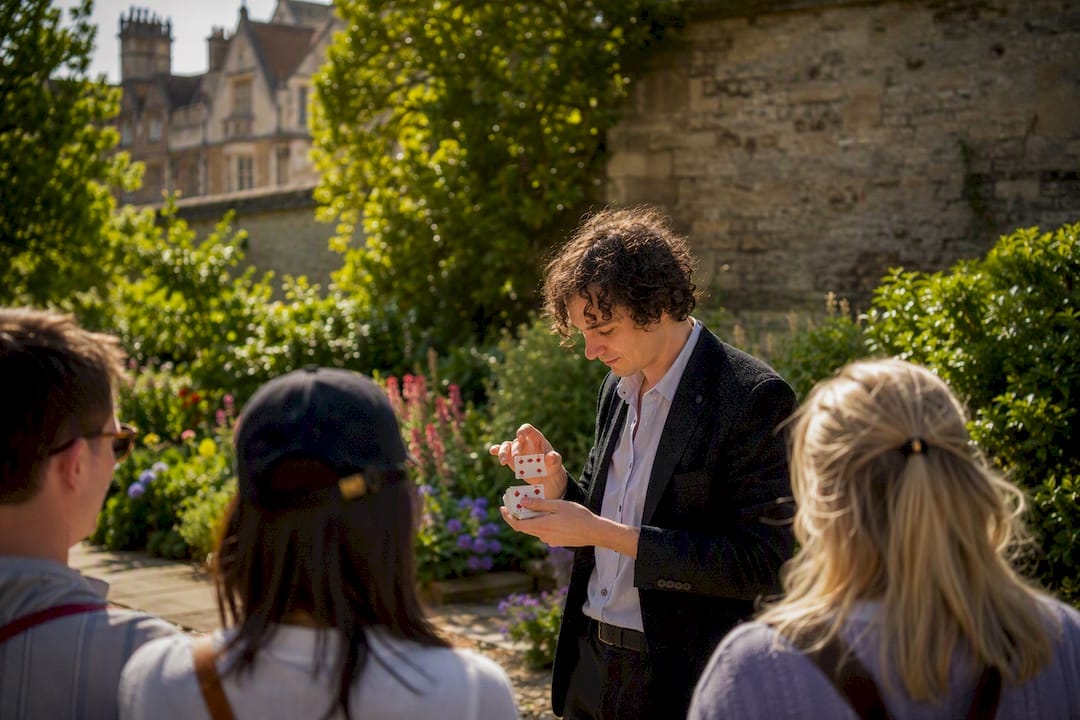
A guide who pauses mid-anecdote to perform a card trick that echoes the story’s theme is using surprise and theatrical staging simultaneously, and it is one of the clearer signals you are in the hands of a narrative specialist rather than a fact-reciter. Oxfordmagictours builds its Oxford routes around exactly this layering, with a professional magician working live illusion into the walk itself.
Pro Tip: Watch how a guide handles a factual question mid-story. A narrative specialist will answer it and loop straight back into the anecdote without losing pace; a weaker guide breaks character entirely and the spell drops.
What evidence supports the benefits of narrative tourism?
The immersion claim isn’t just marketing language. Tourism Recreation Research found that narrative-driven experiences produce significantly stronger cultural immersion, with visitors reporting deeper emotional connection when guides lean on anecdote and myth instead of pure fact.
The mechanism is partly physiological. Experiences built on surprise or live performance raise emotional arousal, and arousal is closely tied to how durably a memory encodes, according to research on memorable tourism experiences. This is where the idea of “malleable memories” comes from: a visit reshaped by a strong emotional beat gets remembered more vividly than one delivered flat.
There’s a wellbeing angle too. A study tracking tourists found that experiences prompting recollection and retelling afterward improved subjective wellbeing, with storytelling acting as the link between the visit and the boost. Framing a visit using recognisable narrative arcs, the Hero’s Journey being the most studied example, can also increase perceived personal transformation.
Three consistent findings across the literature:
- Anecdote and myth outperform pure fact for cultural immersion.
- Surprise and live performance raise emotional arousal and memory durability.
- Storytelling mediates the link between a visit and how satisfied travellers feel afterward.
How do you spot a genuinely good narrative tour?
Not every tour billed as “storytelling” delivers on it. A few signals separate the real thing from a script with adjectives added.
- The guide has had actual storytelling or performance training, not just a memorised fact sheet.
- Sensory or theatrical elements appear naturally, timed to specific locations rather than bolted on.
- Local voices contribute to the material, not just a marketing department.
- There’s visible ethical care, community involvement is mentioned unprompted, not defensively.
Before booking, it’s worth asking a few direct questions: How are local voices included in the material? Is any theatrical staging scripted, improvised, or a mix? How much audience participation should you expect, and is that comfortable for your group?
Watch for these red flags:
- “Heritage-lite” scripts that sand every rough historical edge into something inoffensive and forgettable.
- Factual errors delivered with total confidence, a sign the operator prioritises performance over accuracy.
- Living cultures presented as museum exhibits rather than ongoing communities.
The Plantrip glossary on narrative tourism makes a similar case: authenticity and local engagement are the hallmarks worth checking for before you hand over payment.
What ethical issues does narrative tourism raise?
Turning a place’s history into a story creates real risk alongside the benefit. Misrepresentation is the obvious one, smoothing a complicated or painful history into something more palatable for a paying audience. Appropriation is subtler: taking a community’s stories without involving that community in telling them, or in the proceeds. Uneven economic benefit follows naturally when tour revenue never reaches the people whose heritage is being sold.
Operators can reduce this in concrete ways: consulting communities before building a route, sharing revenue with local storytellers, and co-creating scripts rather than writing about a place from the outside.
Pro Tip: Ask directly whether local residents or historians were involved in developing the tour’s material. A confident, specific answer is a good sign; a vague one usually means they weren’t.
Where is narrative tourism heading next?
Four shifts are shaping the next few years. Destinations are increasingly built as “story worlds” spanning app, book, film and physical site rather than a single leaflet, a shift the trends literature on tourism’s story turn documents in detail.
- Transmedia storytelling, where a single narrative unfolds across multiple formats.
- Co-creation, with tourists acting as prosumers who help shape and share the story, not just consume it.
- Mobile gamification, unlocking narrative content tied to physical location.
- Sustainability-first planning, with community benefit built into the story from the start rather than added afterward.
Oxford Magic Tours: narrative tourism in practice
Oxfordmagictours runs walking tours across Oxford University landmarks and Harry Potter filming locations, built around live magic performed by a professional magician who has entertained the British Royal family and A-list celebrities.
What sets the format apart is the layering. Guides weave university history and film trivia into a single narrative thread, then a live illusion lands at a moment tied directly to that story, not as a separate act bolted onto a fact tour. Visitors should expect:
- A route through recognisable university and filming locations, narrated as a single continuous story rather than a list of stops.
- Live magic and illusion staged to echo whatever the guide has just been describing.
- Themed variants, including ghost tours, plus custom private tours for groups wanting a bespoke narrative.
It’s a working example of what interactive tour design looks like when surprise and theatrical staging are treated as core structure rather than decoration.
Where did narrative tourism come from?
The idea of turning a place’s history into a story is old. Grand Tour guides in the 18th century already leaned on myth and dramatic anecdote to keep young aristocrats engaged with ruins and galleries. What changed is the deliberateness of the design.
Heritage tourism through much of the 20th century leaned on plaques, chronological fact and expert lecture. It informed, but it rarely moved anyone. The shift toward deliberate story structure, character, stakes, resolution, tracks alongside the wider rise of experience design across retail and hospitality from the 1990s onward, where operators realised customers remembered and retold experiences, not features.
Digital technology accelerated the change dramatically. Mobile devices and social media gave every visitor a publishing platform, and the academic literature on tourism’s story turn identifies this as the real inflection point: user-generated content and gamification meant tourists stopped being an audience and became co-authors of destination stories, sharing their own version as they went. Film and fiction tourism added another layer again, as visitors began travelling specifically to stand inside stories they already knew from a screen or a page, Harry Potter locations being one of the clearest modern examples.
How does narrative tourism compare with other niche travel styles?
Several niche tourism categories overlap with narrative tourism without being identical to it, and the differences matter when you’re choosing what kind of trip you actually want.
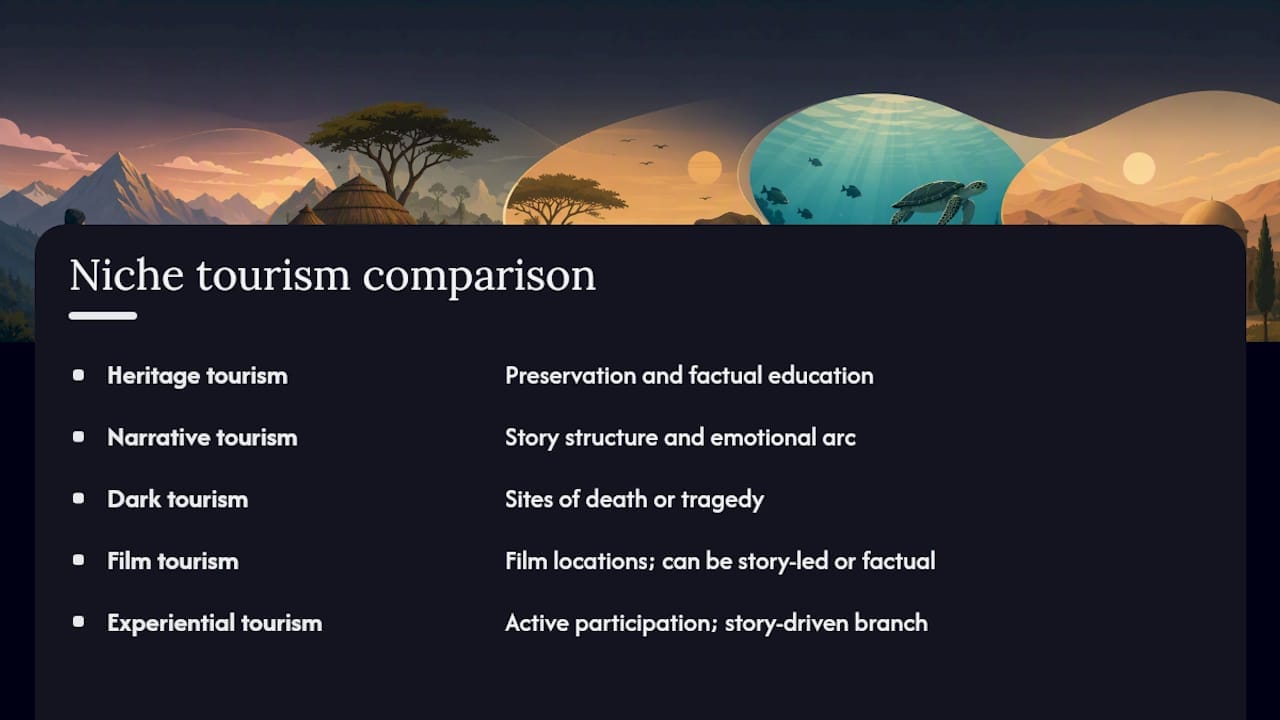
Heritage tourism focuses on preservation and factual education, visiting sites because they are historically significant. Narrative tourism can use heritage sites, but it prioritises the emotional arc of the telling over comprehensive factual coverage.
Dark tourism visits sites associated with death or tragedy, largely for the gravity of the place itself. Narrative tourism sometimes incorporates dark material, ghost tours are an obvious crossover, but its defining feature is storytelling technique, not subject matter.
Film tourism takes visitors to locations from screen or literature. It’s frequently a vehicle for narrative tourism (a guide telling the story of a scene while standing in the filming location) but film tourism can also be delivered as flat, fact-based sightseeing with no story-craft at all.
Experiential tourism is the broadest category, any travel prioritising active participation over passive sightseeing. Narrative tourism sits inside this umbrella specifically as the branch that uses story structure, character and emotional arc as its main design tool, rather than adventure, food or wellness activities.
The overlap explains why so many strong tours borrow from two or three of these categories at once. A ghost-and-film walking tour with a live performer touches heritage, dark tourism, film tourism and experiential design simultaneously, with narrative technique holding the whole thing together.
Why we build tours around story, not fact-lists
We design routes around character and consequence because that’s what people actually remember and repeat afterward, not because it sounds appealing on a brochure. A guide who only recites dates is giving visitors information they could have read online… The story is the point; the facts are just the scaffolding underneath it.
Experience narrative tourism for yourself in Oxford
Reading about narrative tourism only gets you so far. Oxfordmagictours is where the theory in this article plays out live: a route through Oxford University’s colleges and genuine Harry Potter filming locations, with a professional magician weaving illusion directly into the story at each stop rather than performing a separate side act. It’s built on exactly the techniques covered above, anecdote over fact, surprise timed to the narrative, and a guide trained to hold character while still answering your questions.
Browse the main walking tours page to see current routes and times, or head straight to the Oxford city walks listing to check availability and book your place.
Frequently asked questions
What is narrative tourism in simple terms?
It’s travel experience design built around story structure, characters, stakes, and resolution, rather than plain factual explanation, with the aim of making a visit more immersive and memorable.
Is narrative tourism the same as heritage tourism?
No. Heritage tourism centres on preserving and educating about historically significant sites. Narrative tourism can use those same sites but prioritises emotional storytelling technique over comprehensive factual coverage.
How do I know if a tour is genuinely narrative-driven?
Look for guides trained in storytelling or performance, sensory and theatrical elements timed to specific locations, and evidence that local voices shaped the material rather than a marketing team alone.
Does narrative tourism actually improve the visitor experience, or is it just marketing?
Peer-reviewed research, including findings from Tourism Recreation Research, links narrative-driven experiences to measurably stronger cultural immersion and emotional connection compared with fact-only delivery.
What should I ask before booking a narrative tour?
Ask how local voices are included in the material, whether theatrical staging is scripted or improvised, and how much audience participation is expected during the walk.
Sources
- Narrative-driven tourism boosts cultural immersion — Tourism Recreation Research (2024)
- Emotional arousal and memorable tourism experiences — ScienceDirect (2020)
- Story turn in tourism practice and futures — James Cook University research (JCU) (2019)
- Story-weaving: homo narrans, popular culture and the role of stories in tourism (2024)
- Effects of tourism experiences on tourists’ subjective well-being through recollection and storytelling — SAGE (2022)