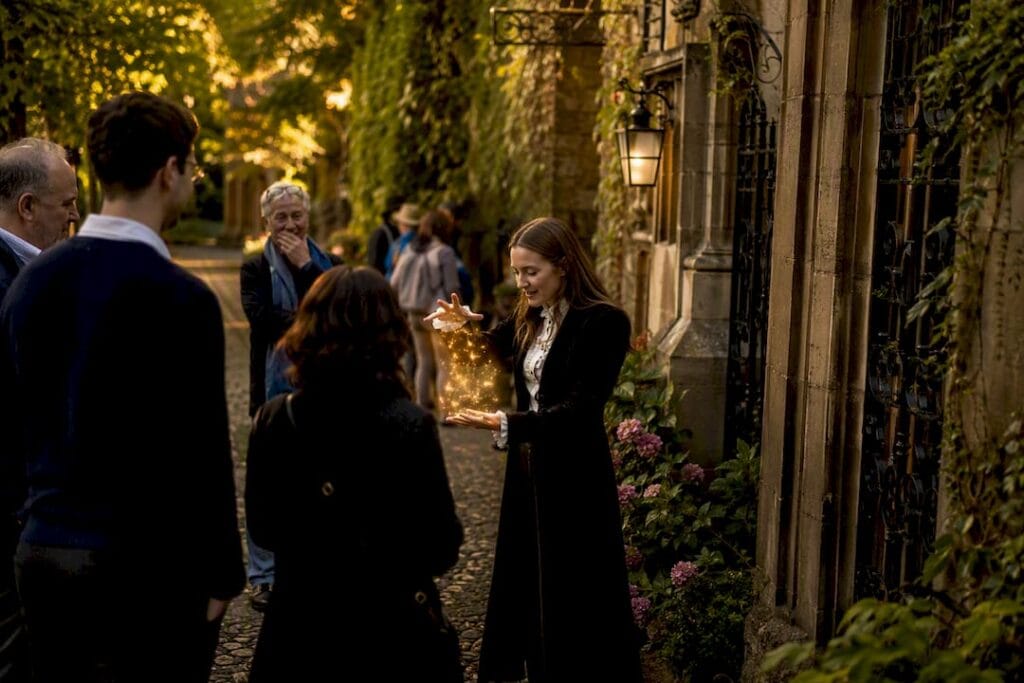
A filming location is any real place used to shoot a film or TV scene instead of a purpose-built soundstage or backlot. It’s the setting, not the set.
- A cobbled Oxford street standing in for a fictional wizarding town
- A private dining hall doubling as a boarding-school refectory
This explainer covers why productions bother leaving the studio, how they secure these places, and how you can track one down yourself.
Key Takeaways
Filming locations are real-world sites chosen for authenticity, and most productions blend location shoots with studio work to balance realism against control.
| Point | Details |
|---|---|
| Definition matters | A filming location is a real site used instead of a soundstage, chosen for authenticity and scale. |
| Hybrid shoots are common | Exteriors are often filmed on location while interiors move to a studio for technical control. |
| Permits drive the process | Location managers and film offices handle permits, insurance, and site logistics before shooting begins. |
| Verify before visiting | Cross-check databases like movie-locations.com and recent Street View imagery to confirm access and accuracy. |
| Guided tours add context | A guided walk explains why a site was chosen, not just where it is. |
Table of Contents
- What does “location shooting” actually mean?
- Why do productions choose real locations over a studio?
- How do films use the same location differently?
- How are filming locations found and secured?
- Where can you look up and visit real filming locations?
- Which filming locations became famous in their own right?
- When does a guided tour beat a self-guided visit?
- Where to research filming locations further
- What’s overrated about the way people talk about filming locations?
- Frequently asked questions
- Sources
What does “location shooting” actually mean?
Location shooting means filming on a real site rather than a constructed set, and a “practical location” is the industry term for that real place once it’s chosen. It can be indoors or outdoors, urban or rural, and it rarely plays itself on screen. A filming location is frequently dressed up, disguised, or simply asked to stand in for somewhere else entirely.
Three examples show the range:
- A quiet residential street redressed as a 1940s wartime scene
- A stately home used as a fictional royal residence
- A university cloister filmed to represent a completely different city
None of these places were built for cameras. They were borrowed.
Why do productions choose real locations over a studio?
Authenticity is the main draw. Real stone, real light, real weather, and real scale are hard to fake convincingly, and audiences notice when they’re missing. Locations also give art departments texture that a painted backdrop simply can’t replicate.
The trade-offs are just as real:
- Uncontrolled noise from traffic, aircraft, or nearby residents
- Weather delays that can derail a shooting schedule overnight
- Permits, insurance, and access agreements that take weeks to arrange
- Variable costs from travel, accommodation, and site fees
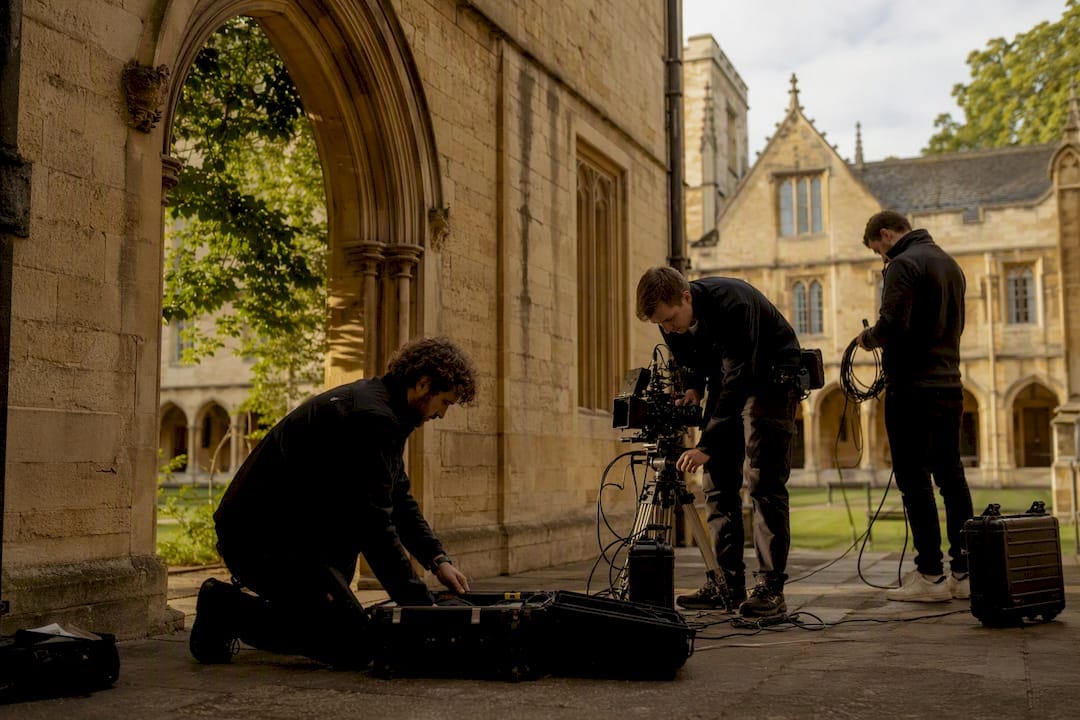
Many productions split the difference, balancing studio work with Film production, video & photography to combine controlled interiors with authentic locations. Exterior scenes get filmed on location for authenticity, while interiors move to a soundstage where lighting, sound, and schedule stay predictable.
Pro Tip: If a scene needs both grandeur and total technical control, expect a hybrid shoot: the establishing shot is real, the close-up dialogue probably isn’t.
How do films use the same location differently?
Not every location does the same job. Productions typically use them in one of four ways.
- Hero locations carry key scenes and get the most screen time and set dressing
- Stand-in locations substitute for a place the story is actually set in, often for budget or access reasons
- Second-unit shoots capture scenic or establishing footage without the main cast present, as second-unit photography often does
- Background exteriors appear briefly, giving a sense of place without carrying dialogue
A grand hall might serve as a hero location for a banquet scene, while a nearby cloister only appears for three seconds of walking footage. Interiors, meanwhile, tend to migrate to a studio once the production needs multiple takes, controlled sound, or a redressed set for a different scene entirely.
How are filming locations found and secured?
Getting from an empty street to a working film set follows a fairly consistent chain of people and paperwork.
- A location scout researches and photographs candidate sites against the script’s needs
- A location manager shortlists options and negotiates access with owners or councils
- The production applies for permits, insurance, and any required road or crowd closures
- Local film offices are contacted for listings, guidance, or fast-track approvals
- On shooting day, the location manager oversees site logistics, from parking to noise control
A location manager exists precisely because locations introduce risks a studio never has: unpredictable acoustics, weather, and public access.
Before any camera rolls, most productions need to confirm:
- Written permission from the property owner or council
- Public liability insurance for cast, crew, and equipment
- Parking, power, and welfare arrangements for the crew
- A community notice if filming will disrupt residents or traffic
Where can you look up and visit real filming locations?
Several databases exist specifically to catalogue where films and shows were shot. Movie-locations lists thousands of sites with map pins and GPS coordinates, letting you search by film title or city. Wikipedia’s own entry on filming location is a solid starting point for background and cross-referencing, while The Movie Database offers crowd-sourced stills and contributor notes that help verify older or more obscure productions.
Before you turn up somewhere, run through a short checklist:
- Confirm whether the site is public land or private property
- Check opening times if it’s a business, museum, or stately home
- Look at recent Google Street View imagery to see what’s actually changed
- Be considerate of residents living at or near the site
Independent visits work well for well-documented public sites. Guided tours make more sense when a location is tricky to access, easy to misidentify, or richer with context than a map pin can offer. Researching properly before you go, as film-location researchers recommend, matters just as much for a quiet residential street as it does for anywhere more famous.
Pro Tip: Never rely on a single source. A location tagged on one fan forum might be outdated or simply wrong, so check it against at least two databases before you plan a trip around it.
Which filming locations became famous in their own right?
Some places became tourist attractions purely because of what was filmed there.
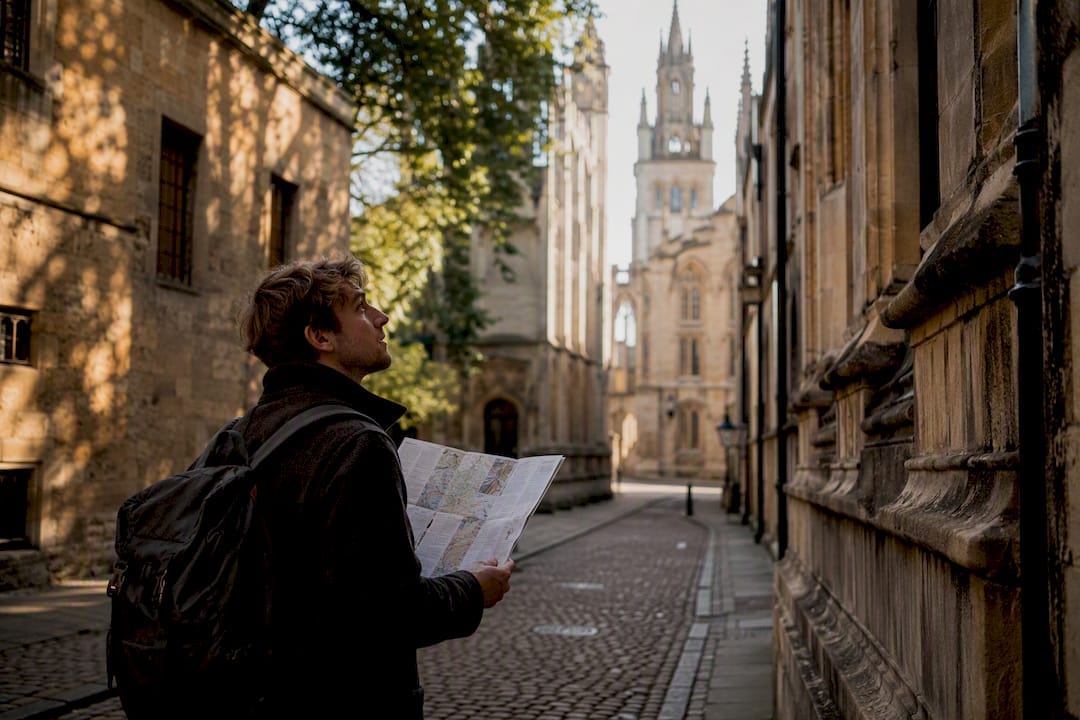
- Christ Church, Oxford turned its dining hall and cloisters into instantly recognisable backdrops for a global franchise
- Dubrovnik’s Old Town became inseparable from a fictional capital city in the public imagination
- The Scottish Highlands now draw visitors chasing sweeping landscape shots from countless productions
- New York’s brownstone streets have appeared as backdrops so often they’ve become cinematic shorthand for the city itself
A single hit film can rewrite a place’s public identity for decades, turning quiet streets into destinations that outlast the production itself.
When does a guided tour beat a self-guided visit?
Standing outside a filming location tells you what it looks like. It rarely tells you why it was chosen, what happened during the shoot, or which detail the cameras deliberately hid. Oxfordmagictours runs walking tours of Oxford’s university landmarks and Harry Potter filming locations, pairing that history with live magic from a performer with genuine Royal and celebrity credits.
A guided walk earns its keep in a few situations:
- You’ve got limited time and want the story, not just the postcode
- You want the layered history behind a site, not just a screen credit
- You’re travelling with a family or group who’ll enjoy live entertainment alongside the history
Combining eight centuries of university history with the exact spots used on screen, plus a magician who has performed for the British Royal family, turns a walk past old buildings into something visitors actually remember.
Where to research filming locations further
Start with Movie-Locations.com for map pins and GPS data, Wikipedia’s filming location entry for background, and The Movie Database for crowd-sourced stills. For production-side queries, contact your local film office directly, or explore Oxfordmagictours’s guided walking tours for a curated visit.
What’s overrated about the way people talk about filming locations?
The conventional advice treats location-hunting as a solved problem: find the address, take the photo, move on. That undersells how much a location’s meaning depends on context you can’t get from a map pin. A cloister photographed a thousand times on Instagram still won’t tell you which director chose it, why, or what was digitally removed from the final cut.
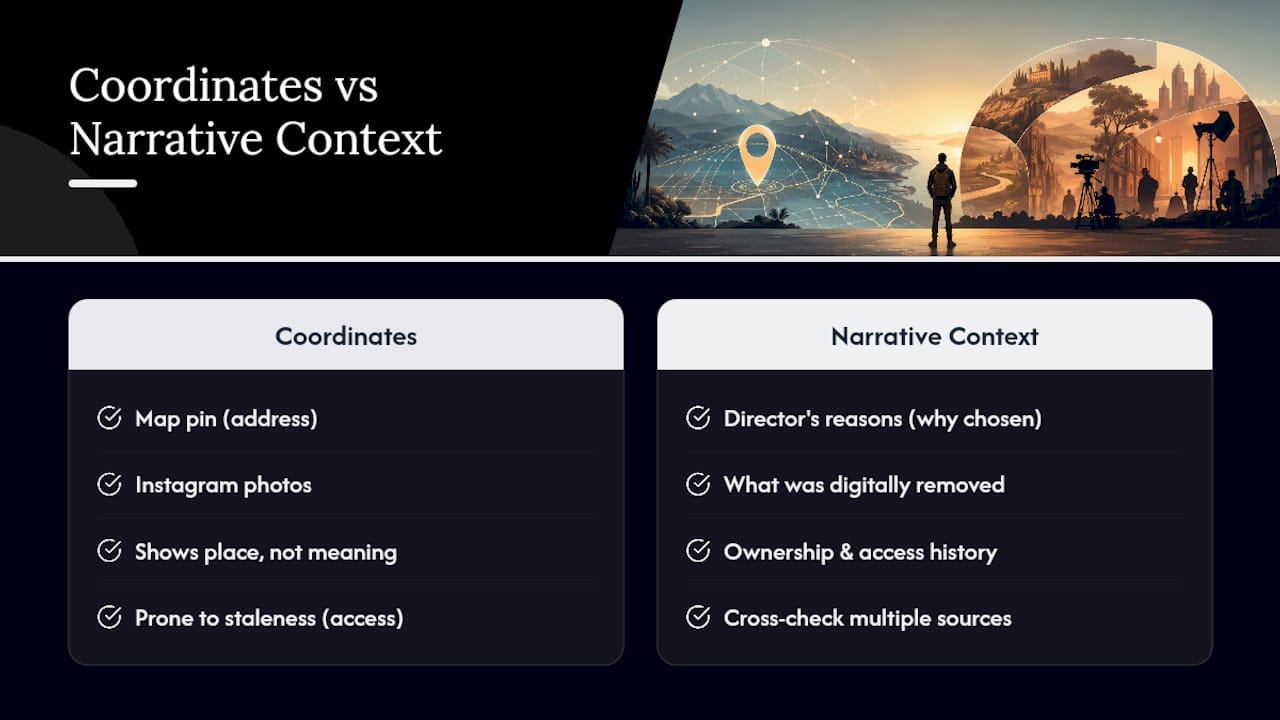
Casual researchers also underestimate how quickly location data goes stale. Buildings change hands, access rules shift, and fan forums repeat errors for years. Cross-checking multiple sources isn’t optional diligence, it’s the only way to avoid turning up somewhere that’s since become private property.
If there’s one thing worth prioritising, it’s this: treat a filming location as a story first and a coordinate second. The address gets you there. The context is what makes the trip worthwhile.
Frequently asked questions
What’s the difference between a filming location and a set?
A filming location is a real place, while a set is purpose-built, usually on a soundstage or backlot, and constructed specifically for the camera.
Can anyone visit a famous filming location?
Many are public streets, parks, or buildings you can visit freely, but plenty of iconic addresses are private homes or working businesses that require permission or discretion.
How do I find where a specific film was shot?
Search dedicated databases like Movie-Locations.com or check the film’s Wikipedia filming location entry, then cross-reference with recent photos before planning a visit.
Why do productions film in Oxford specifically?
Oxford’s historic colleges, cloisters, and dining halls offer centuries-old architecture that’s genuinely difficult to replicate on a soundstage, which is why it’s appeared in major franchises and continues to attract productions.
Is it legal to film or photograph at a filming location?
Public land generally allows photography, but private property, including many stately homes and college interiors, requires permission from the owner, so always check access rules before you go.
Sources
- Location shooting — Wikipedia
- Movie-locations
- Studio vs location shooting — Captiv Creative
- Location — Tools for Film glossary
- How to research a celebrity home or filming location before visiting — Kivo Mind