
Harry Potter fans and families searching for something unforgettable often find ordinary sightseeing leaves everyone wanting more. Oxford’s walking tours are more than just strolls through famous streets—they are immersive adventures where live entertainment turns history into vivid storytelling. Families can expect multi-dimensional sensory experiences that spark curiosity for both young and old, adding excitement to every step as guides blend magic, performance, and Oxford’s iconic heritage into one unforgettable journey.
Table of Contents
- Walking Tours Defined And Frequent Misconceptions
- Types Of Walking Tours In Oxford
- What Makes Walking Tours Engaging
- Role Of Live Entertainment In Tours
- Comparing Walking Tours With Other Activities
Key Takeaways
| Point | Details |
|---|---|
| Engagement | Walking tours offer active participation, transforming passive sightseeing into immersive experiences through storytelling and physical exploration. |
| Variety | Oxford’s walking tours cater to diverse interests, including history, literature, and ghost stories, allowing for personalised exploration. |
| Emotional Connection | Tours create profound connections between participants and the historical narrative, inviting deeper understanding of cultural heritage. |
| Live Entertainment | Integrating performance arts enhances the experience, making historical narratives dynamic and engaging. |
Walking Tours Defined And Frequent Misconceptions
A walking tour is far more than simply strolling through a location with a group of strangers. Complex sensory experiences of movement reveal these journeys as intricate encounters that engage participants beyond typical tourist activities. Walking tours transform urban landscapes into living narratives, connecting travellers with historical spaces through immersive storytelling and physical exploration.
Common misconceptions about walking tours often stem from oversimplified expectations. Many tourists assume these experiences are merely passive sightseeing, but they actually represent dynamic interactions between participants, guides, and environments. Key misunderstandings include:
- Believing walking tours are only about seeing landmarks
- Thinking tours are uniformly structured and predictable
- Assuming all guides offer similar storytelling experiences
- Expecting minimal physical engagement
In reality, walking tours are rich, multisensory journeys that blend historical knowledge, physical movement, and emotional connection. They invite participants to experience spaces through multiple perspectives, transforming traditional tourism into an interactive adventure.
To clarify common misunderstandings, here is a summary contrasting major misconceptions with the realities of walking tours:
| Misconception | Reality |
|---|---|
| Only about viewing landmarks | Involves active engagement with culture |
| Uniform and predictable | Styles and formats vary widely |
| All guides present similarly | Storytelling differs with each guide |
| Minimal physical activity | Requires attentive, immersive participation |
The most compelling walking tours transcend simple geographical navigation. Emotional engagement becomes paramount, with skilled guides creating narrative landscapes that breathe life into historical locations. Participants don’t just observe – they actively participate in unfolding stories, making each tour a unique, personal experience.
Pro tip: Always wear comfortable walking shoes and bring an open mind to truly appreciate the nuanced storytelling of a walking tour.
Types Of Walking Tours In Oxford
Oxford offers a diverse range of walking tours tailored to multiple interests, ensuring visitors can explore the city’s rich heritage through multiple thematic lenses. These tours transform historical spaces into immersive storytelling experiences, allowing participants to engage deeply with Oxford’s multifaceted cultural landscape.
The primary categories of walking tours in Oxford include:
- Historical Tours: Exploring centuries of academic and architectural history
- Literary Tours: Tracing paths of famous writers and literary connections
- Harry Potter Tours: Discovering filming locations and magical inspirations
- Architectural Tours: Examining collegiate and urban design intricacies
- Ghost and Mystery Tours: Uncovering dark narratives and supernatural legends
Each tour type offers a unique perspective on Oxford’s complex narrative. Thematic walking tours provide more than simple geographical navigation – they create immersive experiences that connect visitors emotionally with the city’s distinctive character. Skilled guides transform ordinary streets into living narratives, revealing hidden stories behind iconic landmarks.
Specialised tours allow visitors to customise their exploration based on personal interests. Whether tracing scholarly traditions, exploring cinematic locations, or delving into architectural marvels, Oxford’s walking tours offer something for every curious traveller. These experiences transcend traditional sightseeing, inviting participants to become active participants in the city’s ongoing story.
Below is a comparison of distinctive walking tour types available in Oxford and their core experiences:
| Tour Type | Central Focus | Unique Experience |
|---|---|---|
| Historical | University and city history | Discover origins and traditions |
| Literary | Famous authors’ journeys | Follow in writers’ footsteps |
| Harry Potter | Film locations | Explore magical film settings |
| Architectural | Building styles | Understand Oxford’s varied architecture |
| Ghost & Mystery | Legends and folklore | Experience chilling stories on site |
Pro tip: Research tour themes in advance and choose a walking experience that aligns with your specific interests to maximise your Oxford exploration.
What Makes Walking Tours Engaging
Walking tours captivate participants through multi-dimensional sensory experiences that transform ordinary urban exploration into extraordinary journeys. These immersive experiences go far beyond traditional sightseeing, engaging visitors through a unique combination of physical movement, storytelling, and direct interaction with historical environments.
Key elements that make walking tours inherently engaging include:
- Interactive Storytelling: Guides who bring historical narratives to life
- Sensory Exploration: Experiencing locations through multiple perceptual channels
- Physical Movement: Active participation that transcends passive observation
- Personal Connection: Intimate encounters with local culture and heritage
- Spontaneous Discovery: Unexpected insights and hidden urban details
Walkability factors play a crucial role in tour engagement. The combination of accessibility, comfort, and safety transforms a simple walk into a compelling narrative journey. Professional guides curate experiences that connect participants emotionally with the landscape, revealing layers of history, culture, and personal stories that remain invisible to casual observers.

Beyond physical navigation, walking tours create profound psychological connections. They invite travellers to become active participants rather than passive consumers of information. Each step becomes a moment of discovery, each street corner a potential revelation. The intimacy of walking allows for nuanced interactions with urban spaces that other forms of tourism simply cannot replicate.
Pro tip: Choose walking tours with smaller group sizes to ensure more personalised interactions and deeper engagement with local narratives.
Role Of Live Entertainment In Tours
Live entertainment transforms walking tours from ordinary experiences into captivating storytelling adventures that engage participants on multiple sensory and emotional levels. By integrating performance arts with historical narrative, tours become immersive journeys that transcend traditional educational experiences.
The primary elements of live entertainment in walking tours include:
- Interactive Performances: Theatrical interpretations of historical events
- Musical Storytelling: Using music to enhance narrative depth
- Magic and Illusion: Creating memorable, unexpected moments
- Character Reenactments: Bringing historical figures to life
- Spontaneous Audience Engagement: Encouraging participatory experiences
Performance techniques play a crucial role in tour engagement. Skilled entertainers can transform dry historical facts into compelling stories, making learning feel like an exciting adventure. The fusion of education and entertainment ensures that participants remain fully absorbed, connecting emotionally with the location’s rich heritage.
Beyond mere amusement, live entertainment serves a deeper purpose in walking tours. It creates an inclusive environment that breaks down barriers between information and experience. By making historical narratives dynamic and interactive, these performances invite participants to become active explorers rather than passive listeners, turning each tour into a unique, personal journey of discovery.
Pro tip: Choose walking tours that feature live entertainment elements to transform your historical exploration into an unforgettable, multisensory experience.
Comparing Walking Tours With Other Activities
Unlike traditional tourist experiences, walking tours offer intimate urban engagement that fundamentally transforms destination exploration. These tours represent a profound departure from passive sightseeing, inviting participants to become active explorers rather than mere spectators.
Key differences between walking tours and alternative activities include:
- Pace and Interaction: Slow, deliberate exploration versus rapid transit
- Sensory Experience: Multi-dimensional engagement versus visual observation
- Personal Connection: Intimate understanding versus superficial exposure
- Physical Involvement: Active movement versus sedentary experiences
- Narrative Depth: Contextual storytelling versus fact-listing
Comparative tourism approaches reveal walking tours as superior for travellers seeking genuine cultural immersion. Bus tours, audio guides, and digital explorations provide information, but lack the nuanced, embodied experience of physically traversing a landscape. Walking allows participants to absorb subtle environmental details, engage with local communities, and develop a more profound understanding of place.
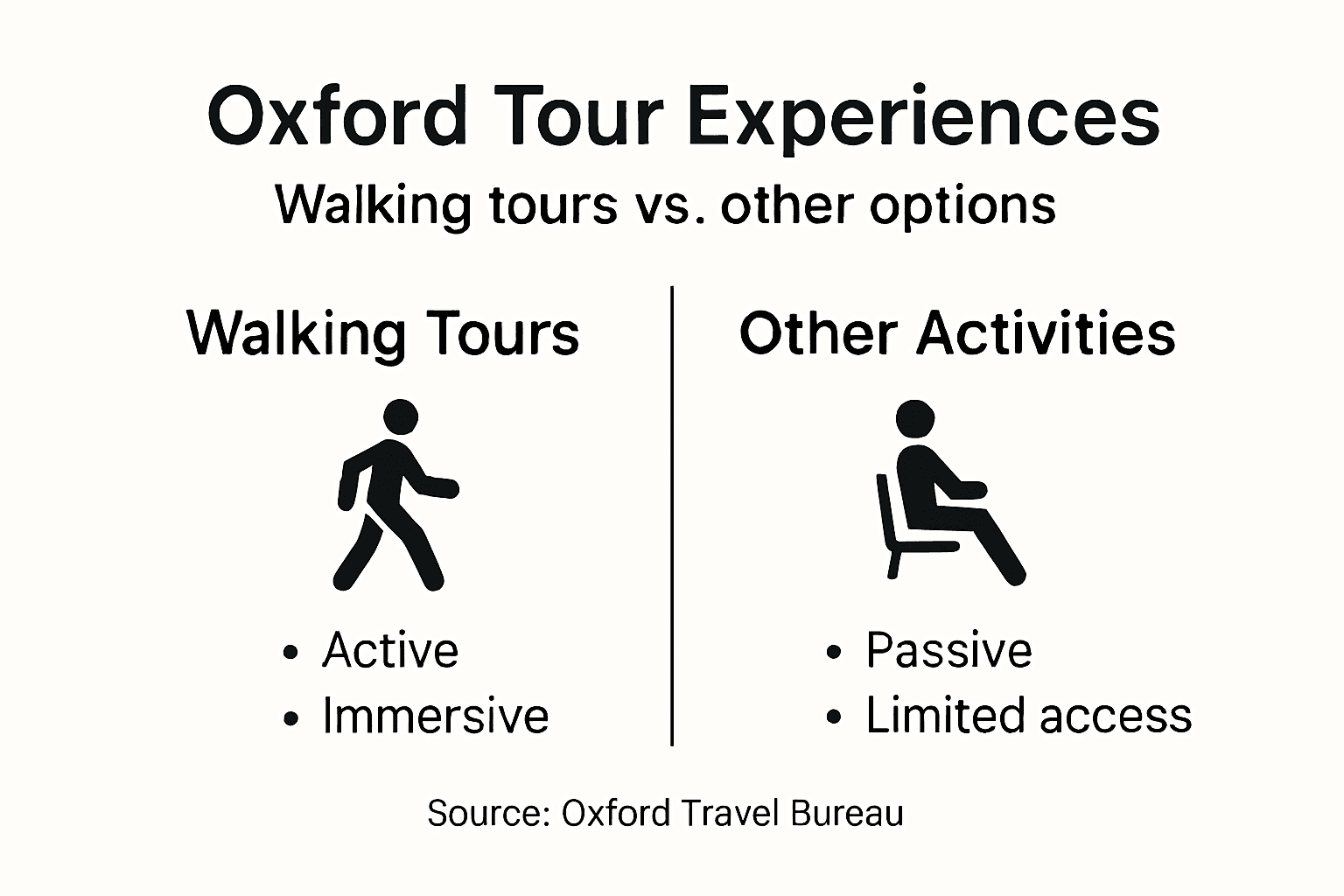
The emerging trend towards sustainable, health-conscious tourism further elevates walking tours. By prioritising slow travel, environmental consciousness, and personal well-being, these experiences offer more than simple navigation – they provide transformative journeys that connect individuals with destinations on fundamental, experiential levels.
Pro tip: Choose walking tours that balance historical information with interactive storytelling to maximise your travel experience.
Discover the Magic Behind Oxford Walking Tours
Many walking tours can feel predictable or overly focused on landmarks alone but the real challenge is finding a journey that offers emotional engagement, interactive storytelling, and a unique, multisensory experience as highlighted in the article Walking Tours Popularity: Why Oxford Walks Inspire. If you want to avoid passive sightseeing and instead become an active participant in Oxford’s rich history and culture this is where our tours stand apart.
At Oxford Magic Tours we combine expert guides with live entertainment featuring a magician who has performed for the British Royal family and A-list celebrities. Our walking tours immerse you fully whether exploring Oxford University or the iconic Harry Potter filming locations. This unique blend of history and magic creates unforgettable narratives that transform your journey into an extraordinary adventure.
Ready for a walking tour unlike any other Choose an experience that goes beyond conventional sightseeing and ignites your curiosity while keeping you enchanted every step of the way Explore more and book today at Oxford Magic Tours to secure a spot on one of the most captivating tours in Oxford.
Frequently Asked Questions
What are the main misconceptions about walking tours?
Common misconceptions about walking tours include the belief that they are solely about viewing landmarks, that they have uniform structures, and that all guides provide similar storytelling experiences. In reality, walking tours involve active engagement with culture and vary widely in style and format.
How do walking tours differ from traditional sightseeing activities?
Walking tours offer a more intimate urban engagement with a focus on active exploration, multi-dimensional sensory experiences, and personal connections to the location, unlike traditional sightseeing that may be more passive and superficial.
What types of walking tours are available in Oxford?
Oxford offers various walking tours, including historical tours, literary tours, Harry Potter-themed tours, architectural tours, and ghost & mystery tours, each providing unique perspectives and immersive storytelling experiences.
How can live entertainment enhance the experience of walking tours?
Live entertainment, such as interactive performances and musical storytelling, transforms walking tours into engaging adventures by making historical narratives dynamic and inviting participants to become active explorers rather than passive listeners.
Recommended
- Why Take Walking Tours: Complete Guide – Walking tours of oxford
- Historical Walking Tour – Why It’s Unforgettable in Oxford
- oxford-city-walks – Walking tours of oxford
- Oxford Tour information – Walking tours of oxford
- Plan perfecto en el Paral·lel: teatro y paella – Restaurant L’Amfora Barcelona
- Restaurante con terraza en Barcelona: el encanto de comer al aire libre en Els Pescadors – Els Pescadors