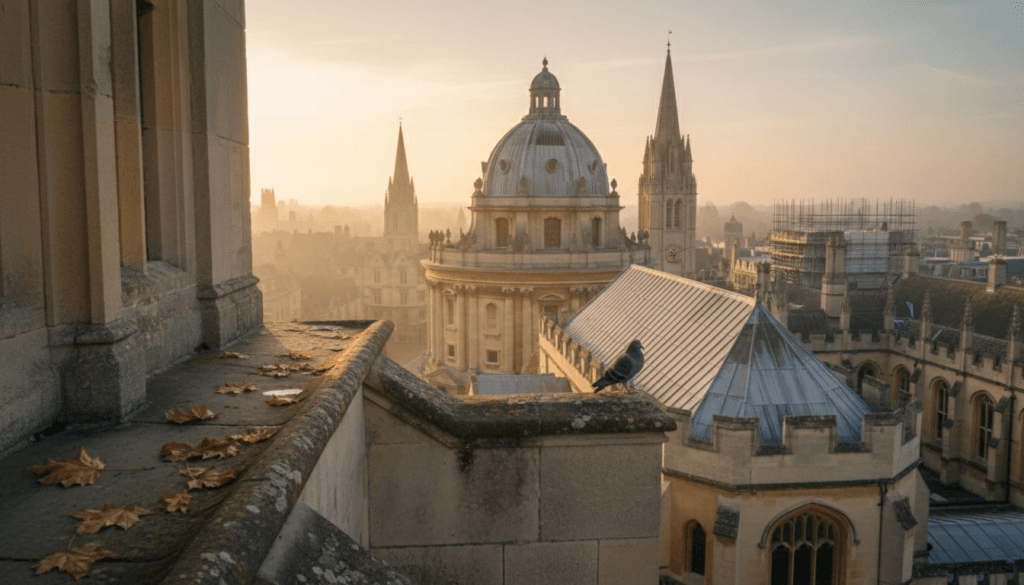
Every fan of magical stories knows the thrill of standing in a real place that inspired their favourite worlds. Oxford captures that feeling with its skyline of historic domes and spires, revealing centuries of academic and architectural achievement. Whether you are drawn by the enchanting sites seen in the Harry Potter films or the allure of ancient college walls, this city promises a blend of historical depth and living imagination at every step.
Table of Contents
- Oxford Architecture’s Unique Identity and History
- Defining Styles: Gothic, Neoclassical, and Beyond
- Famous Buildings and Their Stories
- Harry Potter Locations and Magical Inspiration
- How to Spot Hidden Details on Your Walk
- Common Myths and Tourist Traps to Avoid
Key Takeaways
| Point | Details |
|---|---|
| Architectural Heritage | Oxford’s architecture combines medieval and collegiate designs, showcasing its academic prestige and historical continuity. |
| Distinct Architectural Styles | The city’s buildings feature Gothic and Neoclassical influences, illustrating cultural and intellectual transformations over centuries. |
| Famous Structures | Iconic buildings like the Bodleian Library and Radcliffe Camera embody the rich narrative of scholarly pursuit and innovation in Oxford. |
| Authentic Exploration Tips | To appreciate Oxford’s history, focus on lesser-known details and choose guided tours that provide genuine insights into its architectural heritage. |
Oxford Architecture’s Unique Identity and History
Oxford’s architectural landscape represents a profound narrative of academic prestige and historical continuity, blending medieval stonework with sophisticated collegiate design. The city’s architectural identity emerges from centuries of intellectual evolution, where every spire and quadrangle tells a story of scholarly ambition.
The architectural heritage of Oxford is distinguished by several remarkable characteristics:
- Medieval Stone Foundations: Buildings dating back to the 12th century, constructed with local Headington limestone
- Gothic and Neoclassical Influences: Architectural styles reflecting different historical periods
- Collegiate Design: Intricate layouts emphasising communal academic living
- Preservation of Historic Structures: Careful maintenance of original architectural elements
Oxford Preservation Trust’s assessment reveals the city’s skyline as a carefully curated landscape of historic domes, towers, and spires. These architectural elements are not merely decorative but represent the intellectual and cultural significance of the University of Oxford.
The architectural narrative of Oxford is fundamentally tied to its academic institutions. Each college represents a microcosm of architectural innovation, with buildings that have witnessed generations of scholarly discourse. From the Radcliffe Camera’s circular design to the intricate stonework of Christ Church College, these structures embody more than physical space – they represent intellectual heritage.
Pro tip: When exploring Oxford’s architectural wonders, look beyond the stones and observe how each building reflects the intellectual spirit of its time.
Defining Styles: Gothic, Neoclassical, and Beyond
Oxford’s architectural landscape represents a complex tapestry of design movements, where Gothic and Neoclassical styles interweave to create a uniquely compelling aesthetic. Each architectural period reflects not just aesthetic preferences, but profound cultural and intellectual transformations that shaped the university’s visual identity.
The Gothic Revival movement, in particular, played a pivotal role in Oxford’s architectural development. Gothic architectural principles introduced remarkable design elements that transformed the city’s buildings:
- Pointed arches symbolising vertical aspiration
- Intricate stone tracery and ornamental details
- Emphasis on verticality and spiritual symbolism
- Rich, decorative architectural language
- Structural innovations that celebrated craftsmanship
Neoclassical architecture emerged as a counterpoint to Gothic styles, bringing rational, symmetrical design principles that reflected Enlightenment thinking. These architectural languages coexisted and competed, with Oxford’s buildings representing a sophisticated dialogue between medieval romanticism and classical restraint.
The Radcliffe Camera exemplifies this architectural complexity, blending Palladian principles with distinctly English sensibilities. Its circular design represents more than aesthetic choice – it embodies the intellectual curiosity and architectural innovation that define Oxford’s scholarly landscape.
Pro tip: When exploring Oxford’s architectural wonders, observe how different architectural styles communicate the intellectual spirit of their historical moment.
Here is a summary comparing Oxford’s key architectural styles and their influences:
| Style | Period Dominance | Key Features | Lasting Influence |
|---|---|---|---|
| Medieval Gothic | 12th–16th centuries | Pointed arches, verticality | Spiritual ambience, tradition |
| Gothic Revival | 19th century | Ornamental stonework, tracery | Romanticised medieval forms |
| Neoclassical | 18th–early 19th c. | Symmetry, rational structures | Classical academic identity |
| Palladian/Blended | 18th–19th centuries | Circular forms, classical motifs | Innovation meets tradition |
Famous Buildings and Their Stories
Oxford’s architectural landscape is a treasure trove of historical narratives, where each building tells a profound story of intellectual and cultural evolution. Grade I listed buildings represent the pinnacle of architectural significance, capturing centuries of academic and architectural brilliance.
Some of the most iconic structures that define Oxford’s architectural heritage include:
- Bodleian Library: A magnificent repository of human knowledge
- Sheldonian Theatre: An architectural masterpiece designed by Sir Christopher Wren
- Christ Church College: A stunning example of collegiate architectural complexity
- Radcliffe Camera: A circular landmark symbolising scholarly pursuit
- Oxford Castle: A testament to the city’s multilayered historical narrative
Oxford Castle represents a particularly fascinating architectural journey. Transformed from a Norman fortress into a heritage site, it encapsulates the city’s ability to reinvent and preserve its historical structures. The castle’s evolution from a military stronghold to a cultural landmark mirrors Oxford’s own transformative spirit.

Each building in Oxford is more than mere stone and mortar – they are living narratives of academic achievement, architectural innovation, and cultural resilience. The Bodleian Library, with its intricate Gothic details and expansive collections, stands as a testament to the university’s commitment to knowledge preservation and scholarly excellence.
The following table connects famous Oxford buildings with their architectural and cultural roles:
| Building | Architectural Style | Primary Historical Role | Unique Feature |
|---|---|---|---|
| Bodleian Library | Gothic | Academic repository | Medieval reading rooms |
| Sheldonian Theatre | Classical/Baroque | Ceremonial venue | Wren’s domed ceiling |
| Christ Church | Gothic/Collegiate | College and cathedral | Grand staircase and hall |
| Radcliffe Camera | Palladian/Neoclassical | Library | Circular rotunda design |
| Oxford Castle | Norman/Medieval | Military to heritage site | Surviving Saxon St George’s Tower |
Pro tip: When exploring Oxford’s architectural wonders, pause to imagine the generations of scholars who walked these halls and the stories embedded in every stone.
Harry Potter Locations and Magical Inspiration
Oxford’s architectural landscape serves as an extraordinary canvas for magical storytelling, transforming historic buildings into living backdrops for the Harry Potter film series. University architectural locations have become iconic pilgrimage sites for fans seeking to experience the enchantment that inspired J.K. Rowling’s wizarding world.
The most remarkable Harry Potter filming locations in Oxford include:
- Christ Church College: Inspiration for the Great Hall at Hogwarts
- Bodleian Library: Featuring in multiple magical scenes
- New College Cloisters: Used for Hogwarts corridor sequences
- Divinity School: Transformed into the Hogwarts infirmary
- Magdalen College: Providing stunning architectural backdrops
Christ Church College represents the epitome of magical architectural inspiration. Its Great Hall directly influenced the design of Hogwarts’ dining area, with its soaring Gothic ceilings and magnificent wooden panelling creating an atmosphere of timeless wonder. The college’s architecture seamlessly blends historical authenticity with a sense of magical potential.
Beyond mere film locations, these buildings represent a deeper connection between Oxford’s architectural heritage and magical imagination. The intricate stonework, medieval corridors, and grand spaces whisper stories of intellectual and creative transformation, making Oxford the perfect backdrop for a narrative about extraordinary potential.
Pro tip: Walk slowly through these locations, allowing yourself to absorb the magical atmosphere that inspired one of the world’s most beloved fantasy narratives.
How to Spot Hidden Details on Your Walk
Oxford’s architectural landscape is a treasure trove of subtle details that reveal extraordinary stories, waiting to be discovered by those with a discerning eye. Architectural heritage exploration requires more than casual observation – it demands curiosity and an understanding of historical nuances.
Key strategies for uncovering hidden architectural details include:
- Look for carved stone emblems above doorways and windows
- Examine intricate gargoyle and grotesque sculptures
- Notice subtle architectural transitions between different historical periods
- Inspect decorative metalwork on gates and railings
- Search for historic mason’s marks on stone surfaces
The medieval mason’s marks represent particularly fascinating hidden details. These small, often overlooked symbols were craftsmen’s signatures, carved into stonework as a form of professional identification and pride. Each mark tells a story of individual skill, guild membership, and architectural lineage.
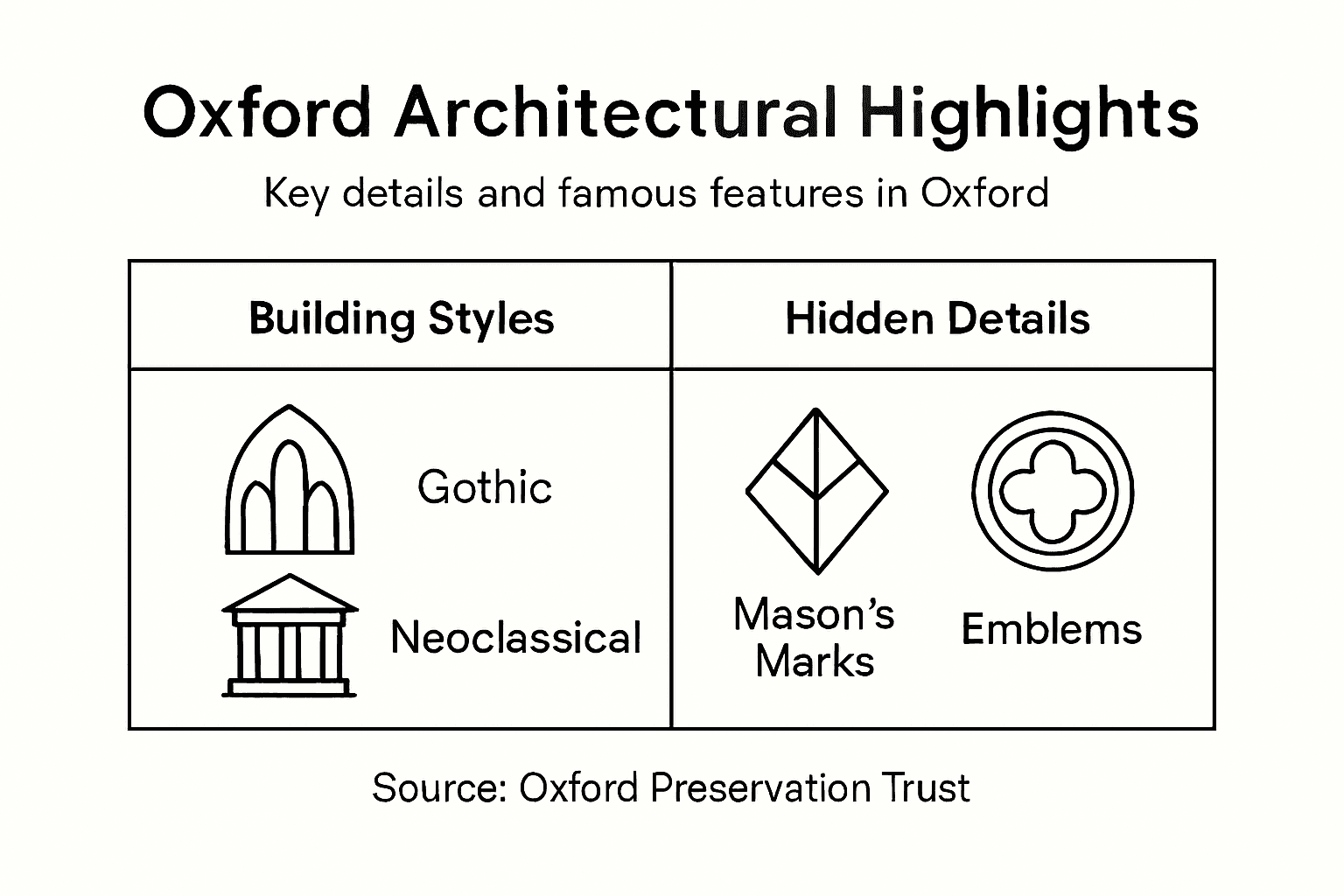
Architectural details often communicate complex historical narratives that extend far beyond their immediate visual appearance. A seemingly ordinary doorway might reveal generations of social history, while an apparently simple stone carving could represent intricate cultural symbolism passed down through centuries.
Pro tip: Carry a small magnifying glass and take your time – the most remarkable stories are often hidden in the smallest architectural details.
Common Myths and Tourist Traps to Avoid
Oxford’s rich historical landscape attracts millions of visitors annually, but navigating its complex tourist environment requires discernment and insider knowledge. Authentic visitor experiences demand more than casual sightseeing – they require understanding the nuanced differences between genuine cultural encounters and superficial tourist attractions.
Common myths and tourist traps in Oxford include:
- Overcrowded ‘Famous’ College Tours: Not all guided tours offer genuine historical insights
- Overpriced Souvenir Shops: Many sell mass-produced items with little local significance
- Rushed Photography Locations: Popular photo spots that offer minimal historical context
- Generic Walking Tours: Lacking depth and scholarly perspective
- Inauthentic ‘Harry Potter’ Experiences: Commercialised locations with minimal real connection
The professional guiding community emphasises the importance of selecting experiences that provide genuine historical and cultural understanding. Tourists often fall into traps of believing every location has equal historical significance, when in reality, some sites offer far more nuanced and authentic narratives about Oxford’s rich intellectual heritage.
Navigating Oxford’s tourist landscape requires a critical approach. Each location tells a story, but not all stories are equally compelling or accurately represented. Discerning visitors seek depth over superficial experiences, understanding that true historical appreciation comes from thoughtful exploration and expert interpretation.
Pro tip: Always verify tour credentials and seek guides with genuine academic or local historical expertise to ensure an authentic Oxford experience.
Discover the True Stories Behind Oxford’s Dreaming Spires with a Magical Twist
Oxford’s architectural heritage invites you to explore centuries of academic brilliance and breathtaking design, yet many visitors miss the deeper stories hidden in stonework and collegiate halls. If you want to move beyond common tourist traps and uncover the authentic narratives behind Gothic arches and Palladian domes, an immersive experience is essential. The article highlights the challenge of distinguishing genuine history from surface-level sightseeing while capturing the intellectual spirit embodied in every spire and corridor.
Our walking tours at Oxford Magic Tours offer a unique solution. With live entertainment by a magician renowned for performing for the British Royal family and A-list celebrities, your journey through Oxford University and Harry Potter filming locations will be unforgettable. Experience:
- Insightful stories about Oxford’s famous buildings like Christ Church and the Bodleian Library
- Magical reflections on the architectural details that inspired the wizarding world
- A chance to spot hidden architectural gems and hear about historic mason’s marks
Don’t settle for rushed, superficial tours. Step into the real magic of Oxford’s dreaming spires today. Visit Oxford Magic Tours now and book your unforgettable walking tour with live magic entertainment before places fill up.
Frequently Asked Questions
What are the key architectural styles found in Oxford?
Oxford features a blend of architectural styles, primarily Medieval Gothic, Gothic Revival, Neoclassical, and Palladian influences, each reflecting distinct historical periods and cultural transformations.
How does the architecture of Oxford reflect its academic history?
The architecture of Oxford represents its academic heritage through intricate collegiate designs, historic buildings like the Bodleian Library and Radcliffe Camera, and spaces that have facilitated centuries of scholarly discourse.
What are some famous buildings in Oxford and their significance?
Notable buildings include the Bodleian Library, which serves as an academic repository; Christ Church, a college with a renowned architectural design; and the Radcliffe Camera, symbolising scholarly pursuit, each contributing uniquely to the city’s architectural narrative.
How can visitors notice hidden architectural details in Oxford?
Visitors can spot hidden details by looking for carved stone emblems, intricate gargoyle sculptures, and historic mason’s marks, which add depth to the understanding of Oxford’s architectural heritage.