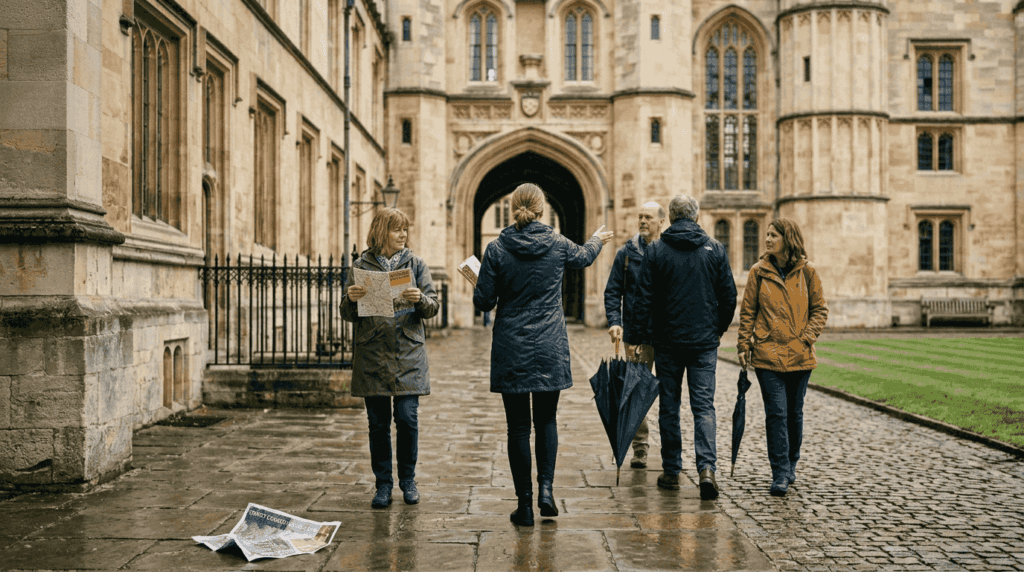
Oxford’s walking tours attract over 500,000 visitors annually, yet many tourists miss the deeper traditions woven into these experiences. Beyond admiring historic buildings, Oxford tours reveal living customs that have shaped literary giants and iconic film locations for centuries. This guide explains how tradition enriches Oxford tours, helping literature and film enthusiasts understand the ceremonies, collegiate customs, and unique rituals that transform a simple walk into an immersive cultural journey. You’ll discover what makes these tours memorable and how to engage fully with Oxford’s rich heritage.
Table of Contents
- Understanding Oxford’s Academic And Cultural Traditions
- How Oxford Tours Bring Literary And Film Heritage To Life Through Tradition
- Celebrating Unique Oxford Customs During Your Tour Experience
- Making The Most Of Oxford’s Tradition-Rich Tours: Tips And What To Expect
- Discover Oxford’s Rich Traditions On Our Award-Winning Walking Tours
Key takeaways
| Point | Details |
|---|---|
| Oxford tours connect heritage with tradition | Walking tours blend literary history, film locations, and centuries-old university customs to create immersive experiences |
| Expert guides personalise each visit | Knowledgeable guides tailor tours to your interests, sharing insider stories about traditions, ceremonies, and local life |
| Unique customs enhance cultural understanding | Traditions like May Day celebrations, academic dress ceremonies, and tortoise races reveal Oxford’s vibrant, living culture |
| Film and literary sites gain deeper meaning | Visiting Harry Potter locations and author haunts becomes richer when you understand the traditions behind them |
Understanding Oxford’s academic and cultural traditions
Oxford University traditions, including formal ceremonies and college customs, are deeply rooted in history, dating back to the 11th century. These practices aren’t museum pieces but active elements of daily university life that shape the character of walking tours. When you explore Oxford’s colleges, you’re witnessing traditions that have evolved over nearly a millennium whilst maintaining their core significance.
The collegiate system creates self-governing communities that foster both academic excellence and social networks. Each of Oxford’s 39 colleges operates independently, maintaining unique traditions whilst sharing broader university customs. This structure produces the intimate, personalised atmosphere that makes Oxford tours so engaging. Guides often share stories about specific college quirks, from dining rituals to sporting rivalries, that reveal how tradition shapes student life at Oxford University today.
Formal ceremonies represent tradition at its most visible. Matriculation is a formal ceremony enrolling students with academic dress worn in the Sheldonian Theatre. New students pledge allegiance to university statutes in Latin, creating a tangible link to medieval academic life. Encaenia, the annual commemoration ceremony, honours benefactors and awards honorary degrees with similar pageantry. These events demonstrate how Oxford maintains continuity with its past whilst adapting to contemporary needs.
Academic dress is a physical representation of the University’s structure and a reward, with colour marking ceremony significance. The system includes several components:
- Subfusc: formal clothing worn beneath academic robes, typically dark suit with white shirt and black shoes
- Gowns: varying styles indicate student status, from undergraduate commoner gowns to ornate doctoral robes
- Hoods: lined with college colours and shaped according to degree level, creating visual hierarchy
- Caps: mortarboards for graduates, soft caps for undergraduates during specific ceremonies
Pro Tip: Ask your tour guide about the subtle differences in gown styles between colleges. These variations reveal fascinating historical rivalries and traditions that outsiders rarely notice.
Understanding these foundational traditions transforms how you experience Oxford tours. When visiting Christ Church or Magdalen College, you’ll recognise the significance of architectural features designed for ceremonial processions. The quadrangles, dining halls, and chapels aren’t just beautiful spaces but functional settings for traditions that continue shaping academic life. This context enriches every photograph and story your guide shares.
How Oxford tours bring literary and film heritage to life through tradition
Oxford’s literary legacy intertwines inseparably with its traditions. The ‘Literary Oxford Tour’ leverages the city’s historical and architectural landscape to create an immersive experience for literature and film enthusiasts. Authors like J.R.R. Tolkien, C.S. Lewis, Oscar Wilde, and Lewis Carroll didn’t simply study here; they absorbed Oxford’s traditions, which profoundly influenced their creative works. Tours reveal these connections by visiting the specific buildings, pubs, and gardens where literary history unfolded.
Tolkien’s Middle-earth, for instance, drew inspiration from Oxford’s medieval architecture and collegiate rituals. Walking through Merton College’s ancient library or Exeter College’s chapel, you’ll understand how Gothic spires and cloistered quadrangles shaped his imagination. C.S. Lewis’s Narnia similarly reflects Oxford’s blend of Christian tradition and classical learning. Guides share anecdotes about the Inklings, the literary group that met in local pubs to discuss their works, connecting these stories to the traditions of Oxford’s tutorial system and collegiate fellowship.

Inclusion of filming locations, like Christ Church (Harry Potter), increases tour appeal for fans of film and literature. The Great Hall inspired Hogwarts’ dining hall, and the cloisters appeared in multiple scenes. Understanding that these locations function as active college spaces, where students still dine in academic dress beneath portraits of alumni, adds layers of meaning. You’re not visiting a film set but experiencing the living tradition that made these spaces cinematically perfect. This is why Oxford is a film hotspot for productions seeking authentic historical atmosphere.
Expert guides blend historical facts with personal anecdotes and contemporary student life insight. They personalise tours based on your interests, whether you’re passionate about Romantic poets, detective fiction, or fantasy literature. This flexibility allows tours to explore lesser-known connections, such as Dorothy L. Sayers’ use of Oxford traditions in her Gaudy Night mystery or Philip Pullman’s incorporation of college architecture into His Dark Materials trilogy.
Key literary and film connections include:
- Bodleian Library: featured in Harry Potter films and inspired countless fictional libraries, from Hogwarts to Discworld’s Unseen University
- Eagle and Child pub: where the Inklings met, blending literary discussion with Oxford’s pub tradition
- Christ Church meadow: walking route favoured by Lewis Carroll, who created Alice’s Adventures whilst strolling these paths
- Radcliffe Camera: iconic reading room symbolising Oxford’s scholarly tradition in numerous films and novels
| Location | Literary/Film Connection | Tradition Highlighted |
|---|---|---|
| Christ Church Hall | Harry Potter dining scenes | Formal hall dining in academic dress |
| Bodleian Library | Multiple film locations | Scholarly tradition and book preservation |
| Exeter College | Tolkien’s undergraduate college | Tutorial system and fellowship |
| Magdalen College | C.S. Lewis’s teaching rooms | Don’s lifestyle and May Day singing |
Pro Tip: Request information about current student traditions during your tour. Many colleges maintain quirky customs, like the Brasenose beer cellar tradition or the All Souls mallard song, that connect directly to stories in Oxford literature. For more insights, explore our Oxford blog covering hidden traditions.
These tours succeed because they present Oxford as a living, breathing community rather than a historical monument. When you understand the traditions behind the architecture and stories, every corner reveals new significance. The experience becomes participatory rather than observational.
Celebrating unique Oxford customs during your tour experience
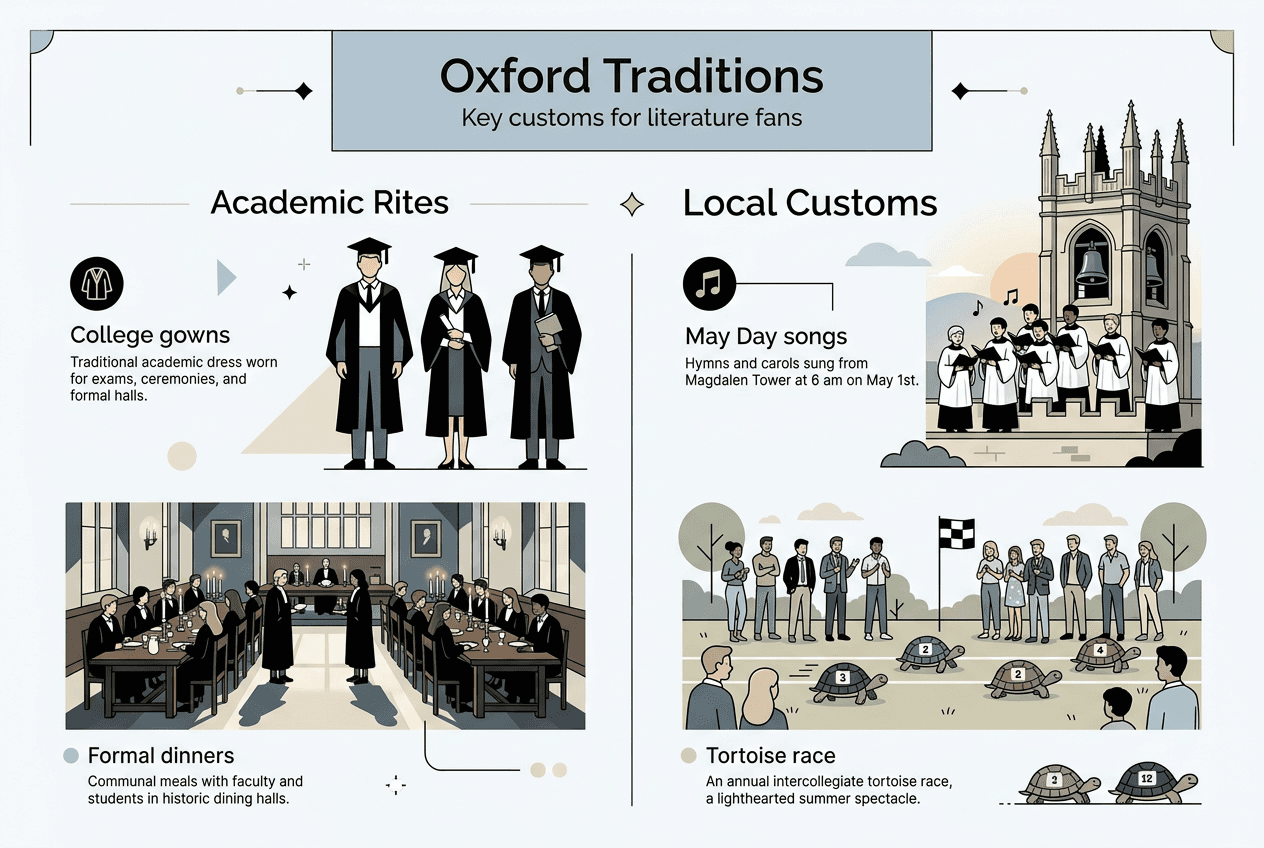
Oxford’s distinctive customs create memorable moments that distinguish these tours from typical sightseeing. May Day tradition involves thousands gathering at Magdalen Tower for choir singing and folk dancing, marking summer’s start. At 6am on 1st May, the Magdalen College choir sings from the tower whilst crowds below celebrate with Morris dancing, music, and traditional festivities. Whilst most tours don’t coincide with this early morning event, guides share its significance and how it reflects Oxford’s connection to seasonal traditions and community celebration.
Punting represents another beloved Oxford tradition. Navigating flat-bottomed boats along the Cherwell or Thames rivers combines recreation with comedy, as inexperienced punters often struggle with the long pole. This activity dates back centuries when punts served practical transport purposes. Today, it offers visitors a peaceful way to view college gardens and architecture from unique angles whilst participating in a quintessentially Oxford pastime. Many tours incorporate punting stories or recommend trying it after your walk.
Intercollegiate rivalry manifests in delightfully unusual ways. The Tortoise Race reflects intercollegiate rivalry with colleges keeping pet tortoises. Corpus Christi College has maintained this tradition since the 1970s, racing their tortoise against competitors from other colleges. The race embodies Oxford’s ability to blend absurdity with tradition, creating customs that feel both ancient and playfully modern. These quirky traditions humanise the university, showing that scholarship coexists with humour and creativity.
The Time Ceremony at Merton College features students walking backwards at 2am to symbolically stabilise the space-time continuum. Performed when clocks change in autumn, participants in academic dress walk backwards around Fellows’ Quad whilst drinking port, supposedly preventing temporal paradoxes. This tradition, invented relatively recently, demonstrates how Oxford continuously creates new customs that honour its heritage of eccentricity and intellectual playfulness.
Key Oxford customs you’ll learn about:
- Formal Hall: colleges serve dinner in medieval-style ceremonies with Latin grace, high tables for fellows, and strict dress codes
- Subfusc examinations: students wear academic dress for final exams, often decorating themselves with flowers and confetti afterwards
- Trashing: post-exam celebration involving friends covering examinees in foam, glitter, and champagne
- Sconcing: dining tradition where rule-breakers must drink penalty measures, often in elaborate ceremonial vessels
- College gardens: private spaces maintaining centuries-old landscaping traditions, occasionally opened for special tours
| Custom | When to Experience | Significance |
|---|---|---|
| May Day singing | 1st May, 6am | Celebrates spring and community tradition |
| Formal Hall | Term time evenings | Demonstrates collegiate dining customs |
| Tortoise racing | June | Shows intercollegiate rivalry and humour |
| Time Ceremony | October clock change | Blends tradition with playful intellectualism |
| Exam trashing | June examination period | Marks academic achievement and relief |
These customs aren’t performed for tourists but represent genuine traditions that current students and fellows maintain. Unveiling the magic of Oxford through these living practices creates authentic connections between visitors and the university’s ongoing story. Your guide will explain which traditions you might witness during your visit and which require special timing or access.
Making the most of Oxford’s tradition-rich tours: tips and what to expect
Planning enhances your Oxford tour experience significantly. Tours are tailored to individual interests, offering a unique experience for each visitor. Most walking tours last 2-3 hours, covering approximately two miles at a comfortable pace with frequent stops for explanations and photographs. Guides typically contact participants beforehand to learn specific interests, whether you’re passionate about Harry Potter filming locations, medieval architecture, or particular authors.
Expert guides with in-depth knowledge enhance the tour experience. Many guides are Oxford graduates or current researchers who bring personal insights alongside historical facts. They share insider stories about student traditions, explain architectural details invisible to casual observers, and answer questions with genuine expertise. This personalised approach transforms tours from scripted presentations into engaging conversations.
Practical preparation ensures comfort and engagement. Weather in Oxford changes rapidly, so layered clothing and waterproof jackets prove essential. Comfortable walking shoes are non-negotiable, as cobblestone streets and uneven college floors challenge unsuitable footwear. Most colleges prohibit large bags inside historic buildings, so travel light. Bringing a camera or smartphone captures memories, though be respectful of photography restrictions in certain chapels and libraries.
The Oxford Official University & City Tour has a 5-star average rating from nearly 1,000 reviews, indicating high satisfaction. Visitors consistently praise guides’ ability to make history accessible and entertaining. Reviews highlight how understanding traditions deepens appreciation for Oxford’s architecture and cultural significance. Many tourists report that their tour transformed their perception of Oxford from a collection of old buildings into a vibrant, living community.
Maximising your experience:
- Arrive 10 minutes early to meet your guide and ask preliminary questions about the route
- Engage actively by asking about traditions that interest you; guides appreciate curiosity
- Take notes or photos of recommendations for further exploration after the tour
- Consider booking private tours for deeper dives into specific interests like literature or film
- Check college websites before visiting, as some restrict access during examination periods
Pro Tip: Ask your guide about attending Evensong at college chapels. These free services offer authentic experiences of Oxford’s musical and religious traditions, with stunning choral performances in historic settings. Many visitors find Evensong the highlight of their Oxford visit.
Expert guides don’t just recite facts; they share personal anecdotes and contemporary insights that bring Oxford’s traditions alive. Their passion for the city’s heritage transforms walking tours into immersive cultural experiences that resonate long after you’ve left.
Timing affects what you’ll experience. Term time (October to June, excluding holidays) offers the fullest picture of Oxford life, with students in academic dress and colleges hosting formal events. Summer provides beautiful weather and open gardens but fewer active traditions. Examination periods in May and June showcase unique customs like trashing but may restrict college access. Discuss timing with your tour provider to align your visit with specific interests.
For comprehensive experiences exploring Oxford’s traditions, walking tours provide expertly guided journeys through the university’s rich heritage. Understanding why learning Oxford history enriches your visit helps you appreciate the depth these tours offer beyond surface-level sightseeing.
Discover Oxford’s rich traditions on our award-winning walking tours
Oxford Magic Tours offers expertly guided experiences that immerse you in the traditions, literary heritage, and film locations that make Oxford extraordinary. Our personalised walking tours adapt to your interests, whether you’re passionate about Harry Potter filming sites, medieval ceremonies, or the authors who shaped English literature. We’re the only Oxford walking tour featuring live entertainment from a magician who has performed for the British Royal family and A-list celebrities, adding unique theatrical elements to your cultural exploration.
Our guides bring Oxford’s traditions alive through engaging storytelling and insider knowledge. You’ll explore Oxford’s colleges with experts who explain the ceremonies, customs, and architectural details that casual visitors miss. Discover why Oxford and Harry Potter connect so powerfully whilst learning about the living traditions that made these locations perfect for film. Book your tour today to experience Oxford’s rich heritage through expert eyes.
FAQ
What is the traditional academic dress worn on Oxford tours?
Academic dress includes gowns, hoods, and subfusc, worn during formal university events and ceremonies. Academic dress is worn for specific occasions including matriculation, examinations, and ceremonies. The style varies by degree level and college, with undergraduates wearing simpler commoner gowns whilst graduates and fellows wear more elaborate robes with coloured hoods. You’ll likely see students in academic dress during term time, particularly around examination periods in May and June.
How do Oxford tours incorporate film locations?
Tours visit iconic filming sites like Christ Church, the Bodleian Library, and New College cloisters, explaining their significance in productions like Harry Potter. Tours include visits to Christ Church and other Harry Potter filming locations to engage fans. Guides contextualise these locations within Oxford’s living traditions, showing how the university’s authentic atmosphere attracted filmmakers. You’ll understand why these spaces work cinematically whilst appreciating their ongoing role in student life.
What unique Oxford traditions might I see during a tour?
Depending on timing, you might witness or learn about May Day celebrations, formal hall dinners, examination trashing, and quirky customs like tortoise races. Visitors may learn about or experience May Day, tortoise races, punting, and the Time Ceremony traditions. Guides share stories about these customs and explain their historical significance. Term-time tours offer the best chance to see traditions in action, whilst summer tours focus on explaining customs through storytelling and visits to relevant locations.
Are Oxford tours suitable for all fitness levels?
Most tours involve moderate walking over two to three hours, suitable for visitors with reasonable mobility. Tours are suitable for visitors with moderate fitness and include comfortable walking pace. Guides adjust pace to group needs and incorporate frequent stops for explanations and rest. Comfortable walking shoes are essential due to cobblestone streets and uneven surfaces. If you have specific mobility concerns, contact tour providers beforehand to discuss accommodations and alternative routes.