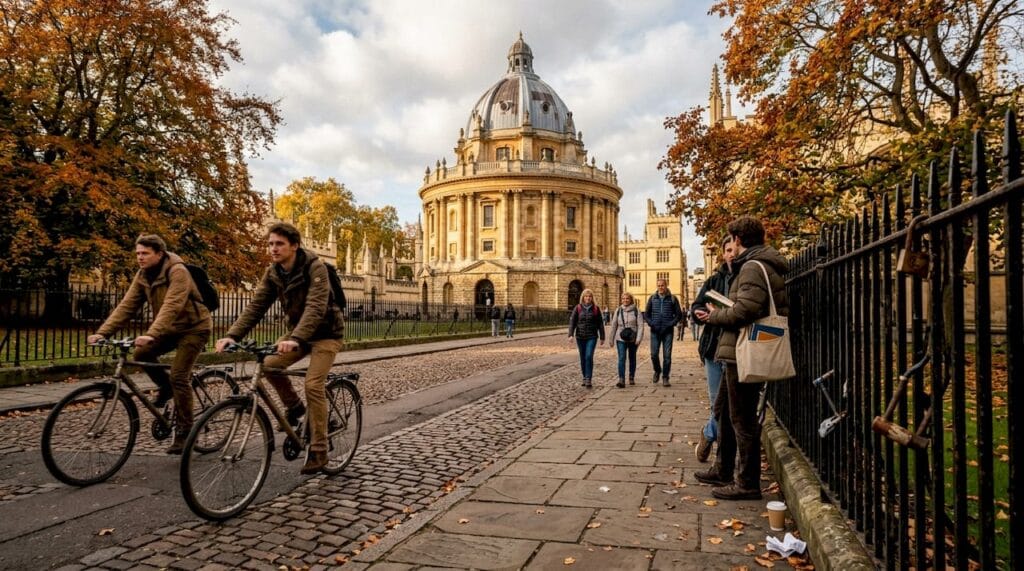
You’ve probably seen the Radcliffe Camera in countless Oxford photographs, its distinctive dome rising above Radcliffe Square. Yet many visitors arrive unsure whether it’s a church, a museum, or something else entirely. The truth is more fascinating: this architectural masterpiece is a working library, steeped in centuries of academic tradition and intellectual heritage. Understanding its history, design, and cultural significance transforms it from a mere photo opportunity into a meaningful stop on any Oxford exploration. This article reveals what makes the Radcliffe Camera special, from its 18th-century origins to its enduring appeal for literature enthusiasts and Harry Potter fans alike.
Table of Contents
- Key takeaways
- The history and origins of the Radcliffe Camera
- Architectural design and features that define the Radcliffe Camera
- The significance of Radcliffe Square and surrounding landmarks
- Why the Radcliffe Camera captivates literature and Harry Potter fans
- Discover Oxford’s magic with expert walking tours
- What is the Radcliffe Camera?
Key Takeaways
| Point | Details |
|---|---|
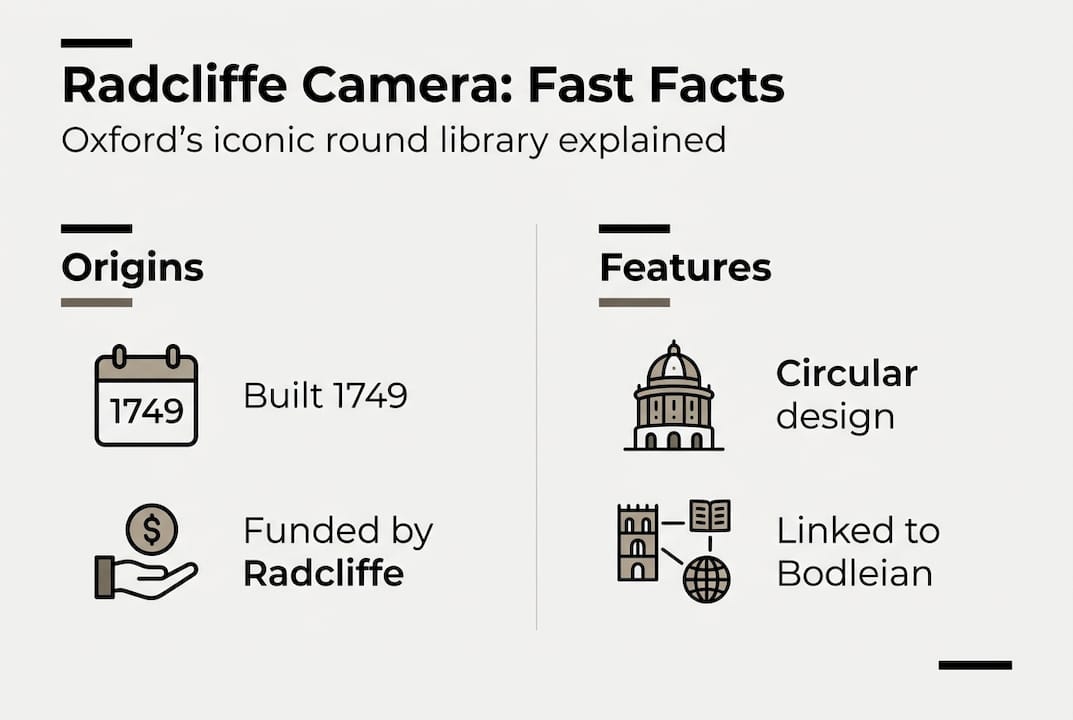
| History and origins | Completed in 1749 as Oxford’s first circular library, it was funded by Dr John Radcliffe and designed by James Gibbs, later becoming part of the Bodleian system in 1861 and today functioning as a reading room for humanities. |
| Architectural design | James Gibbs crafted the English Palladian circular form inspired by the Roman Pantheon, featuring a forty metre dome and Corinthian columns around the drum above a decorative balustrade. |
| Location significance | Situated in Radcliffe Square it dominates the skyline and sits alongside the Bodleian Library, creating a focal point in Oxford’s historic fabric. |
| Cultural relevance | Although a working library the Radcliffe Camera is a cultural icon for readers and has become associated with Harry Potter lore and film inspired locations in addition to its scholarly function. |
The history and origins of the Radcliffe Camera
The Radcliffe Camera stands as a testament to 18th-century academic ambition. Construction completed in 1749, funded by Dr John Radcliffe’s generous £40,000 bequest specifically for a science library. Building began in 1737 under architect James Gibbs, who faced numerous technical challenges over the 12-year construction period. The resulting structure became Oxford’s first circular library, a revolutionary design choice that signalled both innovation and prestige.
Dr Radcliffe, a prominent physician who treated royalty, left his fortune to Oxford with clear instructions. He envisioned a dedicated space where scientific knowledge could flourish, separate from the humanities-focused Bodleian collections. The substantial funding allowed Gibbs to pursue an ambitious design that would dominate Radcliffe Square visually and symbolically. The physician’s legacy literally shaped Oxford’s skyline.
The building’s function evolved significantly after 1861. The history of Radcliffe Camera reveals that Oxford integrated it into the Bodleian Library system, converting the space from its original scientific focus to general academic use. This shift reflected changing priorities as Oxford’s science departments expanded into purpose-built facilities. Today it serves as a reading room primarily for humanities students, a complete reversal from Radcliffe’s original vision.
Key historical milestones include:
- 1737: Foundation stone laid, construction begins under James Gibbs
- 1749: Building completed and opened as Radcliffe Science Library
- 1861: Transferred to Bodleian Library administration, function broadened
- 1940s: Survived Second World War without major damage
- Present day: Functions as Bodleian reading room, restricted public access
Pro Tip: Visiting during autumn or early spring means fewer crowds around Radcliffe Square, giving you better opportunities to appreciate the building’s exterior details and potentially join Bodleian tours that include glimpses of the interior spaces.
Architectural design and features that define the Radcliffe Camera
James Gibbs crafted the Radcliffe Camera in the English Palladian style inspired by the Roman Pantheon, creating Oxford’s most recognisable silhouette. The circular plan, crowned by an imposing dome, deliberately evokes Roman grandeur whilst incorporating British architectural sensibilities. This fusion produced something uniquely Oxford, neither purely classical nor entirely English in character.
The building’s exterior showcases elaborate Corinthian columns arranged around the drum beneath the dome. These columns support a decorative balustrade that encircles the structure at roof level. Above, the dome itself rises 40 metres, its lead covering gleaming silver-grey against Oxford’s often cloudy skies. A statue of Dr Radcliffe tops the structure, watching over the square he funded.
Construction challenges nearly derailed the project. Gibbs initially planned a stone dome, but structural concerns forced a redesign in 1741. The architect pivoted to timber framing covered with lead sheeting, a lighter solution that preserved the visual impact whilst ensuring stability. This pragmatic adjustment demonstrates how Georgian architects balanced ambition with engineering realities.
Inside, visitors who gain access discover ornate plasterwork adorning walls and ceiling. The central reading room features tall windows flooding the space with natural light, essential for scholarly work before electric lighting. Radiating bookcases line the walls, their dark wood contrasting with pale stonework. The interior matches the exterior’s grandeur, creating an inspiring environment for academic research.
| Feature | Radcliffe Camera | Roman Pantheon |
|---|---|---|
| Shape | Circular plan | Circular plan |
| Dome | Lead-covered timber frame | Concrete with oculus |
| Columns | Corinthian order | Corinthian portico |
| Purpose | Library/reading room | Temple, later church |
| Height | 40 metres | 43 metres |
| Lighting | Windows in drum | Central oculus only |
Radcliffe Camera architectural history reveals how Gibbs studied Continental examples extensively before finalising his design. He visited Rome personally, sketching the Pantheon and other circular structures. These influences merged with English traditions to produce something distinctly Oxford, recognisable worldwide yet firmly rooted in British academic culture.
Pro Tip: Photograph the Radcliffe Camera during golden hour, either early morning or late afternoon, when angled sunlight emphasises the sculptural details of the columns and creates dramatic shadows across the stonework.
The significance of Radcliffe Square and surrounding landmarks
The Radcliffe Camera occupies the heart of Radcliffe Square, surrounded by the Bodleian Library, All Souls College, Brasenose College, and the University Church of St Mary the Virgin. This concentration of historic architecture creates one of Oxford’s most photographed views. Each building contributes layers of history, their varied styles spanning medieval to Georgian periods.
Radcliffe Square functions as Oxford’s architectural showpiece. The Camera dominates the space, but surrounding structures provide context and contrast. The Bodleian’s Gothic stonework sits opposite Brasenose’s Tudor facade, whilst All Souls presents classical formality. Together they demonstrate Oxford’s architectural evolution across centuries. Walking the square offers a compressed history lesson in British building styles.
An underground book railway once connected the Radcliffe Camera to the main Bodleian Library complex. This ingenious Victorian system transported requested volumes through tunnels, allowing scholars to access materials without staff carrying heavy loads across the square. Though no longer operational, the tunnels remain, a hidden infrastructure supporting Oxford’s academic mission. Modern book requests now travel through updated pneumatic systems.
How to combine landmarks during a walking tour:
- Begin at Radcliffe Square, circling the Camera to appreciate its proportions from all angles
- Climb St Mary’s Church tower for panoramic views over the square and surrounding colleges
- Book a Bodleian Library interior tour to see Duke Humfrey’s medieval reading room
- Position yourself at various square corners to photograph the Camera framed by different buildings
- Visit Brasenose College chapel if open, noting architectural contrasts with the Camera
Other significant landmarks immediately surrounding the square include:
- Bodleian Library’s Old Schools Quadrangle with its Tower of the Five Orders
- All Souls College, accessible during limited visiting hours
- Hertford College’s Bridge of Sighs, visible from nearby lanes
- Catte Street’s bookshops and academic suppliers
- Hidden courtyards and passages connecting to other colleges
This dense clustering of historic buildings makes historical walking tours Oxford particularly rewarding around Radcliffe Square. Guides can point out architectural details easily missed by independent visitors, explain the relationships between institutions, and share anecdotes about famous scholars who worked in these spaces. The square rewards both quick visits and extended exploration.
Why the Radcliffe Camera captivates literature and Harry Potter fans
Oxford’s architecture, particularly the Radcliffe Camera’s distinctive silhouette, evokes Hogwarts’s magical atmosphere for countless fans. Whilst Harry Potter filming used Duke Humfrey’s Library primarily, the Camera remains iconic on themed walking tours. Its circular form and dramatic dome suggest the fantastical architecture J.K. Rowling imagined, even if cameras never rolled inside. The building’s very presence enriches Oxford’s magical associations.
Literature enthusiasts value the Radcliffe Camera for deeper reasons than film connections. It represents centuries of scholarly tradition, housing works that shaped British intellectual life. Standing before it, visitors sense the accumulated knowledge within, the generations of students who climbed those steps seeking wisdom. This tangible connection to Oxford’s literary and academic heritage resonates powerfully with book lovers.
The building appears in numerous novels, memoirs, and travel writings about Oxford. Authors use it as shorthand for academic prestige, its dome symbolising the pursuit of knowledge. Philip Pullman, Evelyn Waugh, and countless others reference the Camera when establishing Oxford settings. For readers familiar with these works, visiting the actual structure brings fictional descriptions to vivid life.
Fan activities centred on the Radcliffe Camera include:
- Photographing the building from multiple angles to capture its changing appearance
- Joining Harry Potter themed walking tours that contextualise Oxford’s Hogwarts connections
- Sketching or painting the Camera as artistic inspiration
- Reading passages from Oxford-set novels whilst seated in Radcliffe Square
- Exploring how architectural details might have influenced magical world-building
“Standing in Radcliffe Square, gazing up at the Camera’s dome, you understand why Oxford inspired countless fantasy worlds. The building seems almost impossibly grand, its proportions suggesting spaces larger inside than outside, like magical architecture made real through Georgian craftsmanship.”
Themed tours connecting Oxford university tours and Harry Potter help visitors appreciate both historical facts and cultural influences. Guides explain which locations actually appeared in films, which inspired written descriptions, and how Oxford’s atmosphere shaped the wizarding world’s aesthetic. The Radcliffe Camera features prominently in these narratives, its photogenic qualities making it a tour highlight even without direct film appearances.
For many visitors, the Camera represents Oxford’s essence: ancient yet vital, beautiful yet functional, inspiring imagination whilst serving practical scholarly needs. This combination of qualities explains its enduring appeal across different interest groups, from architecture students to fantasy fans.
Discover Oxford’s magic with expert walking tours
Experiencing the Radcliffe Camera and surrounding landmarks gains depth through guided exploration. Oxford Magic Tours offers expert-led walks that reveal architectural details, historical context, and cultural connections you’d miss independently. Our guides narrate Oxford’s evolution from medieval university to modern institution, weaving together stories of famous scholars, architectural innovations, and literary influences that shaped British culture.
Tours include the Radcliffe Camera alongside other Radcliffe Square landmarks, creating comprehensive experiences of Oxford’s historic core. We offer options ranging from general architectural and historical tours to specialised Harry Potter themed walks. Each tour combines education with entertainment, our unique approach featuring live magical performances that bring Oxford’s enchanting atmosphere to life.
Benefits of booking with Oxford Magic Tours:
- Knowledgeable guides who studied Oxford’s history extensively
- Interactive presentations including magical entertainment
- Insider stories about famous residents and hidden architectural features
- Strategic positioning for optimal photography opportunities
- Small group sizes ensuring personalised attention
Learn more about Oxford walking tours and discover how our distinctive approach combines scholarly expertise with theatrical flair. Browse our range of Oxford magic walking tours to find experiences matching your interests, whether you prioritise architectural history, literary connections, or Harry Potter locations. Understand why Oxford Harry Potter tours captivate fans by revealing the real inspirations behind fictional magic.
What is the Radcliffe Camera?
What exactly is the Radcliffe Camera and what was its original purpose?
The Radcliffe Camera is a circular library building in Oxford, completed in 1749 as a science library funded by physician John Radcliffe’s £40,000 bequest. Since 1861 it has functioned as a reading room within the Bodleian Library system, primarily serving humanities students. The name “Camera” derives from Latin meaning “room” or “chamber”, not photographic equipment.
Can visitors go inside the Radcliffe Camera?
The interior is restricted to Bodleian Library readers with valid university credentials. However, the exterior remains accessible year-round for photography and appreciation from Radcliffe Square. Occasional Bodleian Library tours include brief interior glimpses, though availability varies seasonally. Check Radcliffe Camera history details for current access information.
Was the Radcliffe Camera used in Harry Potter filming?
No, Harry Potter scenes filmed at Oxford used Duke Humfrey’s Library within the Bodleian complex, not the Radcliffe Camera itself. However, the Camera’s distinctive architecture contributes to Oxford’s overall Hogwarts atmosphere and features prominently on themed walking tours. Its exterior appears in countless fan photographs capturing Oxford’s magical qualities.
How does the Radcliffe Camera connect to the Bodleian Library?
Underground tunnels link the Camera to the main Bodleian complex, originally housing a Victorian book railway system for transporting volumes between buildings. Though the railway no longer operates, the tunnels remain functional for modern book delivery systems. This hidden infrastructure allows the Camera to function as an integrated Bodleian reading room despite physical separation.
What other attractions are near the Radcliffe Camera?
Radcliffe Square places you within metres of the Bodleian Library, All Souls College, Brasenose College, and the University Church of St Mary the Virgin. Hertford College’s Bridge of Sighs sits one street away, whilst numerous other colleges cluster nearby. This concentration makes the area ideal for compact walking tours covering multiple historic sites efficiently.