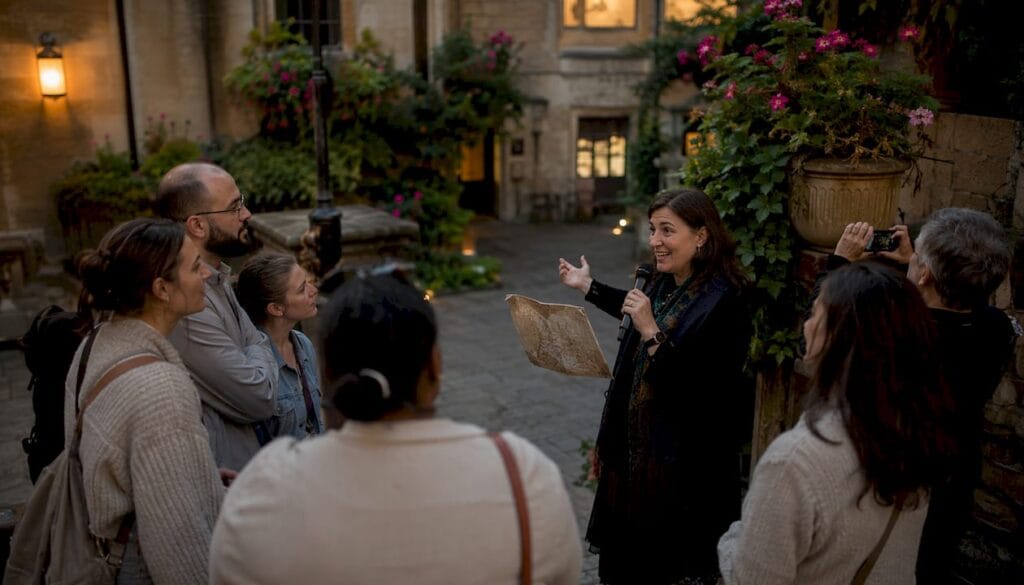
Guides are the single biggest variable in whether a visit becomes memorable or forgettable. Research confirms this bluntly: communication competence in tour guides explains 70.5% of the variance in visitor satisfaction. Not the venue, not the weather, not the itinerary. The guide.
The role of guides in visitor experience extends well beyond pointing at buildings and reciting dates. A skilled guide acts simultaneously as communicator, cultural interpreter, emotional anchor, and co-creator of meaning. Visitors leave not just informed but genuinely moved, and that shift is almost entirely down to how the guide works the room, reads the group, and tells the story.
Key contributions guides make to visitor experience:
- Communication competence: verbal clarity and non-verbal expressiveness directly drive satisfaction
- Cultural mediation: translating heritage into personal relevance for diverse audiences
- Emotional connection: using storytelling to provoke curiosity and lasting memory
- Inclusivity facilitation: adapting pace, language, and content for all visitor types
- Co-creation: inviting visitors to contribute their own knowledge and perspectives
- Post-tour engagement: extending the emotional connection beyond the physical visit
How does guide communication shape what visitors feel and remember?
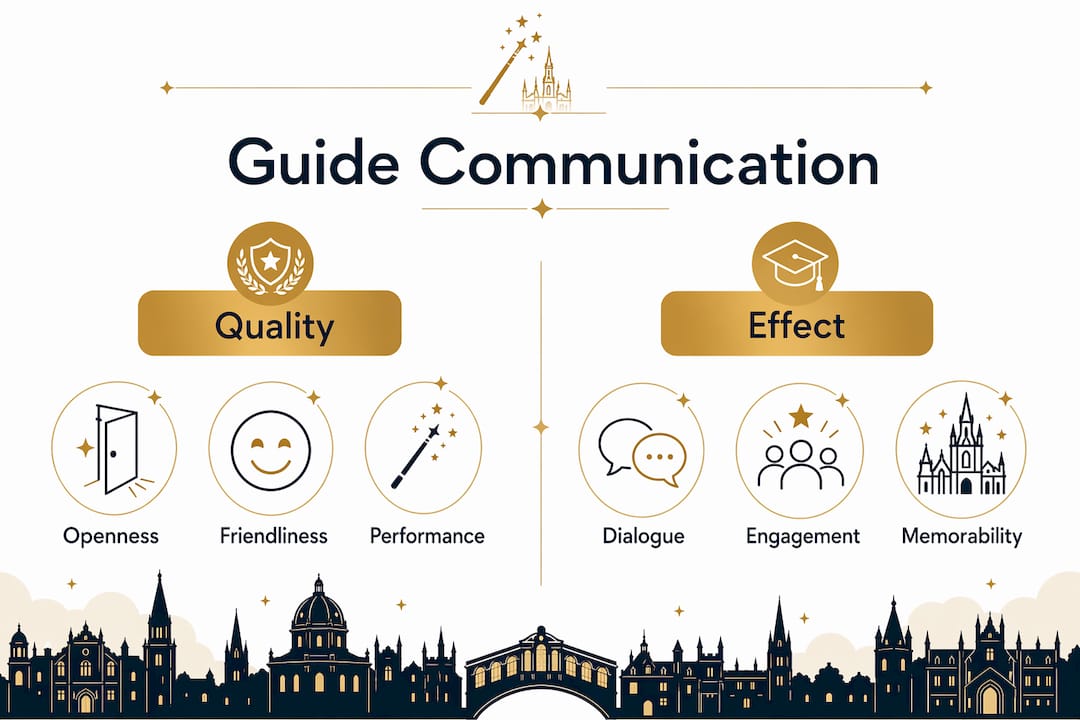
The communicative role of tour guides is the foundation everything else rests on. Verbal competence covers clarity, pacing, vocabulary choice, and the ability to read whether a group is engaged or drifting. Non-verbal competence covers eye contact, gesture, spatial positioning, and the physical energy a guide brings to a space. Both matter independently.
“Interpersonal communication qualities such as openness, empathy, supportiveness, positiveness, and equality significantly enhance the quality of relationships between tour guides and tourists, fostering satisfaction and loyalty.”
— J-TRUE: Journal of Travel and Leisure
Research drawing on interviews with 15 guides and questionnaires from 100 tourists found that these five interpersonal qualities, taken together, predict not just satisfaction but repeat loyalty. Openness invites two-way dialogue. Empathy signals that the guide genuinely cares whether the visitor understands. Supportiveness keeps hesitant visitors engaged rather than lost.
| Communication quality | Effect on visitor experience |
|---|---|
| Openness | Encourages two-way dialogue and personal reflection |
| Empathy | Builds trust and reduces visitor anxiety in unfamiliar settings |
| Supportiveness | Keeps quieter visitors engaged and included |
| Positiveness | Sustains group energy and enthusiasm throughout the tour |
| Equality | Prevents cliques forming; ensures every visitor feels valued |
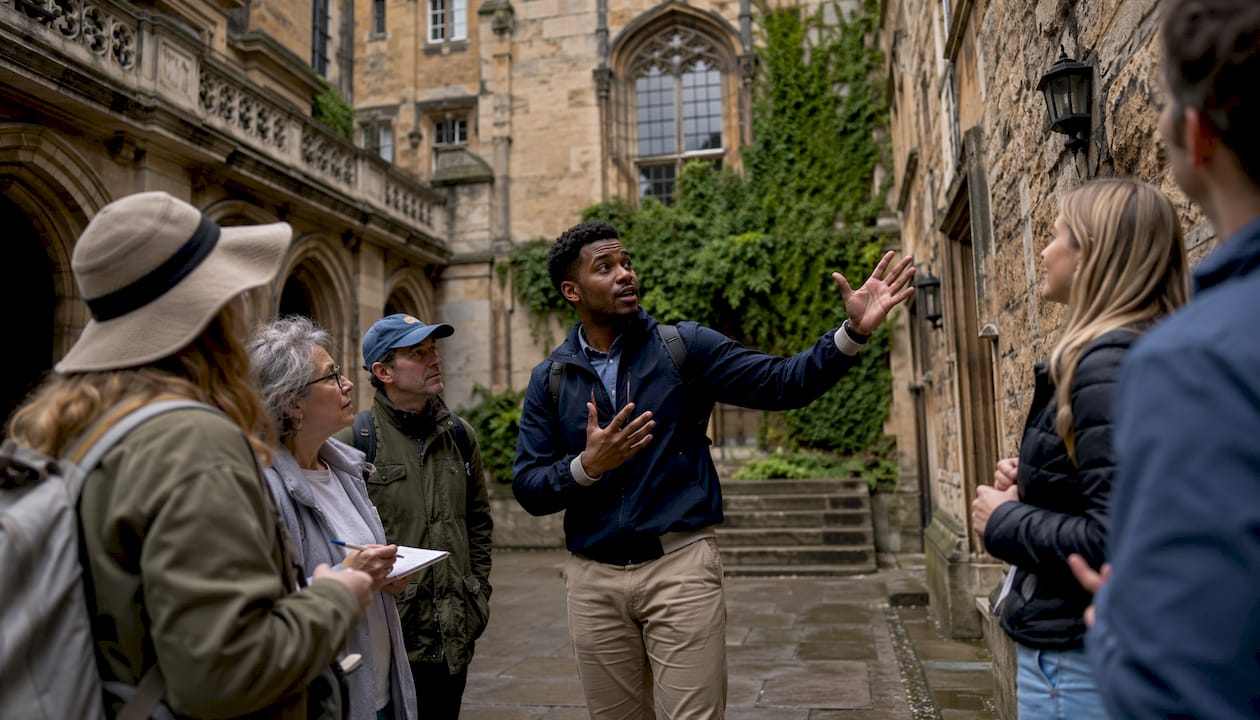
Guides who treat communication as a performance skill rather than a personality trait tend to develop these qualities deliberately. The role of local guides as cultural interpreters is particularly pronounced at heritage sites, where the gap between what a visitor sees and what it actually means can be enormous without skilled mediation.
What do visitors actually expect from their guide?
Visitor expectations have shifted considerably. The modern visitor often arrives with prior research, strong opinions, and sometimes specialist knowledge that rivals the guide’s own. Thematic interpretation focusing on enjoyment, relevance, and emotional resonance consistently outperforms fact-heavy delivery in creating memorable experiences, as field research on Jurassic Coast guided walks demonstrated.
What visitors want from guides today:
- Thematic storytelling that connects heritage to their own lives, not just to history
- Emotional engagement through narrative tension, humour, and surprise
- Relevance tailored to the group’s age, background, and interests
- Two-way interaction rather than a lecture they could have read on a plaque
- Accessibility in language, pace, and physical route for all abilities
- Handling of difficult moments with diplomacy when opinions clash
The challenge of the knowledgeable visitor deserves particular attention. Guides who feel threatened by an expert tourist in the group tend to become defensive, which poisons the atmosphere for everyone else. The more effective response is co-delivery: acknowledging the visitor’s knowledge, inviting them to contribute, and weaving their input into the narrative. This transforms a potential confrontation into a richer experience for the whole group.
Visitors also appreciate guides who communicate in a friendly, open style that invites personal reflection rather than passive reception. The best guides ask questions as often as they answer them.
How should guides be trained to meet these demands?
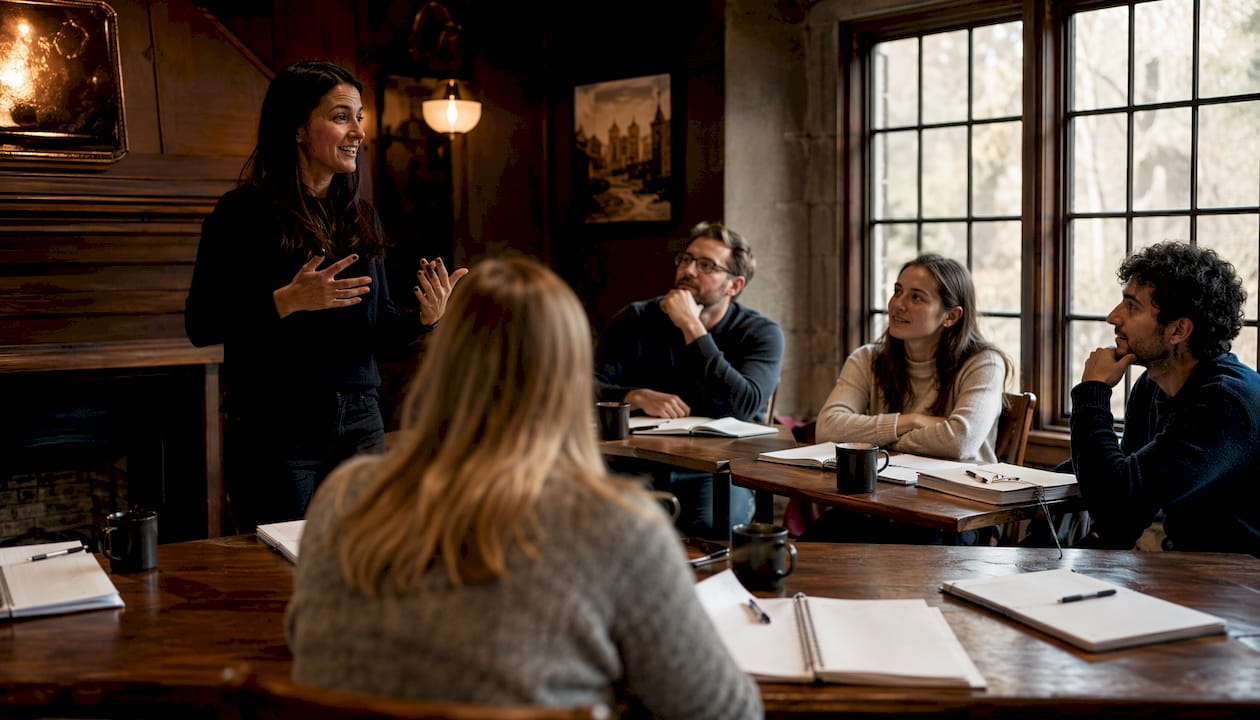
Training that focuses only on content knowledge produces guides who know a great deal but struggle to connect. The shift in professional development is towards soft skills: flexibility, diplomacy, empathy, and emotional intelligence. Guide training programmes that traditionally emphasised interpretive and educational content now need to build these non-content capabilities alongside factual preparation.
Effective training approaches include:
- Role play and scenario-based learning to rehearse responses to probing, learning, and negotiation incidents with difficult visitors
- Active listening workshops that teach guides to acknowledge and integrate visitor contributions without losing narrative control
- Performative and choreography skills to create immersive, story-led experiences that emphasise meaning over information transfer
- Reflective practice sessions where guides review real tour incidents and identify what worked and what did not
- Continuous professional development through peer learning, resource sharing, and exposure to new research on visitor behaviour
Pro Tip: Role play is most effective when scenarios are drawn from real incidents guides have actually encountered. Abstract simulations rarely prepare guides for the specific emotional charge of a visitor who publicly corrects them in front of a group.
The importance of guides who combine content mastery with interpersonal agility cannot be overstated. A guide who knows everything but cannot read a room will consistently underperform one who knows slightly less but connects deeply.
What are the four stages of the tour guiding lifecycle?
Tour guiding follows a four-stage lifecycle, each requiring a distinct set of guide behaviours and priorities.
Pre-tour preparation. The guide researches the group profile, plans the thematic arc, anticipates likely questions, and prepares contingency routes or stories. This stage is invisible to visitors but shapes everything they experience.
Arrival procedures. First impressions set the emotional tone. The guide manages logistics, introduces themselves and the tour’s theme, and begins building rapport before the group has taken a single step. Visitors who feel welcomed and oriented from the outset are far more receptive throughout.
The tour proper. This is where communication competence, storytelling, and visitor management all converge. The guide delivers content thematically, monitors group energy, adapts pace, handles unexpected questions, and creates moments of genuine surprise or emotion. Co-creation happens here: the guide draws out visitor contributions and weaves them into the narrative.
Post-tour activities. The guide closes with a memorable summary, invites feedback, and often continues the relationship through social media or follow-up communication. Post-tour engagement via social media is now recognised as a tool for sustaining visitor loyalty and extending the emotional connection well beyond the physical tour itself.
Each stage demands a different mode from the guide. Pre-tour is analytical; arrival is performative and warm; the tour proper is dynamic and responsive; post-tour is relational. Guides who treat all four with equal seriousness consistently produce stronger outcomes than those who focus only on the delivery phase.
How Oxfordmagictours redefines what a guide can do
Most discussions of tour guide best practice focus on communication technique and thematic storytelling. Oxfordmagictours takes those principles and adds a dimension that very few heritage tours anywhere in the United Kingdom attempt: live magic performed by a magician who has performed for the British Royal family and A-list celebrities.
This is not novelty for its own sake. The live entertainment approach directly addresses the core challenge every guide faces: sustaining emotional engagement across an entire tour. Magic creates moments of collective astonishment that reset the group’s attention and deepen their receptivity to the historical narrative that follows. The effect on visitor engagement mirrors what live entertainment research consistently shows: audiences who experience genuine surprise become more attentive and retain more of what comes next.
Oxfordmagictours covers Oxford University’s colleges and the Harry Potter filming locations that made the city globally famous. The guide’s role here is threefold: heritage interpreter, storyteller, and performer. Each function reinforces the others. A visitor who has just witnessed an inexplicable illusion in the shadow of a medieval quadrangle is primed to believe in the magic of the place itself.
Pro Tip: When evaluating any guided tour for educational or professional purposes, look for evidence that the guide has a structured thematic arc, not just a list of stops. Oxfordmagictours builds its narrative around wonder and discovery, which means every location serves the story rather than interrupting it.
The unique guided tour format Oxfordmagictours has developed also models excellent practice in visitor engagement strategies: the magician-guide invites participation, reads the group’s energy in real time, and adjusts the performance accordingly. That responsiveness is exactly what the research on soft skills and co-creation describes as the hallmark of an exceptional guide.
Experience Oxford’s heritage with Oxfordmagictours
Oxfordmagictours offers something no other walking tour in Oxford provides: a professional magician who has performed for royalty and A-list celebrities guiding you through Oxford University’s colleges and Harry Potter filming locations. Where most tours deliver facts, this one delivers moments you will genuinely remember.
For educators researching visitor engagement, heritage professionals evaluating interpretive models, or tourism managers looking for a benchmark in immersive guiding, this tour is worth experiencing first-hand. The blend of live performance and historical narrative is not a gimmick; it is a worked example of everything the research on communication competence, emotional connection, and co-creation says a guide should do.
Book your Oxford walking tour directly and see the approach in action.
Key takeaways
Effective guides are the primary driver of visitor satisfaction, with communication competence alone accounting for 70.5% of variance in how satisfied visitors feel.
| Point | Details |
|---|---|
| Communication competence drives satisfaction | Guide verbal and non-verbal skills explain 70.5% of visitor satisfaction variance. |
| Soft skills outweigh content knowledge | Flexibility, empathy, and diplomacy determine how guides handle knowledgeable or difficult visitors. |
| Thematic storytelling beats fact delivery | Guides who structure tours around enjoyment, relevance, and emotion create more memorable experiences. |
| All four lifecycle stages matter | Pre-tour preparation, arrival, the tour proper, and post-tour engagement each shape the overall visitor outcome. |
| Oxfordmagictours exemplifies advanced guiding | Live magic combined with Oxford heritage storytelling demonstrates co-creation, emotional connection, and visitor engagement in practice. |