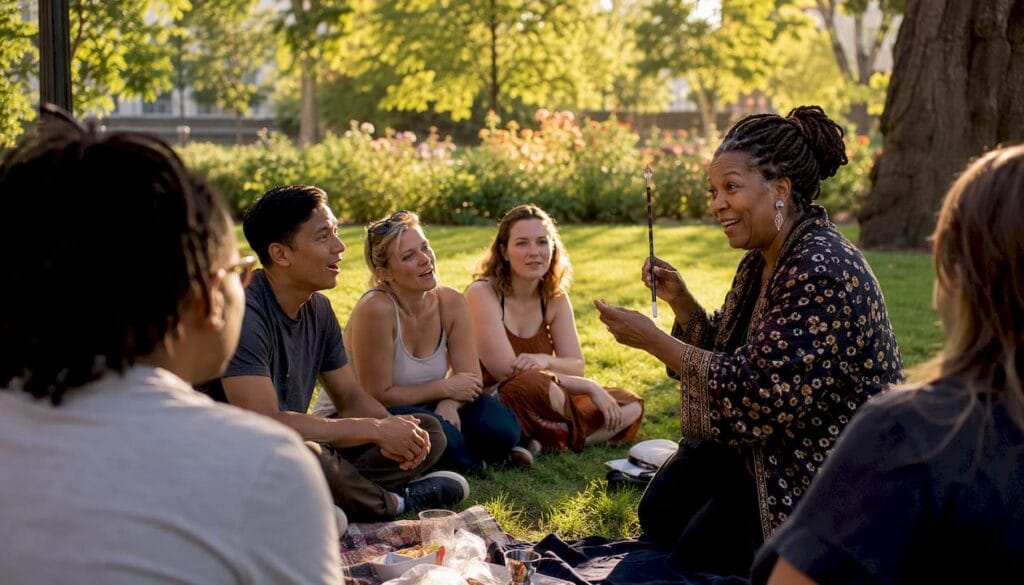
Magic transforms live tours from sightseeing into something genuinely unforgettable. Where a standard guided walk offers facts and dates, a tour with live magic creates moments of wonder that audiences carry home. The role of magic in live tours is, at its core, theatrical: it provokes cognitive dissonance, drawing audiences into a state where they know what they are seeing cannot be real, yet cannot look away. Royal Holloway research describes this as a “theatrical double awareness,” and it is precisely what separates a memorable tour from a forgettable one.
Magic’s key roles in live tours include:
- Creating wonder that holds attention far more effectively than narration alone
- Supporting storytelling by making historical or fictional narratives feel viscerally real
- Upholding cultural standards through bodies like The Magic Circle, which sets professional benchmarks for live performance
- Bridging entertainment and education, so audiences absorb context through experience rather than lecture
- Generating audience interaction, turning passive spectators into active participants
What genres of magic appear in live touring shows?
Performance magic spans a wide range of genres, each shaped by a different contract between performer and audience. That contract determines how much trust the audience extends, how plausible the effects need to feel, and what emotional register the show occupies.
- Stage magic: large-scale illusions designed for theatres and arenas, relying on distance, lighting, and spectacle
- Close-up magic: sleight of hand performed inches from the audience, demanding extraordinary technical skill and creating an intimate, almost unsettling sense of impossibility
- Street magic: unannounced, site-specific performance that uses the real environment as its stage, particularly effective on walking tours
- Mentalism: psychological illusions that appear to reveal private thoughts or predict choices, creating a deeply personal experience for participants
- Mystery entertainment: a genre rooted in the Gothic and bizarre traditions, blending storytelling, character, and illusion to produce a theatrical atmosphere rather than a sequence of tricks
In touring contexts, close-up and street magic tend to dominate because they scale naturally to small groups and outdoor settings. Mentalism works especially well when a tour has a strong narrative thread, since the illusion of mind-reading reinforces the sense that the guide knows more than any ordinary person should.
How does magic integrate with live theatre and storytelling?
Magic works best in a touring production when it serves the story rather than interrupting it. Illusionist Paul Kieve, who has designed effects for West End productions and film, puts it plainly: “my role is collaborative” with the director, writer, and set designer, because unlike a standalone magic show, a stage illusion must fit the context of the story. You cannot simply wheel on a prop and put a glamorous assistant inside it without justification.
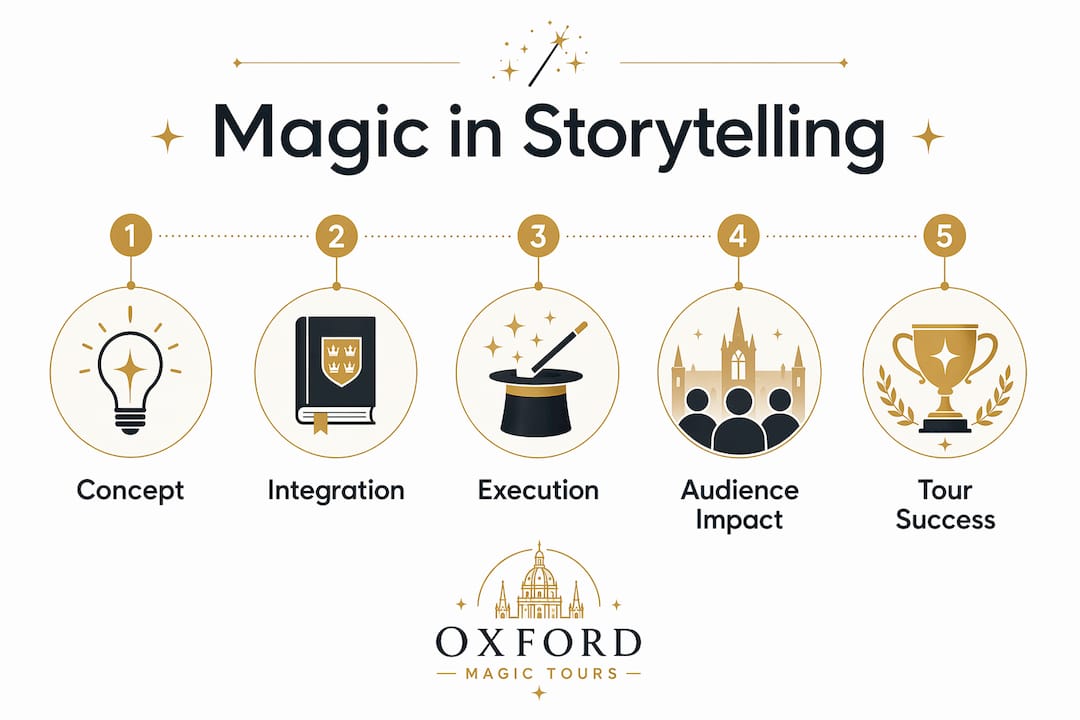
The same principle applies to live tours. An effect that feels arbitrary breaks the spell entirely. One that grows naturally from the location, the historical moment being described, or the character the guide is portraying deepens immersion in a way that no amount of additional narration can replicate.
Pro Tip: When designing magic for a tour, work backwards from the story beat you want to land, not forwards from a trick you want to perform. The effect should feel inevitable given what the audience has just heard, not imported from a different show.
Royal Holloway’s research frames this as meta-theatre: modern magic invites audiences to question the theatrical framework itself, not just the trick. A well-placed illusion on a tour does exactly that, making visitors ask whether what they just witnessed was real, which in turn makes the history or story feel more alive.
Why does magic hold such cultural weight in UK touring history?
Britain has one of the richest traditions of performance magic in the world, and that heritage shapes how live magic functions in UK tours today.
| Milestone | Date | Organisation / Figure |
|---|---|---|
| The Magic Circle founded in London | 1905 | The Magic Circle |
| Robert-Houdin defines the modern magician as “an actor playing the part of a magician” | — | Robert-Houdin |
| Magic integrated into West End productions | — | Paul Kieve and contemporaries |
| Magic used as a touring stage prop in rock concerts | 1982 | Ozzy Osbourne’s Diary of a Madman tour |
| Live magic walking tours established in Oxford | — | Oxfordmagictours |
The Magic Circle, founded in London in 1905, remains the cultural anchor of British performance magic. Its membership standards and ethical codes have shaped what audiences expect from professional magicians, including those working in touring contexts. The organisation’s influence means that UK audiences tend to approach live magic with a sophisticated appreciation, rather than treating it as a novelty.
The use of magic in rock touring, most famously when Ozzy Osbourne’s team worked with American prop builder Charles Kirkham to create a disappearing throne for the 1982 Diary of a Madman tour, shows how illusion has long served spectacle across entertainment genres, not just dedicated magic shows.
Which live magic tours in the UK are worth knowing about?
The UK’s live magic touring scene ranges from large theatrical productions to intimate walking experiences. The most distinctive current example is Oxfordmagictours, which blends live magic with a historical walking tour of Oxford’s most famous landmarks, including the Bridge of Sighs, the Radcliffe Camera, and Harry Potter filming locations.
What sets Oxfordmagictours apart is the calibre of the performer. The tour’s magician has performed for the British Royal Family and A-list celebrities, bringing a level of polish that most walking tours cannot offer. The magic is not pitched at children; it is refined sleight of hand and illusion designed to engage adults and families equally, woven into the storytelling rather than bolted on as an interval act.
Oxfordmagictours is the only walking tour in Oxford to feature live magic as a core element of the experience, performed by a magician with Royal Family credentials.
Other notable formats in the UK include:
- Theatrical touring productions that employ specialist illusion designers such as Paul Kieve to create story-integrated effects for national tours
- Festival and outdoor magic performances at events like the Edinburgh Festival Fringe, where street and close-up magic reaches large, mixed audiences
- Heritage site tours that use magic to animate historical narratives at castles, museums, and university campuses
What are the technical demands of performing magic on a live tour?
Touring magic presents technical challenges that a fixed-stage show never faces. The venue changes every day, lighting conditions are unpredictable, and the audience surrounds the performer rather than sitting at a fixed distance. Every illusion must be engineered to work across a range of physical environments without losing its impact.
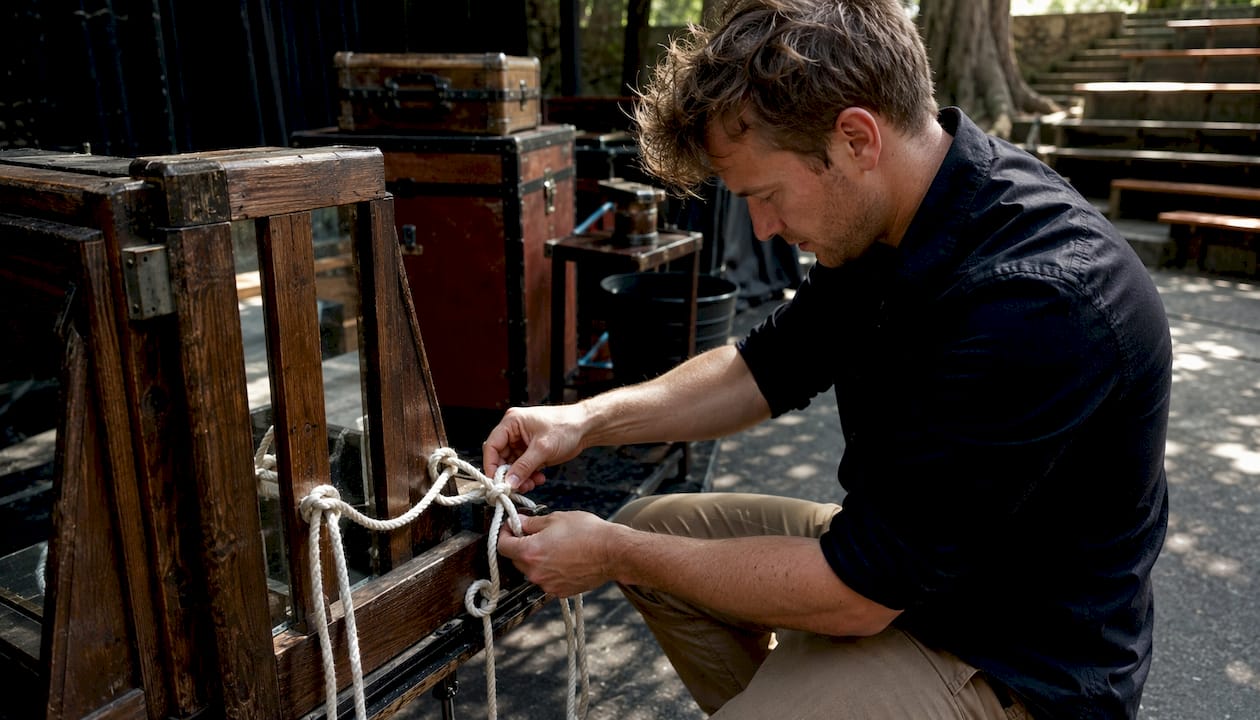
Paul Kieve’s approach to stage illusion offers a useful model: touring magicians collaborate closely with production teams to ensure effects fit both the narrative and the physical environment. For walking tours specifically, this means selecting effects that work in daylight, at close range, and without any technical infrastructure. Close-up magic and sleight of hand are the workhorses of outdoor touring precisely because they require nothing beyond the performer’s hands and a small number of portable props.
Misdirection, one of the principal techniques of conjuring, becomes even more critical outdoors, where ambient distractions compete for attention. A skilled touring magician directs the audience’s gaze deliberately, using psychology as much as physical technique to control what people notice and when.
How do touring magicians keep audiences genuinely engaged?
Audience engagement in live magic relies on a careful balance between revelation and mystery. Give too much away and the wonder evaporates; preserve too much and the audience feels excluded rather than enchanted. The most effective touring magicians manage this through direct interaction, inviting specific audience members to participate in effects, which raises the emotional stakes for everyone watching.
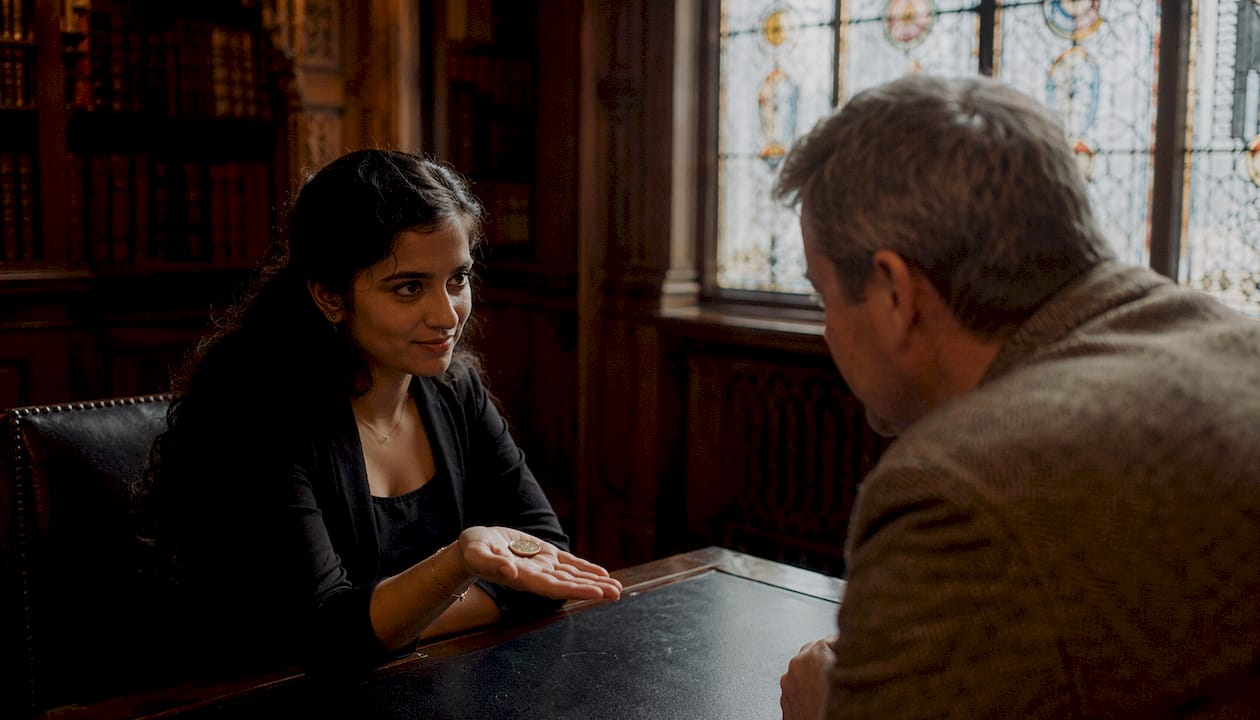
Cognitive double awareness, the state where you know the effect is artifice yet experience it as astonishing, is what sustains wonder across a full tour rather than just a single trick. A magician who understands this structures the experience so that each effect builds on the last, deepening the audience’s investment rather than simply repeating the same emotional beat.
Small group sizes amplify this dynamic considerably. Oxfordmagictours deliberately keeps groups intimate so that every participant feels personally addressed, which is why live magic walking tours consistently generate stronger audience responses than large-scale theatrical formats.
What challenges come with taking magic on the road?
Logistics are the unglamorous reality behind every touring illusion. Props must survive repeated transport, effects must be reset quickly between performances, and the magician must adapt to venues that were never designed with magic in mind. A trick that works perfectly in a rehearsal space can fail completely on a cobbled street in a crosswind.
The deeper challenge is maintaining thematic coherence across a tour that moves through multiple locations. Each effect needs to feel connected to the place where it is performed, not imported from a generic repertoire. This is why the best touring magicians invest heavily in the research and development phase, tailoring illusions to specific sites rather than carrying a fixed set of tricks from venue to venue.
Weather, crowd noise, and unexpected interruptions all require contingency thinking. A touring magician who cannot adapt in real time will lose the audience the moment something goes wrong.
How does live magic affect audience experience and tour ratings?
Live magic consistently elevates audience satisfaction in ways that conventional tour formats cannot replicate. The impact of magic on audience experience operates on two levels: the immediate emotional response of wonder and surprise, and the longer-term memory of the experience as something genuinely out of the ordinary.
Tours that incorporate live magic tend to generate more enthusiastic word-of-mouth and stronger repeat interest than those relying solely on narration. Oxfordmagictours reflects this pattern: reviewers regularly cite the live magic as the defining feature that made Oxford feel different from any city they had visited before, rather than simply another historic destination.
The importance of magic in performances extends beyond entertainment value. When an audience member participates in an effect and cannot explain what happened, they become emotionally invested in the tour’s narrative in a way that no amount of factual information can produce. That investment is what turns a pleasant afternoon into a story worth telling.
Key takeaways
Magic in live tours works because it creates genuine wonder that deepens storytelling, sustains audience attention, and transforms a standard tour into a memorable theatrical experience.
| Point | Details |
|---|---|
| Magic creates theatrical double awareness | Audiences simultaneously know effects are illusions and experience genuine astonishment, sustaining engagement throughout. |
| Genre choice shapes the experience | Close-up and street magic suit touring contexts best; mentalism works when the tour has a strong narrative thread. |
| Collaboration is non-negotiable | Effective tour magic is designed around the story and location, not imported from a generic repertoire. |
| The Magic Circle sets UK standards | Founded in 1905, it remains the professional benchmark for live magic in British touring and performance contexts. |
| Oxfordmagictours leads the UK walking tour format | The only Oxford walking tour with live magic, performed by a magician who has entertained the British Royal Family. |