
TL;DR:
- Oxford is the world’s most influential academic city for popular culture, shaping literature, film, and media for over a century. Its architecture, traditions, and literary heritage continually reinforce its status as a global cultural icon. The recent opening of the Schwarzman Centre signifies Oxford’s ongoing commitment to integrating scholarship with contemporary cultural production.
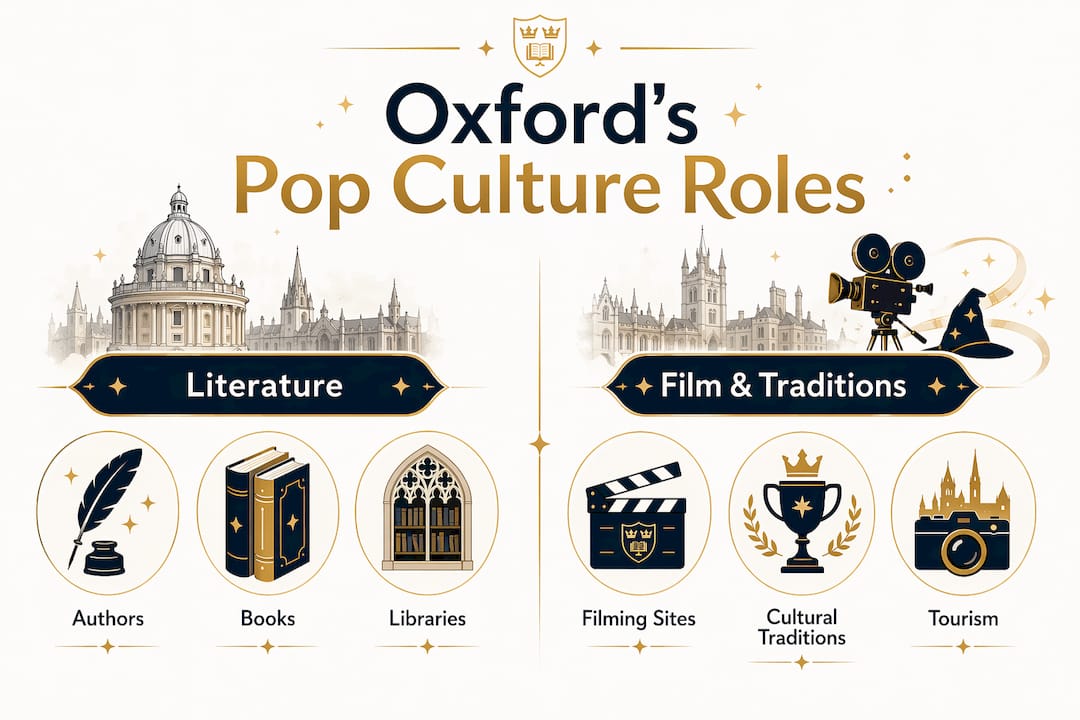
Oxford is defined as the single most influential academic city in the world for popular culture, shaping literature, film, and media for over a century. From J.R.R. Tolkien drafting Middle-earth in its libraries to Hogwarts corridors filmed in its medieval halls, the role of Oxford in pop culture is not incidental. It is structural. The city’s Gothic spires, ancient colleges, and living traditions have given storytellers a ready-made world that audiences recognise as the gold standard of intellectual mystique. Literary and film tourism anchored by Oxford contributes approximately £750 million annually to the UK economy. That figure alone tells you how seriously the world takes Oxford as a cultural force.
How has oxford shaped pop culture through literature?
Oxford holds the highest concentration of published authors per square mile of any city on earth. That density is not coincidence. It is the product of centuries of intellectual cross-pollination, where writers, academics, and students share the same quadrangles and dining halls.
J.R.R. Tolkien is the most cited example, but the list runs deep. Philip Pullman set his entire His Dark Materials trilogy in an alternate Oxford, using real landmarks such as the Bodleian Library and the Oxford Botanic Garden as narrative anchors. The city’s architecture does not merely provide backdrop in Pullman’s work. It generates plot. Jordan College, his fictional stand-in for an Oxford college, mirrors the physical grandeur of Christ Church so precisely that readers arrive in Oxford already knowing the geography.
C.S. Lewis, Lewis Carroll, and Oscar Wilde all studied or taught at Oxford. Each absorbed its particular atmosphere of rigorous debate and theatrical tradition, then exported it into fiction that reshaped global culture. The Oxford influence on culture through literature is cumulative. Each generation of writers adds another layer to the city’s mythological status.
Pro Tip: If you want to trace Oxford’s literary DNA, start at the Bodleian Library and walk to the Oxford Botanic Garden. Both appear directly in Pullman’s trilogy and are open to visitors year-round.
| Work | Author | Oxford Connection |
|---|---|---|
| The Lord of the Rings | J.R.R. Tolkien | Written while Tolkien was a professor at Oxford |
| His Dark Materials | Philip Pullman | Set in a fictionalised Oxford; uses real landmarks |
| Alice’s Adventures in Wonderland | Lewis Carroll | Inspired by Christ Church and the River Cherwell |
| The Chronicles of Narnia | C.S. Lewis | Conceived during Oxford academic life |
| Brideshead Revisited | Evelyn Waugh | Draws heavily on Oxford student culture and architecture |
Oxford’s literary heritage continues to attract readers who want to walk the same streets as their favourite authors. That form of literary tourism is now a significant part of the city’s cultural identity, drawing visitors who treat the city as a living text rather than a museum.
Oxford and the film industry: why cameras keep returning
Oxford served as a principal filming location for several major productions, including the Harry Potter series and the BBC adaptation of His Dark Materials. The reason is straightforward. No studio set replicates the weight of 800-year-old stone.
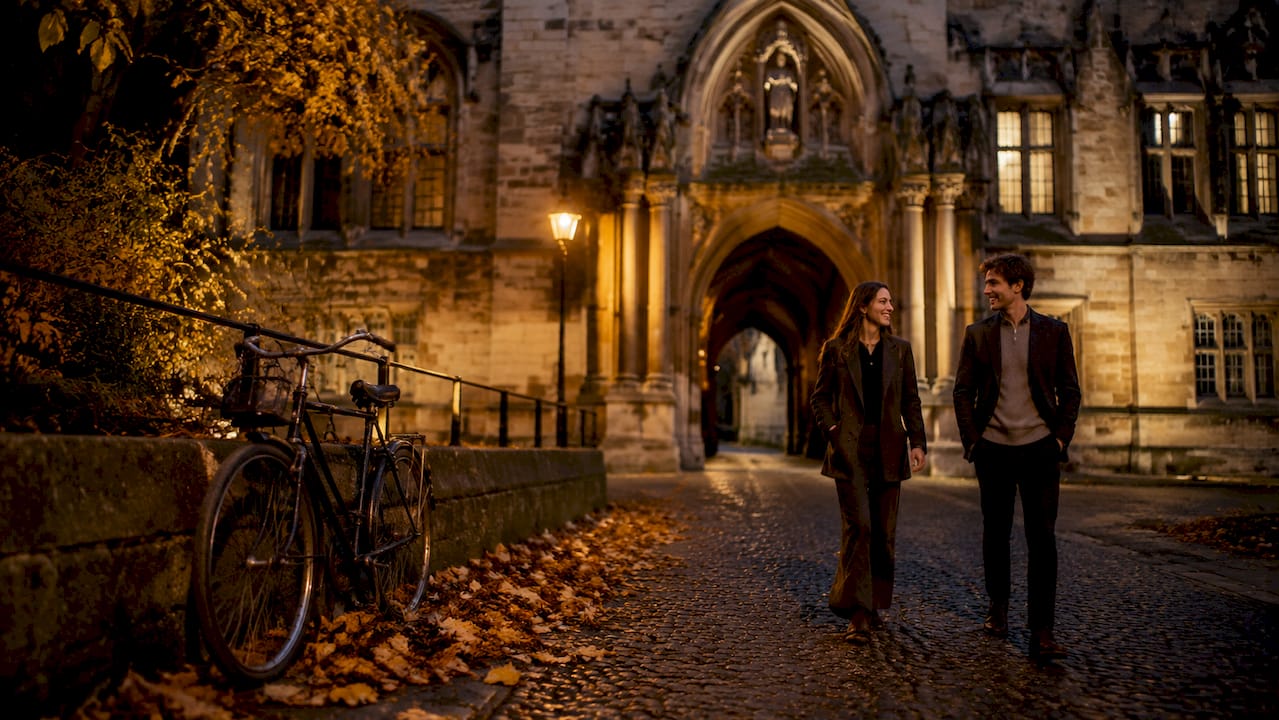
Christ Church’s Great Hall became the model for Hogwarts’ dining hall. The Bodleian Library’s Divinity School doubled as the Hogwarts infirmary. New College cloisters appeared in Harry Potter and the Goblet of Fire. These are not minor cameos. They are central visual environments that millions of viewers associate with magic, learning, and adventure. Oxford’s architecture carries a pre-loaded emotional charge that filmmakers borrow freely.
The BBC’s His Dark Materials used Oxford’s streets and college interiors to ground Pullman’s parallel universe in physical reality. Producers have noted that shooting in Oxford gives the production an authenticity that CGI cannot replicate. The city’s distinctive buildings create a visual shorthand for intellectual authority and historical depth that audiences read immediately.
Beyond Harry Potter and Pullman, Oxford has featured in The Golden Compass (2007), X-Men: First Class (2011), and the long-running television series Inspector Morse and its spin-off Endeavour. Each production reinforces the city’s identity as a place where drama, mystery, and intelligence converge.
Pro Tip: When watching Harry Potter films, look for the transition between authentic Oxford stonework and studio-built sets. The Divinity School’s fan-vaulted ceiling is entirely real. The moving staircases are not.
The economic return from this filming activity is substantial. Film tourism tied to Oxford locations draws visitors who spend on accommodation, guided tours, and local businesses. The £750 million annual figure for UK literary and film tourism reflects how deeply Oxford’s screen presence translates into real economic activity.
What cultural traditions of oxford have entered pop culture?
Oxford’s traditions are not museum pieces. They are living practices that feed directly into the city’s media image and global cultural appeal.
Punting on the Cherwell is the most visually recognisable of these traditions. The flat-bottomed boats, the long poles, the overhanging willows: this image appears in films, novels, and television whenever a director wants to signal English academic life. Punting ties Oxford’s medieval identity to its present in a way that feels both timeless and active. It is a rare tradition that has survived without becoming a parody of itself.
Oxford’s internal slang and sociolect form another layer of cultural identity. Terms like sub fusc (the formal academic dress worn for examinations) and BOPs (college parties) are markers of insider knowledge that differentiate those who have lived the Oxford experience from those who have only observed it. Media depictions that use this vocabulary correctly signal authenticity. Those that get it wrong reveal their distance from the real thing.
The Dark Academia aesthetic has become a global cultural trend, and Oxford is its spiritual home. Students at Oxford use traditional wardrobe elements, tweed, gowns, leather satchels, as platforms for modern identity expression. This is not nostalgia. It is a subversive rebranding of heritage, where the trappings of an aristocratic past are reclaimed and reinterpreted by a diverse student body. The trend has spread through social media platforms including TikTok and Instagram, reaching audiences who have never set foot in Oxford but feel a strong connection to its aesthetic.
The Oxford Movement, which began in 1830s academic circles, reshaped Anglo-Catholic liturgy and aesthetics worldwide. Small academic movements within Oxford have historically initiated global shifts in religious practice and cultural sensibility. That pattern, of a local intellectual current becoming a worldwide force, is one of Oxford’s defining characteristics.
How does oxford’s new cultural centre reinforce its pop culture role?
The University of Oxford opened the £185 million Stephen A. Schwarzman Centre for the Humanities on 25 april 2026. This is not simply a new building. It is a statement about where Oxford positions itself in contemporary cultural life.
The Schwarzman Centre combines academic research with public cultural engagement in a single physical space. It houses a concert hall, performance venues, and interdisciplinary research facilities under one roof. The design philosophy is explicit: scholarship and artistic practice are not separate activities. They inform each other.
The inaugural season featured world-class artists working alongside Oxford academics in interdisciplinary collaborations that would have been unusual for a university venue a decade ago. This signals Oxford’s commitment to cultural innovation rather than preservation alone. The centre acts as a physical and symbolic connection between academic scholarship and cultural production, reflecting Oxford’s evolving contribution to contemporary popular culture.
- The Schwarzman Centre opened in april 2026 with a £185 million investment from the University of Oxford.
- Its inaugural programme included performances by internationally recognised artists working in collaboration with humanities researchers.
- The centre’s interdisciplinary model places Oxford at the intersection of academic rigour and public cultural life.
- Public access to events signals a deliberate shift away from the perception of Oxford as a closed, elite institution.
- The venue positions Oxford as a living cultural producer, not merely a historical backdrop for other people’s stories.
Oxford’s cultural influence has always stemmed from its pattern of initially resisting and then absorbing new intellectual and artistic movements with great seriousness. The Schwarzman Centre is the latest expression of that pattern.
Key takeaways
Oxford’s role in pop culture is structural, not decorative, built on literary heritage, cinematic architecture, living traditions, and new cultural institutions that together shape global perceptions of academia.
| Point | Details |
|---|---|
| Literary density drives influence | Oxford has more published authors per square mile than any city, producing works that define global pop culture. |
| Architecture is the casting director | Locations like Christ Church and the Bodleian Library appear in Harry Potter and His Dark Materials as central visual environments. |
| Living traditions feed media imagery | Punting, sub fusc, and Dark Academia give Oxford a visual and cultural language that media borrows repeatedly. |
| Cultural investment signals intent | The £185 million Schwarzman Centre positions Oxford as an active cultural producer for the 21st century. |
| Tourism reflects cultural weight | Oxford-linked literary and film tourism contributes approximately £750 million annually to the UK economy. |
Oxford’s paradox is its greatest cultural asset
I have spent years walking Oxford’s streets and watching visitors react to the city for the first time. The reaction is almost always the same. They expected a museum. They found a living place that feels simultaneously ancient and urgent.
What most commentary on Oxford’s cultural significance misses is the paradox at its core. Oxford does not trade on nostalgia. It trades on the tension between an 800-year-old institution and the relentlessly contemporary ambitions of the people inside it. That tension is what makes it endlessly productive as a cultural setting. Tolkien was not writing about the past. He was processing the trauma of the First World War through a mythology he built in Oxford’s libraries. Pullman is not writing about tradition. He is writing about authority, freedom, and the nature of truth, using Oxford’s architecture as his stage.
The Dark Academia trend is the most recent proof of this. Students are not dressing like their grandparents out of deference. They are using the aesthetic of an elite institution to make a point about who belongs there now. That is not nostalgia. That is cultural argument conducted through wardrobe choices.
Oxford’s future as a pop culture icon depends on whether it continues to generate this kind of productive friction. The Schwarzman Centre suggests it will. The city’s appeal to celebrities and artists is not about prestige alone. It is about the quality of the conversation Oxford makes possible.
— Shane
Experience oxford’s pop culture legacy in person
Reading about Oxford’s cultural significance is one thing. Standing in the Divinity School where Harry Potter’s infirmary scenes were filmed is another entirely. Oxfordmagictours offers the only walking tour in Oxford with live entertainment from a magician who has performed for the British Royal Family and A-list celebrities. The tours cover Oxford’s Harry Potter filming locations and the city’s most iconic literary landmarks, giving you the context and the spectacle in a single experience. Whether you are a film enthusiast, a literature lover, or simply curious about the city that has shaped so much of global culture, the Oxford walking tours from Oxfordmagictours are the most memorable way to see it all.
FAQ
What is the cultural significance of oxford in popular media?
Oxford is the most frequently depicted academic setting in English-language film and literature. Its architecture, traditions, and literary heritage appear in productions ranging from Harry Potter to His Dark Materials, making it a global symbol of intellectual culture.
Which oxford buildings appear in the harry potter films?
Christ Church’s Great Hall, the Bodleian Library’s Divinity School, and New College cloisters all feature in the Harry Potter series. These locations were chosen because their medieval architecture matched the visual language of J.K. Rowling’s fictional Hogwarts.
How has oxford influenced the dark academia trend?
Oxford’s student culture, including its formal dress codes, historic architecture, and internal slang, directly inspired the Dark Academia aesthetic. Students at Oxford use traditional wardrobe elements as a form of modern identity expression, a practice that has spread globally through social media.
What is the stephen a. schwarzman centre for the humanities?
The Schwarzman Centre is a £185 million cultural venue opened by the University of Oxford in april 2026. It combines academic research with public performances and interdisciplinary arts events, positioning Oxford as an active participant in contemporary cultural production.
How does oxford’s literary heritage attract tourists?
Oxford’s connection to authors including J.R.R. Tolkien, Philip Pullman, and C.S. Lewis draws visitors who want to see the locations that inspired famous works. Literary and film tourism linked to Oxford contributes approximately £750 million annually to the UK economy.